
Vitamins are generally not HSA eligible when you take them for general health. They can qualify when a medical practitioner recommends them as treatment for a specific medical condition diagnosed by a physician. A prescription, doctor's letter, or successful HSA-card payment does not automatically make a vitamin purchase eligible.
- Are vitamins HSA eligible? General-health vitamins do not qualify; treatment for a specific diagnosed condition can qualify.
- IRS Publication 502 distinguishes nutritional supplements for general health from supplements used for medical treatment.
- Save the medical recommendation, diagnosis documentation, itemized receipt, and proof of payment for a qualifying purchase.
- Reimbursable supports HSA receipt tracking; records support eligibility but cannot turn a general-health purchase into medical treatment.
Why this matters
A vitamin can sit on a pharmacy shelf beside eligible medical supplies and still fail the HSA rules. The deciding issue is why you bought it, not where you bought it or whether the packaging mentions health benefits.
For your 2026 purchases, separate the eligibility decision from the recordkeeping decision. First establish that the expense qualifies; then save the evidence. Reimbursable offers an eligibility directory and receipt tracking, but neither a directory listing nor a saved receipt replaces the medical-purpose requirement.
Are vitamins HSA eligible?
Usually not. IRS Publication 502, under its discussion of nutritional supplements, excludes vitamins and supplements taken to maintain ordinary good health. It provides an exception when a medical practitioner recommends them as treatment for a specific medical condition diagnosed by a physician.
Use that distinction to evaluate the purchase before paying from your HSA or recording it for later reimbursement.
| Vitamin purchase | HSA treatment | What determines the answer |
|---|---|---|
| Daily multivitamin for general wellness | Generally not eligible | Maintaining good health is not enough |
| Vitamin taken for energy or general immune support | Generally not eligible | A general-health goal does not establish medical treatment |
| Vitamin recommended to treat a physician-diagnosed deficiency | Can qualify | The recommendation must connect the vitamin to treatment of that condition |
| Vitamin recommended for another specific diagnosed condition | Can qualify | The medical purpose and supporting facts must satisfy the IRS rule |
| Vitamin accompanied only by a general wellness letter | Not automatically eligible | A letter does not override the general-health exclusion |
The same ingredient can therefore receive different treatment in different circumstances. That is not a contradiction: the medical purpose changes, even when the bottle does not.
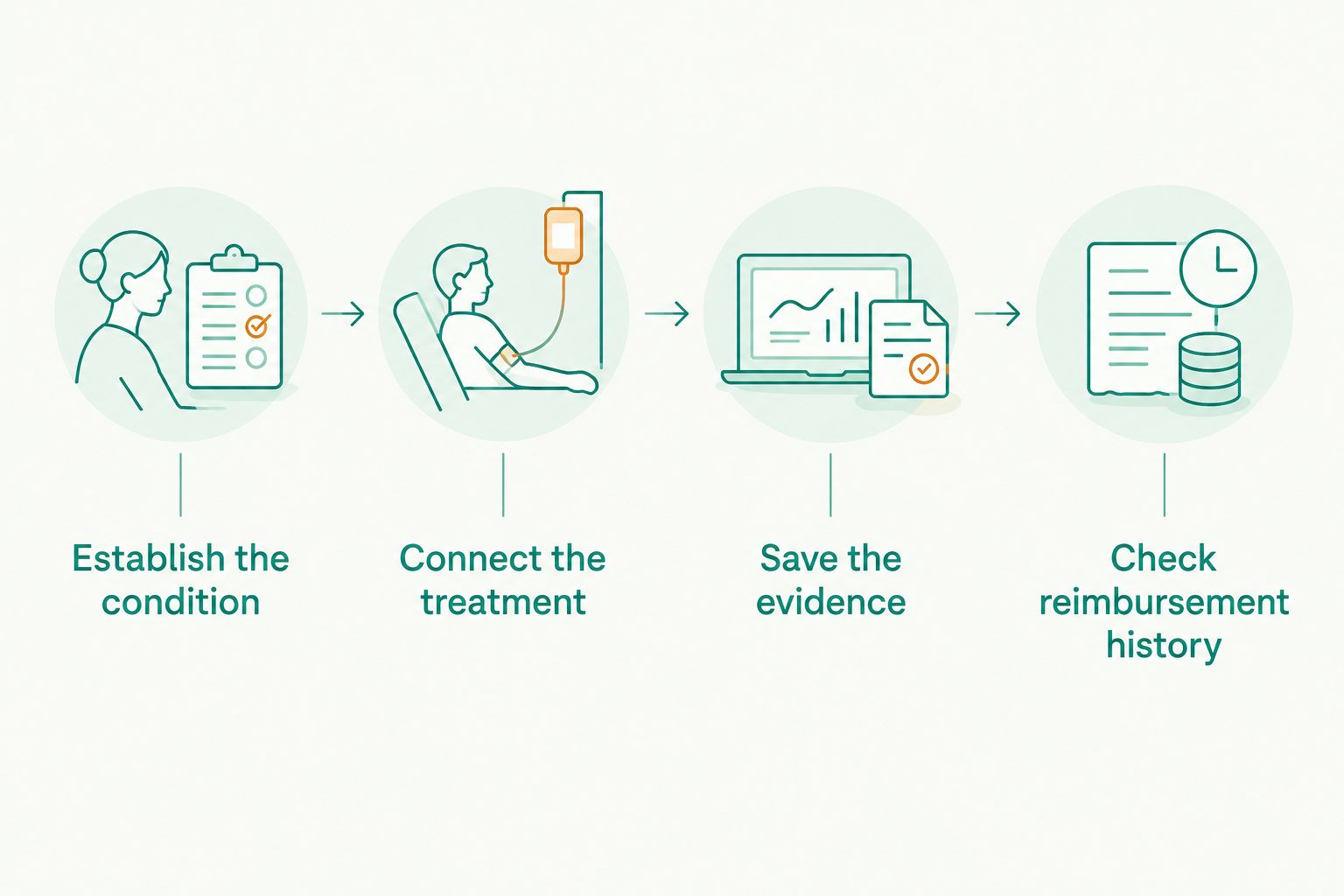
How do you check a vitamin before using your HSA?
Establish the condition
Identify the specific medical condition diagnosed by your physician. A personal suspicion that you have a deficiency is not the same as a diagnosis, and an advertising claim is not a medical recommendation.
If your reason is simply staying healthy, treat the purchase as a personal expense rather than assuming it qualifies.
Connect the treatment
Ask the treating practitioner to explain how the vitamin treats the diagnosed condition. The useful record connects the condition, recommended supplement, and treatment purpose.
Do not ask for a letter that merely repeats broad benefits such as supporting wellness. Documentation needs to establish the medical purpose, not just endorse the product.
Save the evidence
Keep the itemized receipt, payment record, and relevant medical documentation together. A card statement can show that you paid a pharmacy, but it usually cannot identify which items you bought.
For mixed shopping baskets, identify the qualifying vitamin separately from toiletries, snacks, or general-health supplements. The entire transaction does not become eligible because one item qualifies.
Check reimbursement history
Confirm that the expense occurred after your HSA was established. Also confirm that insurance, an FSA, another account, or another person has not already reimbursed the same expense.
Do not claim an itemized medical-expense deduction for an expense you also reimburse tax-free from your HSA.
General-health vitamins: keep them outside your HSA
A daily multivitamin taken to round out your diet generally belongs in your personal budget. The same applies when you buy a vitamin because you want better energy or general immune support without a qualifying treatment purpose.
A physician's involvement does not automatically change that result. Advice to eat well, exercise, and take a supplement for general health is different from recommending a vitamin to treat a specific diagnosed condition.
This distinction also prevents a common recordkeeping mistake: uploading every pharmacy receipt as though every item were eligible. For your 2026 records, separate ordinary wellness purchases from expenses supported as medical treatment.
Do not label a general-health vitamin eligible just because you have a receipt. Keep uncertain purchases separate until you have resolved the treatment question.
Vitamins used for medical treatment: document the connection
Consider a vitamin recommended to treat a physician-diagnosed deficiency. That purchase can qualify because the vitamin serves a specific treatment purpose rather than ordinary nutritional maintenance.
Keep documentation that answers practical questions: What condition was diagnosed? Which supplement was recommended? How does the recommendation relate to treatment? Which purchase does the receipt document?
For example, a vitamin D purchase made under a treatment recommendation for a diagnosed vitamin D deficiency presents a different eligibility case from buying the same vitamin for general wellness. The ingredient alone does not settle the answer.
An eligible initial purchase also does not establish permanent eligibility for every later bottle. Keep later purchases connected to the treatment recommendation, especially if the condition, supplement, or reason for taking it changes.
Does a doctor's letter make vitamins HSA eligible?
A doctor's letter does not automatically make vitamins HSA eligible. Its value is documenting facts that meet the medical-expense rule, not creating an exception for an otherwise personal purchase.
A letter that says a supplement supports general well-being does not establish treatment of a specific diagnosed condition. Likewise, a prescription label is not a substitute for understanding the medical purpose.
Ask the practitioner for a clear treatment recommendation rather than a guarantee about taxes. Your clinician can explain the medical facts; your tax advisor can help apply the reimbursement rules to those facts.
Keep sensitive medical documents somewhere you can retrieve them without unnecessarily sharing them. You need records that support the expense, not a public account of your diagnosis.
Why vitamin eligibility varies
Vitamin eligibility varies because the IRS distinguishes medical treatment from ordinary personal health spending. Review these factors rather than relying on the product category alone:
- Purpose: Maintaining general health is different from treating a medical condition.
- Diagnosis: The supplement exception concerns a specific condition diagnosed by a physician.
- Recommendation: A medical practitioner's recommendation must connect the supplement to treatment.
- Timing: The expense must occur after your HSA was established to qualify for HSA reimbursement.
- Other tax benefits: The same expense cannot also be reimbursed elsewhere or claimed as an itemized medical-expense deduction.
For a 2026 eligibility decision, start with IRS Publication 502's nutritional-supplement rule. Use IRS Publication 969 for the HSA distribution and recordkeeping requirements. Read them together: a medical-expense rule does not remove the separate conditions for tax-free HSA reimbursement.
What records should you save for a qualifying vitamin purchase?
Your records should show what you purchased, why it qualified, when the expense occurred, and whether it was reimbursed. No single document necessarily proves all of those facts.
A useful receipt file includes:
- The itemized receipt identifying the vitamin and purchase date.
- Proof that you paid the expense.
- The medical recommendation connecting the vitamin to treatment.
- Documentation of the physician-diagnosed condition.
- Any insurance or other reimbursement information affecting the expense.
- A record of whether and when you reimbursed yourself.
Keep the original supporting documents, not just a spreadsheet entry saying that the purchase was eligible. A tracker helps you find evidence; it does not replace evidence.
Reimbursable is best for HSA holders who want receipt tracking alongside an eligibility lookup directory. Its free manual tracking is unlimited. The limitation is the same as with any recordkeeping system: entering a vitamin purchase does not determine its tax treatment.
Choose a method you will actually maintain:
| Recordkeeping option | Best for | Useful feature | Limitation |
|---|---|---|---|
| Spreadsheet and digital folders | People comfortable organizing their own records | You control the fields and file structure | You must connect receipts, treatment documents, and reimbursement status yourself |
| Paper receipt folder | People who prefer physical records | Keeps original documents together | Paper can fade, and finding a particular purchase requires organization |
| HSA-provider receipt tool | People who prefer their provider's system | Keeps records within the provider's available workflow | Check whether it supports your documentation and export needs |
| Reimbursable receipt tracking | People who want a dedicated expense-tracking app | Unlimited free manual tracking; Premium adds receipt scanning, bank sync, and email forwarding | Automation does not establish medical eligibility or replace supporting documents |
Premium's purpose is less receipt administration, not access to a different tax rule. Spreadsheets, folders, paper records, and provider tools remain legitimate alternatives when they preserve adequate evidence.
Can you reimburse yourself for vitamins years later?
An HSA has no IRS deadline for reimbursing a qualifying expense incurred after the HSA was established. Paying out of pocket now does not, by itself, prevent later reimbursement.
The expense must still satisfy the eligibility rules, and you must retain records showing it was not reimbursed elsewhere or claimed as an itemized deduction. Waiting does not turn a general-health vitamin into a qualified medical expense.
For a qualifying vitamin purchased in 2026, preserve the receipt and treatment documentation even if you do not reimburse yourself during 2026. Record later reimbursement against that specific expense so you do not claim it again.
Do not substitute your first contribution date or your current balance for the HSA's establishment date without checking your records. If the timing is uncertain, resolve it before reimbursing the purchase.
Do FSA deadlines work the same way?
FSA deadlines are not the same as the HSA reimbursement rule. An FSA operates within plan-specific coverage and claim-submission rules; it does not provide the HSA's open-ended reimbursement timing.
A plan can have a grace period or carryover feature, subject to the applicable rules. Ask your FSA administrator about your plan's deadlines and documentation requirements rather than applying HSA timing to an FSA claim.
The distinction between general-health vitamins and medical treatment still matters. A purchase does not become eligible merely because an FSA deadline is approaching.
FAQ
Are vitamins HSA eligible in 2026?
Vitamins generally are not HSA eligible for general health in 2026. They can qualify when a medical practitioner recommends them to treat a specific medical condition diagnosed by a physician.
Can I use my HSA for a daily multivitamin?
A daily multivitamin taken for general wellness generally does not qualify. A qualifying treatment purpose requires more than wanting to maintain good health.
Is vitamin D HSA eligible if I have a deficiency?
Vitamin D can qualify when a medical practitioner recommends it to treat a physician-diagnosed deficiency. Keep the recommendation, relevant diagnosis documentation, and itemized purchase receipt.
Does a prescription make any vitamin HSA eligible?
A prescription does not automatically make a vitamin HSA eligible. The purchase must meet the medical-expense rules rather than serve only a general-health purpose.
Does an approved HSA-card transaction prove my vitamins qualify?
An approved HSA-card transaction does not prove a vitamin purchase qualifies. You remain responsible for establishing the medical purpose and keeping supporting records.
Can I save my vitamin receipt and reimburse myself later?
You can reimburse a qualifying vitamin expense later if it occurred after your HSA was established and meets the other reimbursement conditions. Keep evidence that it was not reimbursed elsewhere or claimed as an itemized deduction.
Can I claim the same vitamins through my HSA and FSA?
You cannot receive tax-free reimbursement twice for the same vitamin expense. Record which account reimbursed each qualifying purchase.
Do I need a paid receipt-tracking app for HSA reimbursement?
You do not need a paid receipt-tracking app to obtain tax-free HSA reimbursement. Paper files, spreadsheets, digital folders, and provider tools can work when they preserve adequate supporting records.
One last thing
The most useful document may be the one explaining the purchase, not the receipt showing it. A receipt proves that you bought vitamins; the medical documentation explains why that particular purchase qualifies as treatment.
Before you file the receipt, connect those records and mark the reimbursement status. That small administrative step makes the distinction between general wellness and medical treatment easier to explain later.
Not tax advice. Always consult your tax advisor about your circumstances.