
Best overall: a digital thermometer. Best for pumping: a breast pump and lactation supplies. Best for diaper-rash treatment: a medicated diaper-rash product. These are practical starting points for the best FSA eligible baby items in 2026; buy for a medical need, not simply because a retailer labels something baby care.
- The best FSA eligible baby items include digital thermometers, breast pumps, saline nasal products, and medicated diaper-rash treatments.
- Ordinary diapers, wipes, and infant formula generally do not qualify as medical expenses.
- Reimbursable helps parents check HSA/FSA eligibility and organize receipts; your FSA administrator decides claims.
- FSA spending and claim deadlines differ from HSA reimbursement rules. Save itemized receipts for either account.
Why this matters
A baby-shopping receipt can mix qualified medical expenses with ordinary household purchases. A thermometer and medicated rash cream belong in a different category from diapers, clothing, and wipes.
Reimbursable offers an eligibility directory and receipt tracking, but a directory result does not replace your plan’s documentation requirements. Reimbursable is best for parents who want an HSA/FSA eligibility lookup alongside receipt tracking.
For 2026 purchases, use IRS Publication 502, Medical and Dental Expenses, for medical-expense principles and Publication 969, Health Savings Accounts and Other Tax-Favored Health Plans, for account rules. Publication 969 also addresses nonprescription medicines and menstrual care products; Publication 502 alone is not the complete FSA shopping rulebook.
What makes the best FSA eligible baby items
The ranking favors useful medical categories over expensive nursery purchases:
- Clear medical purpose: The item diagnoses, treats, or helps manage a health condition, or falls within a specifically eligible category.
- Distinct household use: Each recommendation solves a different problem rather than duplicating another purchase.
- Product-level clarity: Ingredients, labeling, and intended use distinguish medicine from general toiletries.
- Useful documentation: An itemized receipt identifies what you bought, when, and for how much.
- Appropriate care: Eligibility does not establish that a product is suitable for your baby’s age or symptoms.
FSA eligible baby and parent items at a glance: 2026
| Rank and item | Best for | Standout purpose | Key limitation |
|---|---|---|---|
| 1. Digital thermometer | A basic home medical kit | Measuring body temperature | Technique and age-appropriate use matter |
| 2. Breast pump and lactation supplies | Expressing breast milk | Supporting lactation | Not every feeding accessory qualifies |
| 3. Saline nasal drops or spray | Nasal congestion care | A non-drug saline option | Check the exact product and age directions |
| 4. Medicated diaper-rash treatment | Treating diaper rash | Medication rather than ordinary diaper care | Cosmetic products are not automatically eligible |
| 5. Eligible over-the-counter medicines | Clinician-directed symptom treatment | Medicines can qualify without a prescription | Eligibility does not mean safe for infants |
| 6. Menstrual pads | A parent’s menstrual care | Menstrual care products qualify | Ordinary personal-care products remain excluded |
1. Digital thermometer: best baby medical item for a home kit
A digital thermometer measures body temperature and is a straightforward medical purchase. Choose an age-appropriate device and follow its instructions rather than assuming every measurement method works the same way.
Digital thermometer pros:
- Has a direct medical purpose.
- Serves a different need from nursery comfort products.
- Produces a reading you can report to your child’s clinician.
Digital thermometer cons:
- Incorrect technique can produce an unreliable reading.
- A temperature reading does not identify the cause of illness.
Best for: Parents building a basic home medical kit before they need it urgently.
A baby’s age changes how clinicians assess fever. Get instructions from your pediatrician about when to call and which measurement method to use; do not let shopping guidance substitute for medical advice.
Verdict: Buy an appropriate thermometer if your household does not already have one.
2. Breast pump and lactation supplies: best for expressing milk
Breast pumps and supplies that assist lactation are qualified medical expenses under IRS guidance. That does not turn the entire feeding aisle into an eligible category.
Breast pump and lactation supplies pros:
- Address a specifically recognized medical-expense category.
- Support milk expression when pumping is part of your feeding plan.
- Allow you to document necessary pumping supplies separately from general baby purchases.
Breast pump and lactation supplies cons:
- General feeding accessories require separate eligibility checks.
- You cannot claim an amount already paid or reimbursed by insurance.
Best for: Parents who need to express breast milk.
Check your health plan’s pump benefits before paying out of pocket. Keep any coverage determination and record only your unreimbursed eligible share; ordinary infant formula is generally a personal expense, not a substitute category for lactation supplies.
Verdict: Buy for an actual pumping need after checking insurance benefits.
3. Saline nasal drops or spray: best for nasal congestion care
Saline nasal products are a practical category to check when a baby has nasal congestion. Choose a product intended for nasal use and appropriate for your child’s age; saline and medicated decongestants are not interchangeable.
Saline nasal product pros:
- Has a targeted nasal-care purpose.
- Offers a non-drug saline option.
- Is easier to document when the receipt identifies the exact product.
Saline nasal product cons:
- Directions and application methods differ by product.
- Saline does not treat every cause of congestion or breathing difficulty.
Best for: Parents seeking an age-appropriate saline product as part of congestion care.
Confirm eligibility for the specific item with your FSA administrator, particularly when a package bundles medical and nonmedical accessories. Ask your clinician how to use the product and when symptoms require evaluation.
Verdict: Buy an age-appropriate saline product when needed; skip adult decongestant substitutions.
4. Medicated diaper-rash treatment: best for treating diaper rash
A medicated diaper-rash treatment is different from an ordinary diapering supply. Products labeled to treat diaper rash, including appropriate skin-protectant medicines, can qualify as medical expenses.
Medicated diaper-rash treatment pros:
- Targets a specific skin problem.
- Provides labeling that helps distinguish treatment from cosmetic care.
- Fits an expense record tied to an identifiable medical product.
Medicated diaper-rash treatment cons:
- Not every balm, moisturizer, or baby-care cream is medicine.
- Persistent or unusual rashes need clinical assessment.
Best for: Treating diaper rash with an appropriate labeled product.
Read the active-ingredient and purpose sections rather than relying on packaging language such as gentle or natural. Ordinary diapers and wipes generally remain personal expenses even when purchased alongside rash medicine.
Verdict: Buy a qualifying treatment for a rash; skip the assumption that all diaper-care products qualify.
5. Eligible over-the-counter medicines: best for clinician-directed care
Eligible over-the-counter medicines can be reimbursed through an FSA without a prescription. That tax rule does not make every medicine suitable for a newborn or infant.
Over-the-counter medicine pros:
- Can qualify without obtaining a prescription solely for reimbursement.
- Addresses a defined symptom or treatment need.
- Usually has an identifiable medicine name on the package.
Over-the-counter medicine cons:
- Age restrictions and dosing instructions differ.
- Combination products make it easier to give an unwanted or duplicate ingredient.
Best for: A specific treatment your child’s clinician recommends.
Ask for the exact medicine, formulation, and dosing instructions before buying for a baby. Do not use an eligibility label as a safety recommendation, and do not stock medicines simply to spend an FSA balance.
Verdict: Hold until you know the appropriate product and instructions for your child.
6. Menstrual pads: best for a parent’s menstrual care
Menstrual care products, including menstrual pads, qualify for FSA reimbursement under the account rules described in IRS Publication 969. This recommendation covers menstrual care rather than treating every postpartum personal-care purchase as eligible.
Menstrual pad pros:
- Falls within an expressly eligible product category.
- Covers a parent’s needs, not just the baby’s medical supplies.
- Does not require a prescription solely to establish menstrual-product eligibility.
Menstrual pad cons:
- Eligibility does not extend to every hygiene product nearby.
- A mixed receipt still needs eligible and ineligible lines separated.
Best for: A parent buying menstrual pads for menstrual care.
For products marketed for another purpose, check the exact category instead of assuming similar appearance means identical treatment. Keep ordinary toiletries separate in your expense record.
Verdict: Buy when needed for menstrual care; skip unrelated hygiene add-ons.
How these categories were ranked
The order prioritizes a clear medical purpose, a distinct use, and documentation that a parent can maintain. It is a category guide, not a product test or a claim that one manufacturer performs better than another.
The thermometer is the default because it fills a basic medical-kit role. Pumping supplies move to the top when expressing milk is your immediate need; the remaining categories depend on symptoms and personal circumstances.
Keep baby purchases claim-ready in 2026
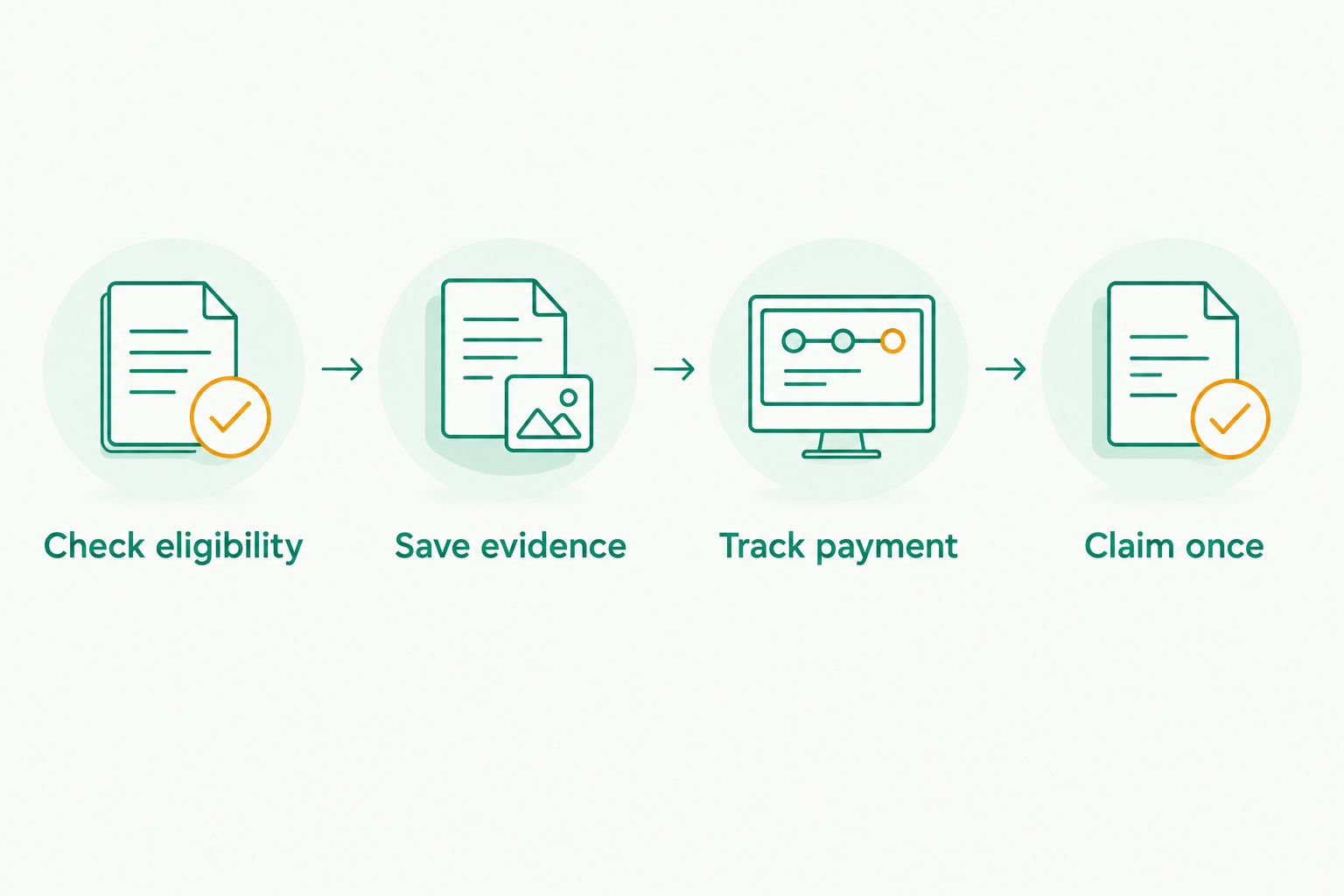
Use this sequence whenever you pay out of pocket. It keeps the purchase decision separate from the reimbursement decision.
Check eligibility
Confirm the exact item, the patient’s eligibility under your account, and any required supporting documents. A doctor’s letter does not automatically turn a general-health or ordinary personal expense into qualified medical care.
Save evidence
For an expense involving insurance, save 2 files: the itemized bill or receipt and the explanation of benefits. For a retail purchase without insurance involvement, retain the itemized receipt and any required eligibility documentation.
Track payment
Use 6 fields: patient, purchase or service date, item, eligible amount, payment source, and reimbursement status. Separate medical items from diapers, snacks, clothing, and other personal purchases; this guide to separating qualified medical expenses on mixed bills explains that distinction.
Claim once
Record the amount reimbursed and the account used. Never submit the same expense to an FSA and later take a tax-free HSA reimbursement for it.
Reimbursable offers unlimited free manual tracking. Spreadsheets, digital folders, paper receipts, and HSA-provider receipt tools are also legitimate choices; use a system you will maintain and back up.
FSA deadlines are not HSA reimbursement rules
For 2026 planning, set 2 reminders: your FSA expense deadline and your claim-submission deadline. Those dates serve different purposes, and your plan determines them. Do not assume that a carryover or grace period applies.
An HSA has no IRS deadline for reimbursing a qualified expense incurred after the HSA was established, provided you retain adequate records. The expense cannot also be reimbursed elsewhere or claimed as an itemized deduction.
With an FSA, you cannot preserve reimbursement rights indefinitely by keeping a receipt. The expense must fall within the applicable coverage period, and you must submit the claim within the plan’s rules.
Which FSA eligible baby items should you choose?
Start with a thermometer if you need a basic medical item; prioritize pumping supplies if lactation is the immediate need. Buy rash treatments, saline products, and medicines for a defined purpose rather than assembling an eligibility-themed shopping cart.
For parents using an HSA instead, the medical-expense categories overlap substantially, but the reimbursement timing does not. Save the evidence now even when you intend to reimburse yourself later.
FAQ
What are the best FSA eligible baby items in 2026?
Start with a digital thermometer, breast pump and lactation supplies when needed, saline nasal products, and medicated diaper-rash treatments. Confirm the exact item’s eligibility and keep an itemized receipt; a baby-care label alone does not establish eligibility.
Are diapers and baby wipes FSA eligible?
Ordinary baby diapers and wipes generally are not FSA eligible because they are personal-care expenses. A separate medical circumstance requires its own eligibility assessment; buying them beside medicine does not change their treatment.
Can I use my FSA for a breast pump?
Yes, breast pumps and supplies that assist lactation are qualified medical expenses. Claim only your unreimbursed eligible amount and check insurance benefits before paying out of pocket.
Is infant formula FSA eligible?
Ordinary infant formula generally is not FSA eligible. Special formula used for medical treatment requires a separate assessment, and a prescription alone does not establish that the entire purchase qualifies.
Do baby medicines need a prescription for FSA reimbursement?
Eligible over-the-counter medicines do not require a prescription solely for FSA reimbursement. Your child’s age, symptoms, and dosing needs still determine whether a medicine is appropriate; ask your clinician before treating an infant.
Can I reimburse the same baby expense from an FSA and HSA?
No, you cannot receive tax-free reimbursement twice for the same expense. Record insurance payments, FSA reimbursements, and HSA withdrawals against the same expense record to prevent duplication.
Can I save baby receipts and reimburse myself years later?
An HSA permits later reimbursement without an IRS time limit for qualified expenses incurred after the HSA was established. An FSA follows plan-specific expense and claim deadlines, so saving the receipt does not extend those deadlines.
One last thing
The most useful receipt is not necessarily the one showing the biggest purchase. It is the one that identifies the medical item and proves what you paid without reimbursement elsewhere.
For your next 2026 purchase, separate eligible items at checkout or mark them immediately afterward. Start free with Reimbursable if manual receipt tracking fits your routine; a spreadsheet or organized folder works too.
Not tax advice. Always consult your tax advisor.