Best overall for a routine restock: first-aid supplies; best for recurring allergy symptoms: allergy medicines; best for sun protection: qualifying sunscreen. This 2026 guide ranks practical purchases by what you need, explains the eligibility checks, and shows how Reimbursable helps you look up HSA/FSA-eligible items and track receipts.
- The best FSA eligible items 2026 list starts with first-aid supplies, allergy medicines, and qualifying sunscreen you actually need.
- Reimbursable offers a free HSA/FSA eligibility directory; your FSA plan determines claim requirements and deadlines.
- Over-the-counter medicines and menstrual care products qualify without prescriptions under federal HSA/FSA rules.
- Keep itemized receipts, follow your FSA deadlines, and never reimburse the same expense from both accounts.
Why this matters
The best FSA purchase solves a health need you already have. Buying unfamiliar equipment or unnecessary medicine just to reduce your balance creates clutter, not better care.
For 2026 purchases, check both federal eligibility rules and your employer's FSA requirements. IRS Publication 502 explains medical expenses, while IRS Publication 969 covers HSA and health FSA rules, including the special treatment of over-the-counter medicines.
FSA deadlines and HSA reimbursement timing are different. Your FSA has plan-specific spending and filing deadlines; an HSA does not impose the same annual use-it-or-lose-it rule. Decide which account will reimburse an expense before submitting it.
What makes the best FSA-eligible items
Use these criteria before choosing anything from the list:
- A real need: You already use the item or have a clear medical reason to buy it.
- Clear eligibility: The exact item fits a medical-expense category, rather than a broad wellness claim.
- Practical usefulness: You can use the purchase appropriately before it expires or becomes unnecessary.
- Simple documentation: An itemized receipt identifies the product, purchase date, and amount paid.
- Low administrative friction: You understand any plan requirements before paying.
- Appropriate care: The item supports suitable treatment or monitoring rather than replacing needed professional advice.
This is a use-case ranking, not a claim that everyone needs every item. Start with your existing care routine and work down the list only as needed.
Best FSA-eligible items at a glance
| Rank and item | Best for | Standout feature | Key limitation |
|---|---|---|---|
| 1. First-aid supplies | Restocking everyday wound-care essentials | Straightforward medical purpose | A large kit can duplicate supplies you already own |
| 2. OTC allergy medicines | Managing recurring allergy symptoms | Eligible without a prescription | The right medicine depends on symptoms and health history |
| 3. Qualifying sunscreen | Routine sun protection | Combines everyday use with medical-expense eligibility | Cosmetic products require closer checking |
| 4. OTC pain relievers | Treating occasional pain or fever | Familiar treatment category | Directions, interactions, and contraindications matter |
| 5. Menstrual care products | Replacing regularly used period supplies | Explicitly eligible under federal rules | Not every related personal-care item qualifies |
| 6. Contact lens supplies | Maintaining prescribed contact lenses | Supports an existing vision-care routine | General grooming products are different |
| 7. Digital thermometers | Checking temperature at home | Reusable medical equipment | An app or extra features do not make it more necessary |
| 8. Blood pressure monitors | Supporting clinician-recommended home monitoring | Helps record readings between appointments | Cuff fit and measurement technique affect usefulness |
1. First-aid supplies: best for an everyday restock
Bandages and wound dressings are practical FSA purchases when your household needs them. Start by checking the supplies you already have, then replace missing or unusable essentials instead of automatically buying a large kit.
This category ranks first because the purpose is clear and the shopping decision can stay simple. A small, deliberate restock is easier to justify than a collection of unfamiliar supplies.
First-aid supplies pros:
- Serve a direct medical purpose.
- Let you replace individual essentials.
- Fit a household's existing care routine.
First-aid supplies cons:
- Preassembled kits can duplicate useful items.
- Mixed-purpose kits need item-level eligibility checks.
Best for: Replenishing bandages and dressings you already use.
Verdict: Buy needed replacements; skip oversized kits chosen only to spend down an FSA.
2. OTC allergy medicines: best for recurring allergy symptoms
Over-the-counter allergy medicines qualify for health FSA reimbursement without a prescription under federal rules. Choose a medicine appropriate for your symptoms rather than treating FSA eligibility as a treatment recommendation.
Check the active ingredients when comparing products. Different packaging or branding does not necessarily mean a different medicine, and combination products deserve particular attention before you add them to an existing routine.
OTC allergy medicines pros:
- Address a recurring medical need.
- Do not require a prescription for federal FSA eligibility.
- Allow purchases based on a familiar treatment routine.
OTC allergy medicines cons:
- Side effects and interactions still matter.
- Buying more than you will use risks waste.
Best for: People replacing an appropriate allergy medicine they already use.
Verdict: Buy an appropriate replacement; ask a pharmacist before changing treatment.
3. Qualifying sunscreen: best for routine sun protection
Broad-spectrum sunscreen with SPF 15 or higher is an established FSA-eligible category. Verify the exact product, especially when the package combines sunscreen with cosmetics or other personal-care functions.
Eligibility and sun-protection advice are separate questions. The American Academy of Dermatology recommends broad-spectrum, water-resistant sunscreen with SPF 30 or higher; an eligibility threshold is not a substitute for choosing suitable protection.
Qualifying sunscreen pros:
- Supports a regular sun-protection routine.
- Comes in different application formats.
- Can replace sunscreen you already need.
Qualifying sunscreen cons:
- Cosmetic combinations need closer verification.
- Expiration dates and storage instructions matter.
Best for: Replacing suitable sunscreen for regular use in 2026.
Verdict: Buy a verified sunscreen you will use; skip products selected solely for an eligibility badge.
4. OTC pain relievers: best for occasional pain or fever
Over-the-counter pain relievers qualify without a prescription under federal health FSA rules. They belong on your list when you need an appropriate medicine, not because every household should purchase every type.
Read the label before buying, including warnings and active ingredients. If you already take other medicines or have a medical condition, ask a pharmacist or clinician which option fits your situation.
OTC pain relievers pros:
- Have a clear treatment purpose.
- Qualify without a prescription.
- Fit a modest medicine-cabinet restock.
OTC pain relievers cons:
- Different medicines have different safety considerations.
- Combination products can duplicate active ingredients.
Best for: Replacing a suitable medicine for occasional symptoms.
Verdict: Buy what fits your care needs; skip bulk purchases without a realistic use.
5. Menstrual care products: best for recurring period supplies
Tampons, pads, menstrual cups, and other qualifying menstrual care products are eligible under federal health FSA rules. This makes replacing regularly used supplies a practical choice rather than an unfamiliar year-end purchase.
Do not extend that eligibility to every product marketed alongside period care. General personal-care items still need their own eligibility check, even when they appear in the same shopping category.
Menstrual care products pros:
- Meet a recurring personal need.
- Have explicit federal eligibility.
- Include both disposable and reusable options.
Menstrual care products cons:
- Fit and comfort remain individual.
- Related wellness products are not automatically eligible.
Best for: Replenishing the menstrual products you already prefer.
Verdict: Buy your usual qualifying supplies; skip unfamiliar products bought only to use remaining funds.
6. Contact lens supplies: best for prescribed lens care
Contact lens solution and supplies needed to maintain prescribed contact lenses are eligible medical expenses. Buy the type appropriate for your lenses and follow your eye-care professional's instructions.
Keep the itemized receipt rather than relying on a card statement that only names the store. A mixed purchase containing lens solution and ordinary toiletries needs enough detail to separate the eligible expense.
Contact lens supplies pros:
- Support an established vision-care routine.
- Replace consumable supplies you regularly need.
- Have a direct connection to prescribed lenses.
Contact lens supplies cons:
- Lens-care products are not interchangeable.
- Expiration dates limit sensible stockpiling.
Best for: Contact lens wearers replenishing appropriate care supplies.
Verdict: Buy the correct supplies for your lenses; skip substitutions based only on packaging or convenience.
7. Digital thermometers: best for home temperature checks
A medical thermometer is an eligible purchase for checking body temperature. Choose a device you can use correctly and maintain according to its instructions.
Extra connectivity does not automatically improve the purchase decision. If a working thermometer already meets your needs, a replacement belongs below missing medicines or supplies on your 2026 shopping list.
Digital thermometers pros:
- Provide a defined medical measurement.
- Can support repeated use at home.
- Do not require a complicated tracking system.
Digital thermometers cons:
- Technique and instructions affect readings.
- Replacing a working device adds little practical value.
Best for: Households without a suitable working thermometer.
Verdict: Buy when there is a genuine gap; skip an upgrade purchased solely for extra features.
8. Blood pressure monitors: best for guided home monitoring
A home blood pressure monitor is eligible medical equipment. It is most useful when home monitoring fits your care plan and you understand how to take and record readings.
Choose a validated device with an appropriate cuff, and ask your clinician about measurement technique. Eligibility does not establish accuracy, and a home reading does not replace medical assessment when you need it.
Blood pressure monitors pros:
- Support measurements outside appointments.
- Help you maintain a record for clinical discussions.
- Serve a specific medical-monitoring purpose.
Blood pressure monitors cons:
- Incorrect cuff fit affects readings.
- Numbers need appropriate interpretation.
Best for: People whose clinician recommends home blood pressure monitoring.
Verdict: Buy for a defined monitoring need; wait if you have no reason to track blood pressure.
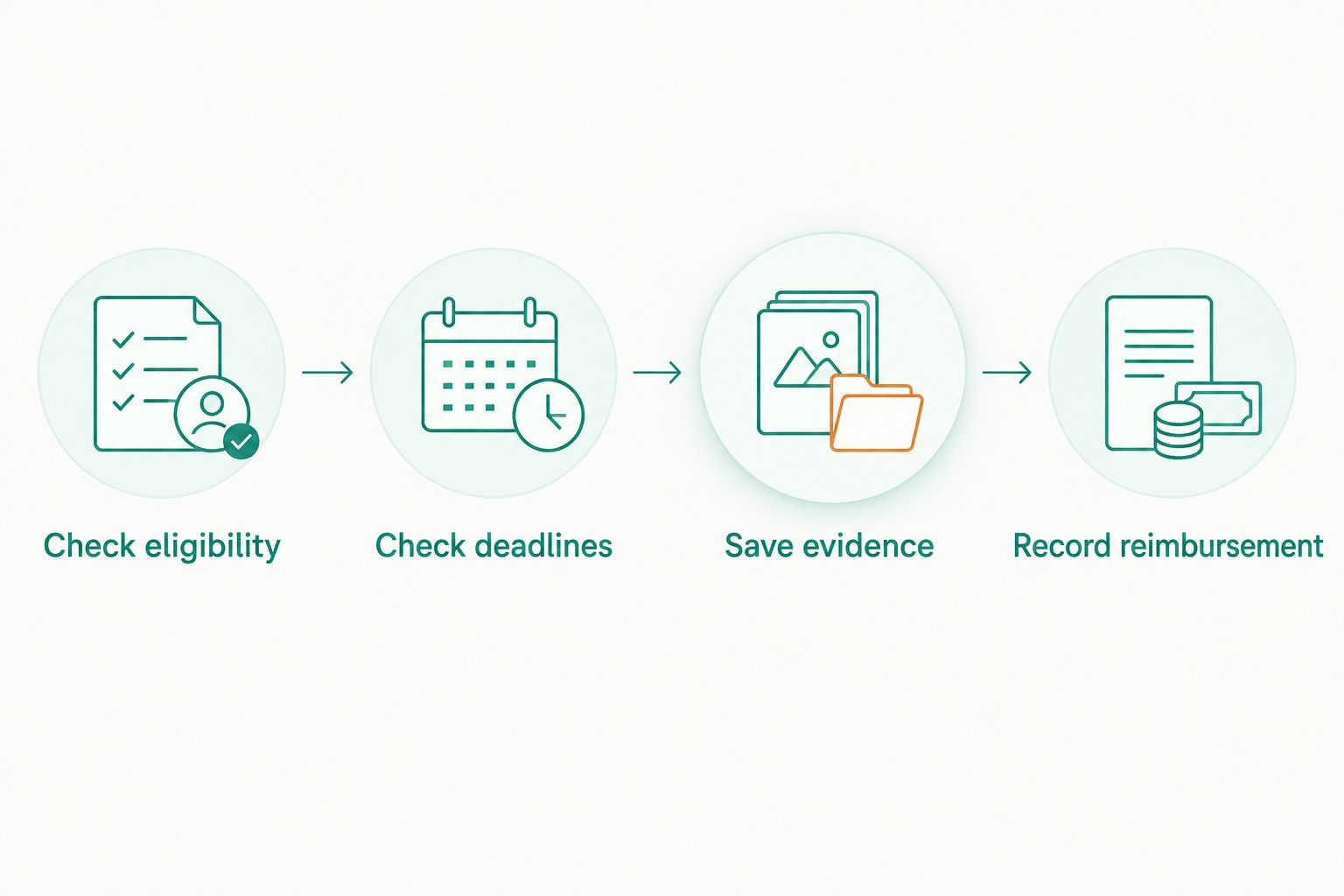
Check eligibility, then keep a usable receipt
Use this sequence for every 2026 FSA purchase. Reimbursable's FSA-eligible items directory is a starting point for research, not a replacement for your plan administrator's claim requirements.
- Check eligibility: Confirm the exact item and whether supporting documentation is required. A doctor's letter does not automatically qualify a general-health expense.
- Check deadlines: Read your plan's spending deadline and its separate claim-submission deadline.
- Save evidence: Keep an itemized receipt showing what you bought, when you bought it, and what you paid.
- Record reimbursement: Mark the expense as submitted and reimbursed so you do not claim it again.
A payment-card approval is not a substitute for documentation. Keep the receipt even when an FSA card pays successfully, because the administrator can still request substantiation.
For dental expenses that need a separate eligibility check, read the guide to using an HSA for dental care. Dental treatment and cosmetic services do not receive identical tax treatment.
Keep FSA deadlines separate from HSA records
A health FSA generally operates over a 12-month plan year. Your employer can offer a carryover or a grace period of up to 2.5 months, subject to applicable rules; neither feature is automatic. A run-out period is time to submit claims, not extra time to incur expenses.
HSA rules differ. Eligible expenses must occur after your HSA was established, and there is no IRS deadline for reimbursing a qualifying expense later. Keep records proving eligibility and showing that the expense was not reimbursed elsewhere or taken as an itemized deduction.
For 2026 recordkeeping, Reimbursable offers unlimited free manual tracking. Spreadsheets, digital folders, paper receipts, and HSA-provider receipt tools are also legitimate alternatives. Use the method you will maintain consistently.
Premium adds AI receipt scanning, bank sync, and email forwarding to reduce receipt administration. Automation is optional; it is not a requirement for tax-free reimbursement.
How these items were ranked
The ranking prioritizes clear medical purpose, an existing need, usable documentation, and limited waste. It does not rank named products or claim that one manufacturer performs better than another.
First-aid supplies lead as a straightforward restocking category. More specialized equipment appears later because its usefulness depends on your circumstances, not because it is less eligible.
Which FSA-eligible items should you choose?
Default to replacing qualifying supplies you already use. Check your medicine cabinet, menstrual supplies, contact lens routine, and sunscreen before considering new equipment.
Reimbursable is best for HSA/FSA holders who want an eligibility directory and a place to track receipts. Keep the shopping decision separate from the recordkeeping decision: a useful app cannot make an unnecessary purchase useful or turn an ineligible expense into an eligible one.
FAQ
What's the best FSA-eligible item to buy in 2026?
The best FSA-eligible purchase is a qualifying item you already need, such as replacement first-aid supplies or your usual allergy medicine. Check the exact item, your remaining balance, and your plan's deadlines before buying.
Can I buy over-the-counter medicine with my FSA without a prescription?
Yes, over-the-counter medicines qualify for health FSA reimbursement without a prescription under federal rules. Keep an itemized receipt and follow your administrator's substantiation requirements.
Is sunscreen FSA eligible?
Qualifying broad-spectrum sunscreen with SPF 15 or higher is FSA eligible. Verify the exact product, especially if it combines sun protection with cosmetics; the American Academy of Dermatology recommends broad-spectrum, water-resistant SPF 30 or higher for sun protection.
Are tampons, pads, and menstrual cups FSA eligible?
Yes, qualifying menstrual care products, including tampons, pads, and menstrual cups, are eligible under federal health FSA rules. Related personal-care products do not automatically share that eligibility.
Does my FSA money expire at the end of 2026?
Your plan determines the spending deadline and whether a carryover or grace period applies. Ask your administrator for the deadline to incur expenses and the separate deadline to submit claims.
Can I reimburse one receipt from both my HSA and FSA?
No, you cannot reimburse the same expense from both an HSA and an FSA. Track which account paid each expense and retain the supporting receipt.
Do I need a receipt-tracking app for tax-free reimbursement?
No, an app is optional. Itemized receipts and adequate records can be maintained with paper files, digital folders, spreadsheets, or an appropriate account-provider tool.
One last thing
Photograph a fading receipt while it is still readable, not when you need to submit a claim. Keep the itemized image with the reimbursement status; a bank transaction alone does not explain what you bought.
Not tax advice. Always consult your tax advisor.