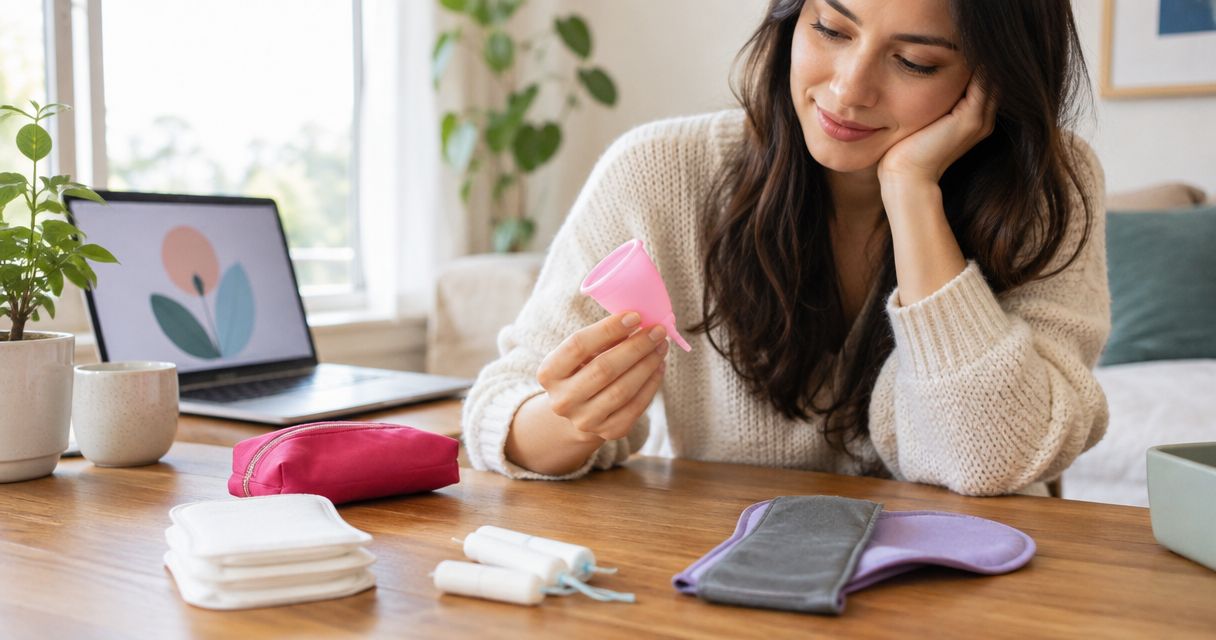
Best overall: menstrual pads. Best for internal protection: tampons. Best reusable option: menstrual cups. The best FSA eligible menstrual products in 2026 are products you will actually use, with clear eligibility and receipts you can keep—not a cart full of loosely defined wellness items.
- The best FSA eligible menstrual products include pads, tampons, menstrual cups, liners, and underwear designed for menstrual protection.
- Choose products by comfort and intended use; menstrual-product eligibility does not make every intimate-care product eligible.
- Reimbursable is best for HSA receipt tracking when you want eligibility lookup and expense records together.
- FSA spending deadlines differ from HSA rules; save itemized receipts and never reimburse the same expense twice.
Reimbursable combines a free directory of 890+ HSA/FSA-eligible items with receipt tracking. Use eligibility lookup to narrow your choices, then preserve the documentation for the actual purchase.
Why this matters
Menstrual care products qualify for HSA and health FSA reimbursement without a prescription under IRS rules. That does not extend automatically to every product marketed for women's health, intimate hygiene, or postpartum comfort.
Eligibility follows the product's medical purpose, not the aisle where you find it. A menstrual pad and a scented cleansing wash can appear together on a receipt while receiving different tax treatment.
For HSA holders paying out of pocket, the task is straightforward: buy eligible products, retain evidence, and record whether you have reimbursed yourself. For FSA holders, the same documentation matters, but plan deadlines also control when expenses must occur and claims must be filed.
What makes the best FSA eligible menstrual products?
These criteria guide the 2026 ranking:
- Clear eligibility: Choose products intended for menstrual protection or another recognized medical purpose.
- Personal fit: Match external protection, internal protection, or reusable protection to your preferences.
- Practical care: Consider changing, washing, drying, and storage requirements before choosing reusable products.
- Safety instructions: Follow the product label rather than treating absorbency as permission for longer wear.
- Useful documentation: Keep an itemized receipt identifying the product, purchase date, and amount paid.
- Distinct purpose: Separate period protection from pain treatment, pregnancy testing, and general hygiene.
No named commercial products were supplied for this comparison. The ranking therefore compares 7 product categories, not unverified brand specifications or claims about individual models.
Best options at a glance
| Rank and item | Best for | Standout benefit | Key limitation |
|---|---|---|---|
| 1. Menstrual pads | External protection without insertion | Straightforward use | Bulk and skin contact can affect comfort |
| 2. Tampons | Internal protection | No external absorbent pad | Require insertion and careful wear-time management |
| 3. Menstrual cups | Reusable internal protection | Collect rather than absorb menstrual fluid | Fit, insertion, and cleaning take practice |
| 4. Menstrual underwear | Reusable external protection | Protection built into underwear | Requires laundering; intended use must be clear |
| 5. Menstrual liners | Light-flow protection and backup | Less bulk than a full pad | Not a substitute for heavier-flow protection |
| 6. OTC pain medicines | Treating menstrual pain | Address symptoms rather than flow | Drug warnings and interactions matter |
| 7. Pregnancy tests | Checking for pregnancy | A separate eligible women's health purchase | Do not provide menstrual protection or diagnose pain |
1. Menstrual pads: best for straightforward external protection
Menstrual pads absorb flow outside the body and do not require insertion. They are the default recommendation if you want a simple starting point, including when you are deciding which menstrual products feel comfortable.
Menstrual pads pros:
- Do not require internal placement.
- Offer different shapes and absorbencies.
- Make it easy to inspect whether protection needs changing.
Menstrual pads cons:
- Adhesive, surface materials, or prolonged moisture can irritate skin.
- Bulk and movement can affect comfort.
Best for: External protection without an insertion routine. Choose absorbency and fit based on your needs, not the tax treatment.
Verdict: Buy menstrual pads if you want the simplest external option.
2. Tampons: best for internal protection without a collection cup
Tampons absorb menstrual flow internally. Choose them if you prefer internal protection and are comfortable following insertion and removal instructions.
Tampons pros:
- Avoid an external absorbent pad.
- Come in different absorbencies.
- Provide an alternative when external protection feels uncomfortable.
Tampons cons:
- Require insertion and consistent removal.
- Carry a toxic shock syndrome warning.
Best for: People who prefer absorbent internal protection. The FDA advises using the lowest absorbency needed and never wearing a single tampon for more than 8 hours; follow the package instructions and change sooner as directed.
Verdict: Buy tampons if internal protection fits your routine; skip them if you cannot follow wear-time instructions.
3. Menstrual cups: best for reusable internal protection
Menstrual cups collect menstrual fluid rather than absorbing it. Their usefulness depends on fit, comfort, and whether you can manage emptying and cleaning as instructed.
Menstrual cups pros:
- Provide a reusable menstrual-protection option.
- Collect fluid rather than relying on absorbent material.
- Avoid needing a new disposable product for every change.
Menstrual cups cons:
- Insertion, positioning, and removal take practice.
- Cleaning and access to suitable facilities require planning.
Best for: People who want reusable internal protection and accept a learning period. Check the specific product's care instructions rather than assuming all cups have the same wear limits.
Verdict: Buy a menstrual cup if you want reusable internal protection and can manage its care routine.
4. Menstrual underwear: best for reusable external protection
Underwear designed for menstrual protection combines absorbent protection with the garment itself. For eligibility, the menstrual purpose matters: ordinary underwear does not become a medical expense because you wear it during your period.
Menstrual underwear pros:
- Does not require insertion.
- Provides a reusable alternative to disposable external protection.
- Can serve as primary protection or backup when used as directed.
Menstrual underwear cons:
- Washing and drying require planning.
- Protection and care requirements differ by product.
Best for: People who prefer reusable external protection. Keep product documentation that identifies it as menstrual underwear, especially if the receipt uses a vague description.
Verdict: Buy menstrual underwear when its stated purpose is menstrual protection; skip generic underwear as an FSA claim.
5. Menstrual liners: best for light flow and backup
Menstrual liners offer lighter external protection than full pads. Their strongest role is light menstrual flow or backup—not replacing a product suited to heavier bleeding.
Menstrual liners pros:
- Provide a less bulky external option.
- Support backup protection alongside an internal product.
- Are easy to carry as a spare.
Menstrual liners cons:
- Provide limited protection for heavier flow.
- Adhesives or fragrances can affect comfort.
Best for: Light-flow menstrual protection. Choose the product for that purpose rather than assuming every daily freshness product qualifies.
Verdict: Buy menstrual liners for light flow or backup; skip them as your only heavier-flow protection.
6. OTC pain medicines: best for treating menstrual cramps
Over-the-counter pain medicines, such as ibuprofen or acetaminophen, are eligible medical expenses without a prescription. They treat symptoms; they do not replace menstrual protection or an evaluation of unexplained pain.
OTC pain medicines pros:
- Address pain rather than menstrual flow.
- Qualify without a prescription under HSA/FSA rules.
- Have labeled instructions and warnings to guide appropriate use.
OTC pain medicines cons:
- Drug interactions and medical conditions can limit appropriate choices.
- Different active ingredients are not interchangeable for every person.
Best for: Menstrual pain when the medicine is appropriate for you. Read the active ingredients to avoid accidentally taking overlapping medicines, and ask a pharmacist or clinician when unsure.
Verdict: Buy an appropriate OTC pain medicine for symptoms; skip choosing a drug solely because it is eligible.
7. Pregnancy tests: best for checking a possible pregnancy
Pregnancy test kits are eligible medical expenses under IRS guidance. They belong in a women's health comparison, but they answer a different question from pads, tampons, or pain medicines.
Pregnancy tests pros:
- Have a clear testing purpose.
- Allow testing at home according to the instructions.
- Are specifically recognized in IRS Publication 502.
Pregnancy tests cons:
- Testing too early can produce a negative result despite pregnancy.
- A result does not explain every cause of missed periods, bleeding, or pain.
Best for: Checking for pregnancy according to the test's timing instructions. Contact a clinician about symptoms or uncertainty rather than treating a home result as a complete assessment.
Verdict: Buy a pregnancy test when pregnancy is the question; skip it as a substitute for evaluating concerning symptoms.
Postpartum care needs a separate eligibility check
After birth, menstrual shopping and recovery shopping can overlap, but they are not identical. A basket of postpartum recovery products can mix medical supplies, medicines, and general personal-care items; each needs its own eligibility decision.
For example, compare a pad intended for bleeding protection with a cleansing product marketed for freshness. The first has a defined protective purpose; the second does not qualify merely because the packaging mentions recovery.
Do not use the postpartum label as a blanket reimbursement rule. Ask your clinician about suitable care after delivery, then assess each purchase under the applicable medical-expense rules. A doctor's letter does not automatically convert a general-health expense into an eligible one.
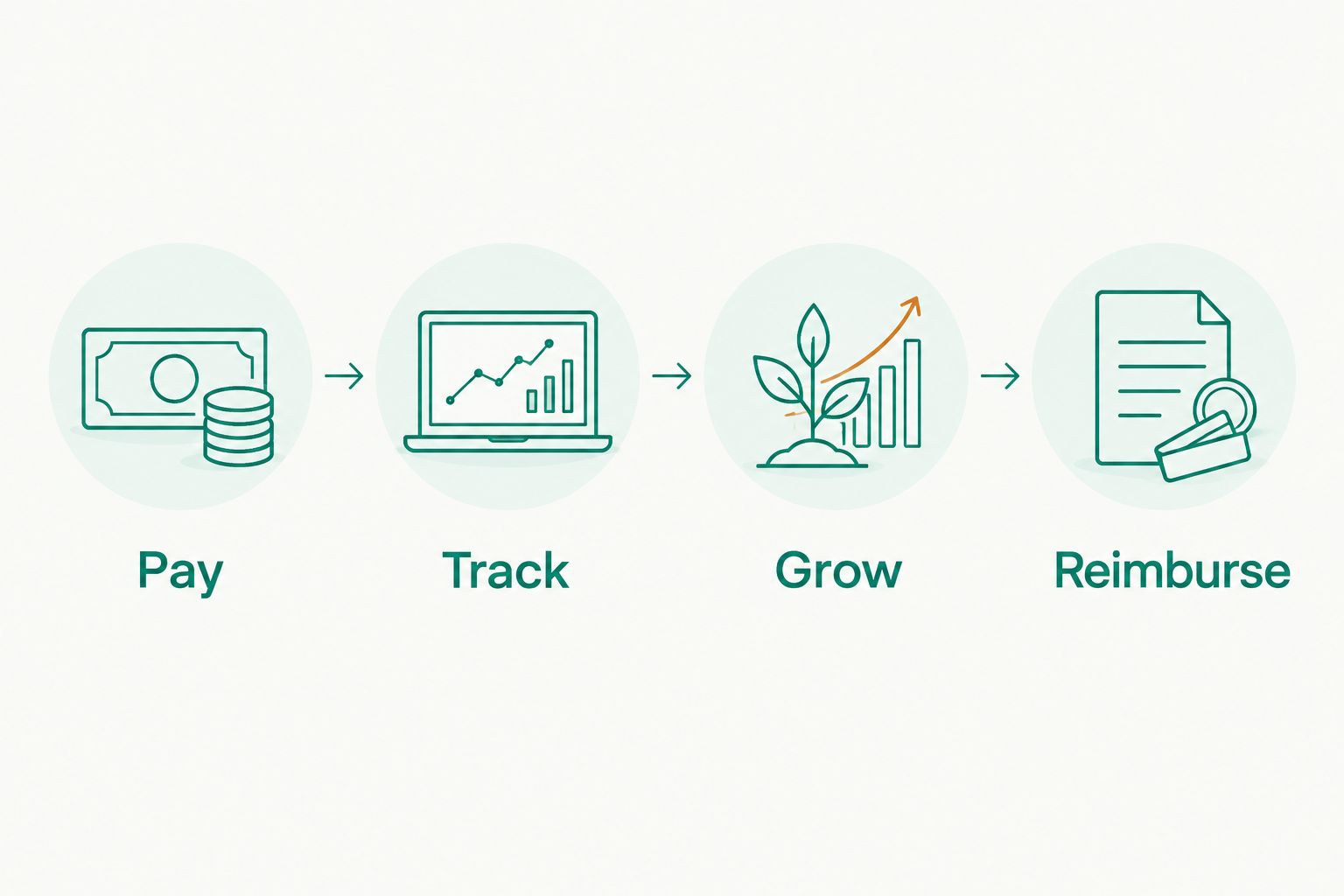
Pay, track, grow, reimburse: a practical receipt routine
Use these 4 steps to keep a 2026 purchase understandable years later. The documentation should explain the expense without relying on your memory.
Pay
Buy the eligible items you need. If you pay out of pocket, keep evidence of the amount paid and separate eligible products from cosmetics, toiletries, or other nonmedical purchases.
Track
Save the itemized receipt, identify each eligible line, and record the purchase date and reimbursement status. The guide to separating qualified expenses on mixed bills explains why a store total alone is not enough.
Grow
Leaving money in an HSA is optional, not a requirement for eligibility. If you invest HSA funds, investments can lose value; delayed reimbursement does not guarantee a financial benefit.
Reimburse
Before taking an HSA distribution, confirm that the expense occurred after your HSA was established and has not been reimbursed elsewhere or deducted. Mark the amount reimbursed so the same receipt cannot accidentally support another claim.
Choose a tracking method you will maintain
Reimbursable offers unlimited free manual tracking. Premium adds receipt scanning, bank sync, and email forwarding; consider those features when manual receipt entry is the problem, not because automation is required for tax-free reimbursement.
| Method | Best for | Benefit | Limitation |
|---|---|---|---|
| Reimbursable manual tracking | Keeping eligibility lookup and expense tracking together | Unlimited free manual tracking | You enter records manually |
| Spreadsheet and digital folders | A self-managed system | You control the fields and organization | You maintain links between receipts and entries |
| Paper receipts and a ledger | An offline routine | No app is required | Paper needs protection against loss and fading |
| HSA-provider receipt tools | Keeping records with your account provider | Uses your provider's existing tools | Features depend on the provider |
Best for less receipt admin: Reimbursable Premium, when scanning, bank sync, or forwarding solves a recurring task. Best for a simple existing routine: Keep your spreadsheet, folders, paper system, or provider tool if it already preserves complete records.
HSA timing is not FSA timing
For 2026 planning, distinguish the purchase deadline from the claim-submission deadline. A health FSA generally covers expenses incurred during its coverage period; a plan's carryover or grace period, if offered, and its claim-submission rules need separate attention.
An FSA run-out period gives you time to submit claims, not automatically more time to incur expenses. Confirm the dates in your plan documents rather than borrowing an HSA rule.
HSA reimbursement has no IRS time limit when the expense qualifies, occurred after the HSA was established, and remains unreimbursed. Keep records proving that the expense was not reimbursed elsewhere or taken as an itemized deduction.
How the categories were ranked
This 2026 ranking prioritizes clear eligibility, distinct uses, practical care, and documentation—not claimed product performance. Pads are the default for straightforward external protection; reusable choices rank by the different routines they serve.
The governing references are IRS Publication 969, covering HSA/FSA rules and menstrual care products, and IRS Publication 502, covering medical expenses including pregnancy tests. Tampon safety guidance comes from the FDA's consumer guidance on using tampons safely. These are category-level recommendations, not hands-on tests of commercial products.
Which products should you choose?
Start with menstrual pads if you want straightforward external protection. Choose tampons for absorbent internal protection, a cup for reusable internal protection, or menstrual underwear for reusable external protection.
Add liners, pain medicine, or pregnancy tests only when they serve a separate need. Eligibility is a reason to document a purchase correctly—not a reason to buy it.
FAQ
What are the best FSA eligible menstrual products?
Menstrual pads are the default choice for straightforward external protection. Tampons, menstrual cups, menstrual underwear, and liners serve different preferences; choose by intended use, comfort, and care requirements.
Do I need a prescription to buy tampons or pads with my FSA?
No prescription is required for eligible menstrual care products under HSA/FSA rules. Keep an itemized receipt, and follow your FSA administrator's claim requirements.
Is period underwear FSA eligible?
Underwear designed for menstrual protection can qualify as a menstrual care product. Ordinary underwear does not qualify merely because you wear it during your period; retain documentation identifying the product's intended purpose.
Are all feminine hygiene and postpartum products eligible?
No, marketing a product for feminine hygiene or postpartum recovery does not establish eligibility. Evaluate the specific medical purpose, and do not assume a doctor's letter automatically qualifies general-health purchases.
Can I save menstrual-product receipts for HSA reimbursement years later?
Yes, eligible expenses incurred after your HSA was established can be reimbursed later without an IRS reimbursement deadline. Keep records showing the expense was not reimbursed elsewhere or taken as an itemized deduction.
Can I reimburse the same purchase from my FSA and HSA?
No, you cannot reimburse the same expense twice. Record which account paid or reimbursed each eligible amount, including any partial reimbursement.
Do I need a paid app to keep HSA receipts?
No, a paid app is not required for tax-free HSA reimbursement. Spreadsheets, digital folders, paper records, provider tools, and free manual tracking are legitimate choices when they preserve adequate documentation.
One last thing
Save the product description before you forget what the receipt abbreviation means. A clearly identified menstrual product is easier to substantiate than a vague store entry years later. For your 2026 purchases, add that detail while the packaging and receipt are still together.
Not tax advice. Consult your tax advisor about your circumstances and your plan administrator about FSA deadlines and claim requirements.