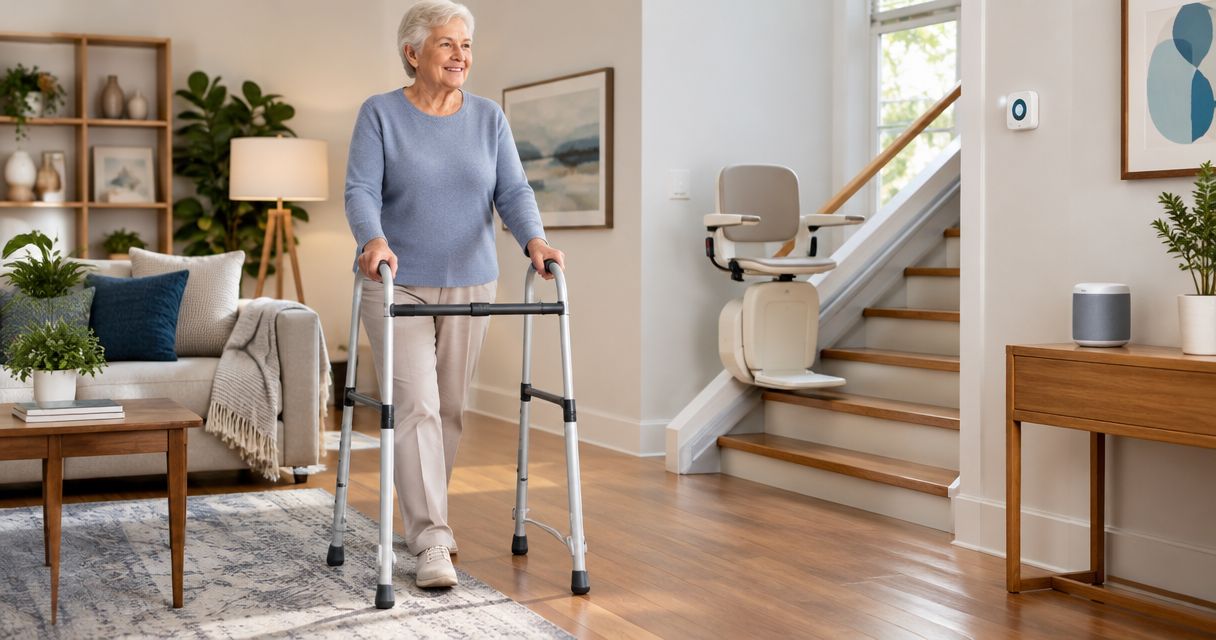
Best overall for walking support: a walker. Best for light balance support: a cane. Best home-safety choice for seated bathing: a shower chair. The best FSA eligible mobility aids address a specific medical need; choose the device with your clinician, then confirm your plan’s documentation requirements before buying.
- The best FSA eligible mobility aids match your medical need, not a retailer’s eligibility badge.
- Walkers, canes, crutches, and wheelchairs serve different mobility needs; fit and safe use come first.
- Shower chairs and grab bars address bathroom safety, but medical purpose and documentation still matter.
- Reimbursable helps you look up HSA/FSA eligibility and track receipts; FSA deadlines still follow your plan.
Reimbursable offers an eligibility directory and receipt tracking. Use the directory to start your research, not as a substitute for your FSA administrator’s review of a particular expense.
Why this matters
A mobility aid can be medically appropriate without being the right device for your home or your reimbursement claim. A walker that catches on a doorway, for example, solves a different problem from a shower chair that lets you bathe seated.
For 2026 purchases, separate three decisions: what helps you move safely, whether the expense qualifies as medical care, and what your account requires as proof. IRS Publication 502 explains medical-expense categories; IRS Publication 969 explains HSA and health FSA rules.
An eligibility label does not establish medical necessity, proper fit, or reimbursement approval. Ask your clinician about the device and your administrator about the claim.
What makes the best FSA eligible mobility aids?
Use these criteria before comparing features:
- Medical purpose: The aid addresses an injury, illness, disability, or other qualifying medical need rather than general convenience.
- Correct support: The device matches your balance, strength, and weight-bearing instructions.
- Safe fit: Handles, seat height, and supports suit the user; follow the manufacturer’s instructions and clinical guidance.
- Home compatibility: Check doorways, turning space, bathroom layout, and the surfaces where you will use it.
- Documentation: Keep an itemized receipt and any medical explanation your administrator requires.
- Manageable upkeep: Consider cleaning, inspecting tips or brakes, storage, and help with installation.
Mobility and home safety aids at a glance
These are device categories, not tested product rankings. The order starts with walking support, moves to alternatives when walking is limited, and ends with bathroom-specific aids.
| Item | Best for | Standout function | Key limitation |
|---|---|---|---|
| Walker | Walking with broader support | Provides a frame for support while moving | Requires space and an appropriate walking technique |
| Cane | Light balance support | Adds a handheld point of support | Does not replace a walker when greater support is needed |
| Crutches | Prescribed weight-bearing restrictions | Help manage loading through an affected leg | Require strength, coordination, and instruction |
| Wheelchair | Seated mobility when walking is limited | Provides mobility without continuous walking | Fit, transfers, and access need planning |
| Shower chair | Bathing while seated | Provides seating inside the bathing area | Does not solve every transfer or slipping risk |
| Installed grab bars | Fixed support at bathroom transitions | Provides an anchored handhold | Placement and installation determine usefulness |
1. Walker: best mobility aid for broader walking support
A walker provides a supporting frame during walking. A standard walker and a wheeled walker require different techniques, so choose the type with a physical therapist or another qualified clinician rather than assuming wheels make every task easier.
Best for: Someone who needs more walking support than a cane provides.
Walker pros:
- Provides support through both hands.
- Comes in different configurations for different walking needs.
- Can support movement between rooms when the layout permits.
Walker cons:
- Tight doorways and clutter complicate use.
- Lifting, steering, or braking requirements depend on the design.
Keep the receipt identifying the actual device, not just a generic store transaction. Verdict: Buy when a clinician recommends the walker type and confirms the fit.
2. Cane: best mobility aid for light balance support
A cane adds a handheld point of support while walking. It is not a smaller substitute for every walker: the amount of support you need determines whether a cane is appropriate.
Best for: Someone whose clinician recommends limited assistance with balance or walking.
Cane pros:
- Takes up less space than a walker.
- Is easier to carry between locations than larger mobility equipment.
- Offers different handle and base designs.
Cane cons:
- Provides less support than a walker.
- Incorrect height or technique can undermine safe use.
Ask which hand to use and how to coordinate the cane with your steps. Verdict: Buy for an assessed light-support need; skip when greater support is prescribed.
3. Crutches: best mobility aid for weight-bearing restrictions
Crutches help you move while following instructions about loading an injured or recovering leg. Underarm and forearm designs are not interchangeable choices for every person; fitting and training matter.
Best for: Someone following a clinician’s specific weight-bearing plan.
Crutches pros:
- Support movement during prescribed recovery.
- Offer different designs for different users.
- Can be used indoors or outdoors when conditions permit.
Crutches cons:
- Require upper-body effort and coordination.
- Stairs, wet surfaces, and carrying objects create challenges.
Save the purchase record with the treatment instructions relevant to the expense. Verdict: Buy the prescribed type after instruction; skip self-selecting crutches for an unexplained walking problem.
4. Wheelchair: best mobility aid for seated mobility
A wheelchair provides seated mobility when walking is limited or inappropriate. Manual and powered designs introduce different requirements for propulsion, transport, charging, and assistance; assess those needs before choosing a model.
Best for: Someone who needs seated mobility rather than continuous walking.
Wheelchair pros:
- Supports movement without continuous walking.
- Offers configurations for different mobility needs.
- Can support access beyond the distance a person can walk.
Wheelchair cons:
- Seat fit and positioning require attention.
- Doorways, transport, and transfers need advance planning.
IRS Publication 502 specifically discusses wheelchairs used for relief of sickness or disability. That does not make every accessory automatically eligible. Verdict: Buy after a mobility assessment and an access check.
5. Shower chair: best home safety aid for seated bathing
A shower chair lets you sit during bathing. Its usefulness depends on the bathing space, the user’s transfer ability, and the chair’s fit; a shower chair and a transfer bench serve different entry arrangements.
Best for: Someone whose medical needs make standing throughout bathing difficult or unsafe.
Shower chair pros:
- Allows bathing while seated.
- Provides a defined seat within the bathing area.
- Offers designs suited to different bathroom layouts.
Shower chair cons:
- Does not eliminate slipping or transfer risks.
- Requires checking stability, dimensions, and manufacturer instructions.
For a 2026 claim, document the medical purpose and ask whether your administrator needs additional support. Verdict: Buy when seated bathing is appropriate and the chair fits the space.
6. Installed grab bars: best home safety aid for fixed handholds
Installed grab bars provide fixed support near a toilet, shower, or tub. A towel rail is not a substitute for a support bar, and choosing a medically appropriate location matters as much as choosing the hardware.
Best for: Someone who needs an anchored handhold during bathroom movements.
Grab bar pros:
- Places support at a specific transition point.
- Avoids carrying a separate support device for that movement.
- Can address a documented accessibility need.
Grab bar cons:
- Requires suitable anchoring and correct installation.
- Poor placement can make the bar ineffective for the user.
IRS Publication 502 discusses certain home improvements made primarily for medical care, including bathroom support bars. Keep the installation invoice and medical-purpose records. Verdict: Buy with a placement and installation plan; skip decorative hardware as a substitute.
How these options were ranked
The ranking prioritizes the task each aid performs, then fit, home compatibility, and documentation. It does not compare named products, measured performance, or user reviews.
The default is a clinical assessment, not the first item in the table. A walker leads the walking-support category, but it does not replace crutches for prescribed unloading or a wheelchair for seated mobility.
Check eligibility before paying
For 2026, use IRS Publication 502 to understand medical care and Publication 969 to distinguish the account rules. Ask your FSA administrator what evidence it requires for the specific device and circumstances.
An ordinary household purchase does not become medical care merely because it feels safer or more comfortable. A doctor’s letter does not automatically qualify a general-health expense; the underlying medical-expense rules still apply.
Apply that distinction when comparing chairs that help you stand: reclining comfort and assistance with standing are different functions, and neither wording alone establishes FSA eligibility. Confirm the actual mechanism, your medical need, and the administrator’s requirements before treating furniture as a reimbursable aid.
For permanent home changes, keep the project scope separate from unrelated remodeling. Publication 502 explains how medical-purpose improvements and any increase in property value affect the medical-expense calculation; do not assume an entire renovation qualifies.
Pay, track, and reimburse without losing the evidence
Build the record while the purchase is fresh. Reimbursable is best for HSA/FSA users who want eligibility lookup and receipt tracking in one place.
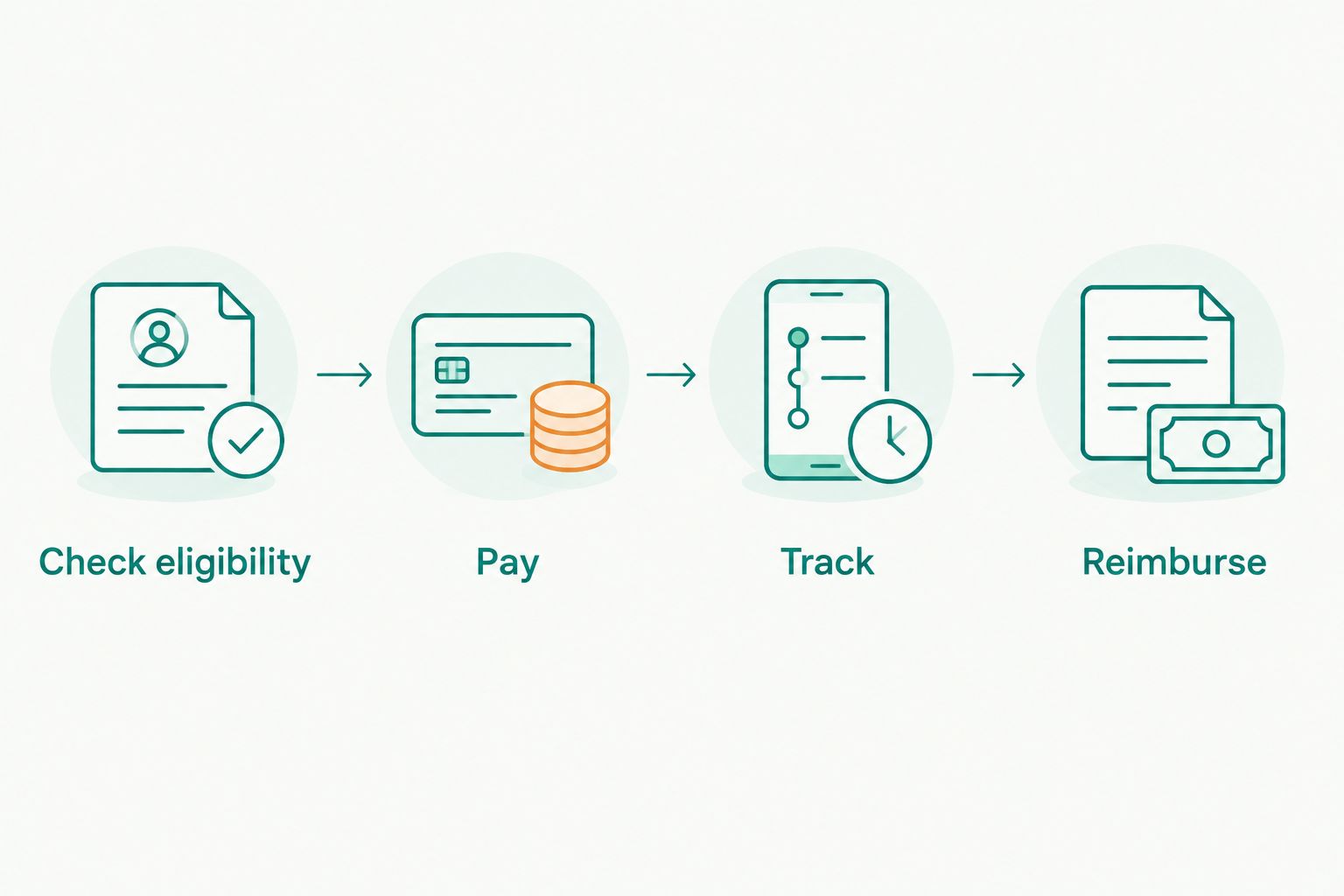
- Check eligibility: Confirm the medical purpose and the documentation your administrator requires.
- Pay: Keep the itemized receipt, including the device description, purchase date, and amount.
- Track: Save supporting records with the expense and record any insurance or other reimbursement.
- Reimburse: Submit only the eligible, unreimbursed amount under the rules for the account you use.
If your receipt includes household items alongside a mobility aid, separate the qualifying amount. The guide to separating qualified medical expenses on mixed bills explains the recordkeeping task in more detail.
Spreadsheets, digital folders, paper receipts, and HSA-provider receipt tools are legitimate alternatives. Their limitation is the manual work of matching documents, updating reimbursement status, and keeping backups; choose the method you will maintain.
Reimbursable offers unlimited free manual tracking. Premium adds AI receipt scanning, bank sync, and email forwarding to reduce receipt administration; automation is optional, not a requirement for tax-free reimbursement.
FSA deadlines are not HSA reimbursement rules
For a 2026 FSA purchase, check both the expense-incurrence deadline and the claim-submission deadline. A run-out period gives you time to submit claims; it does not automatically extend the period for incurring expenses. Carryovers and grace periods depend on your plan.
An HSA works differently. There is no IRS deadline for reimbursing a qualified expense incurred after the HSA was established, provided you retain the required records and meet the other rules.
You cannot reimburse the same expense through both an FSA and an HSA. For HSA reimbursement, the expense also cannot have been reimbursed elsewhere or taken as an itemized deduction. Track partial reimbursements so the remaining balance stays clear.
Which mobility aid should you choose?
Choose a walker for broader walking support, a cane for an assessed light-support need, or crutches for prescribed weight-bearing restrictions. Choose a wheelchair when seated mobility is the appropriate solution.
For bathroom tasks, start with the exact movement that causes difficulty. A shower chair supports seated bathing; installed grab bars provide fixed handholds. Neither replaces a transfer assessment when getting into or out of the bathing area is the problem.
Confirm the device first, confirm the claim requirements second, and preserve the evidence immediately. Spending an FSA balance is not a reason to buy an aid that does not fit your needs.
FAQ
What are the best FSA eligible mobility aids?
The best FSA eligible mobility aids match your medical need: walkers for broader walking support, canes for light support, crutches for prescribed weight-bearing restrictions, and wheelchairs for seated mobility. Shower chairs and installed grab bars address specific bathroom tasks. Confirm fit and claim requirements before buying.
Are walkers and wheelchairs FSA eligible?
Walkers and wheelchairs used for qualifying medical care can be FSA eligible. Keep an itemized receipt and provide any supporting documentation your administrator requires; personal convenience alone does not establish eligibility.
Can I use my FSA for a shower chair or grab bars?
A shower chair or installed grab bars can qualify when the expense meets the medical-care rules. Document the medical purpose, and ask your administrator whether it needs additional evidence or installation records.
Does a doctor's letter make any home safety product eligible?
No, a doctor's letter does not automatically make a general-health or household expense eligible. The purchase must still satisfy the medical-expense rules, and your administrator can require supporting documentation.
Can I reimburse the same mobility aid from an FSA and an HSA?
No, you cannot reimburse the same expense twice. If one account reimburses part of an eligible expense, retain records showing that payment and any remaining unreimbursed amount before considering another claim.
Can I save a mobility aid receipt for HSA reimbursement later?
Yes, a qualified expense incurred after your HSA was established can be reimbursed later without an IRS reimbursement deadline. Keep proof that it was not reimbursed elsewhere or taken as an itemized deduction; this rule does not extend FSA deadlines.
Do I need a receipt-tracking app to claim reimbursement?
No, an app is not required for tax-free reimbursement. Paper records, folders, spreadsheets, and account-provider tools are legitimate choices if they preserve the evidence you need and clearly track reimbursement status.
One last thing
Photograph the item description on packaging before discarding it, especially when the receipt uses an unclear abbreviation. That extra record connects the transaction to the actual device; it does not replace the itemized receipt or medical documentation.
For your 2026 records, keep a separate reimbursement-status field rather than treating a saved receipt as an unpaid claim. A receipt proves a purchase, not that the expense remains available for reimbursement.
Not tax advice; consult your tax advisor.