
Best overall for airborne particle filtration: a room-sized HEPA air purifier, but HSA eligibility is conditional. Best for straightforward allergy-medicine reimbursement: an OTC antihistamine. Best for a simple nasal-rinsing routine: a saline rinse kit. The best HSA eligible air purifiers are not a fixed list of approved models: medical purpose and documentation determine whether your expense qualifies.
- The best HSA eligible air purifiers require a qualifying medical purpose; a HEPA label alone does not establish eligibility.
- OTC allergy medicines generally have clearer HSA eligibility than household air-cleaning equipment.
- Reimbursable helps you check eligibility and track receipts; it does not approve expenses for the IRS.
- Save medical-purpose documentation, itemized receipts, and reimbursement records before claiming an air purifier expense.
Use Reimbursable to look up HSA/FSA eligibility and track expenses, then apply the medical-expense rules to your own purchase. This guide ranks product categories by their distinct uses, not unverified claims about individual models.
Why this matters
An air purifier sold for a cleaner, more comfortable home is not automatically a qualified medical expense. Equipment purchased primarily to treat a medical condition requires a different analysis from an OTC allergy medicine.
For your 2026 purchases, separate two questions: Does this product address your problem, and does this particular expense qualify for HSA reimbursement? A retailer's eligibility badge answers neither question conclusively.
IRS Publication 502 explains the distinction between medical care and expenses that merely benefit general health. IRS Publication 969 provides HSA-specific rules, including the requirement that qualified expenses occur after your HSA was established. Use those sources together rather than treating a product listing as tax guidance.
What makes the best HSA eligible air purifiers and allergy products
Choose the treatment category first. Then compare products within that category using these criteria:
- Medical purpose: Identify the condition being treated, not just a preference for cleaner air.
- Exposure match: Match particle filtration, medication, or nasal rinsing to the problem you need to address.
- Room fit: For purifiers, compare the manufacturer's recommended room size and clean air delivery rate, or CADR.
- Practical upkeep: Check filter replacement requirements, cleaning instructions, and noise information before choosing equipment.
- Eligibility clarity: Distinguish generally qualifying medicines from household products that need a medical-purpose analysis.
- Record quality: Choose a purchase process that gives you an itemized receipt and identifiable product information.
A stronger filter specification does not create stronger HSA eligibility. Technical performance and tax qualification are separate decisions.
Allergy relief options at a glance
| Rank and option | Best for | Standout function | Key limitation | HSA eligibility position |
|---|---|---|---|---|
| 1. Room-sized HEPA purifier | Filtering airborne particles in one room | Captures particles passing through its filter | Does not remove the source of an allergy trigger | Conditional on qualifying medical purpose |
| 2. OTC oral antihistamine | Medication-based allergy symptom relief | Treats allergy symptoms rather than room air | Side effects and suitability vary by medicine | OTC medicines generally qualify |
| 3. OTC corticosteroid nasal spray | Nasal allergy symptom management | Delivers medicine inside the nose | Correct technique and label directions matter | OTC medicines generally qualify |
| 4. Saline nasal rinse kit | Rinsing nasal passages | Washes nasal passages with saline solution | Requires safe water and careful cleaning | Medical-use supplies generally qualify |
| 5. OTC allergy eye drops | Allergy-related eye symptoms | Applies medicine directly to the eyes | Not every eye symptom is an allergy | OTC medicines generally qualify |
1. HEPA air purifier: best for airborne particle filtration
A portable HEPA purifier filters particles from air passing through the device. It belongs on your shortlist when your treatment plan includes reducing airborne particle exposure in a particular room—not simply making your home feel fresher.
Choose a device sized for the room where you will actually use it. Compare CADR, operating noise, filter maintenance, and whether the unit intentionally produces ozone; EPA guidance advises avoiding ozone-generating air cleaners in occupied spaces.
HEPA air purifier pros:
- Targets airborne particles rather than masking odors.
- Allows room-specific placement.
- Offers measurable specifications you can compare before purchasing.
HEPA air purifier cons:
- Does not fix moisture, remove settled dust, or eliminate an allergen source.
- Requires ongoing maintenance.
- Is not automatically HSA eligible, even with a doctor's letter.
Best for: A documented medical need involving airborne particles in a specific room.
Verdict: Hold until the medical purpose and supporting records are clear.
2. OTC oral antihistamine: best for medication-based symptom relief
An OTC oral antihistamine treats allergy symptoms rather than changing your environment. OTC medicines generally qualify for HSA reimbursement without a prescription, provided the expense otherwise meets HSA rules.
Choose the active ingredient with your clinician or pharmacist when other medicines, medical conditions, or drowsiness are concerns. A familiar brand name is not a substitute for reading the label.
OTC oral antihistamine pros:
- Has clearer HSA treatment than general household equipment.
- Does not require room sizing or filter maintenance.
- Provides an identifiable medicine purchase for your receipt records.
OTC oral antihistamine cons:
- Does not reduce environmental exposure.
- Side effects and interactions depend on the medicine.
Best for: Allergy symptoms for which an oral medicine is appropriate.
Verdict: Buy the appropriate medicine after checking its label and your treatment needs.
3. OTC corticosteroid nasal spray: best for nasal allergy management
An OTC corticosteroid nasal spray delivers medicine inside the nose to manage nasal allergy symptoms. It serves a different purpose from an air purifier and should not be ranked by filtration specifications.
For 2026 HSA recordkeeping, retain the itemized receipt showing the medicine purchased. Follow the product's directions rather than assuming every nasal spray has the same ingredients, instructions, or purpose.
OTC corticosteroid nasal spray pros:
- Targets nasal symptoms directly.
- Generally qualifies as an OTC medicine.
- Does not depend on household air-cleaning equipment.
OTC corticosteroid nasal spray cons:
- Technique and consistent use according to the label matter.
- Does not remove allergens from your surroundings.
Best for: Nasal allergy symptoms when a corticosteroid spray is appropriate.
Verdict: Buy for the treatment need, not because a product appears on an eligibility list.
4. Saline nasal rinse kit: best for a nasal-rinsing routine
A saline nasal rinse kit washes the nasal passages with saline solution. It is a medical-use option distinct from oral medicines, medicated sprays, and air filtration.
Water safety is essential. FDA guidance says to use distilled, sterile, or previously boiled and cooled water for nasal rinsing; follow the device's cleaning and preparation instructions as well.
Saline nasal rinse kit pros:
- Provides a non-drug nasal-rinsing option.
- Has a medical-use purpose that can be documented.
- Does not require changes to your home's ventilation.
Saline nasal rinse kit cons:
- Requires appropriate water and device cleaning.
- Does not replace treatment for symptoms needing medical evaluation.
Best for: People whose care routine includes saline nasal rinsing.
Verdict: Buy only if you will follow the water-safety and cleaning instructions.
5. OTC allergy eye drops: best for allergy-related eye symptoms
OTC allergy eye drops deliver medicine directly to the eyes. Choose the actual treatment category carefully: an allergy medicine is not interchangeable with every product marketed for eye comfort or redness.
Ask a clinician about eye pain, vision changes, or symptoms that do not fit your usual allergy pattern. HSA eligibility is not evidence that a medicine is appropriate for those symptoms.
OTC allergy eye drops pros:
- Target eye symptoms directly.
- Generally qualify when purchased as OTC medicine.
- Produce a straightforward itemized medication record.
OTC allergy eye drops cons:
- Do not treat airborne exposure or nasal symptoms.
- Ingredients and contact-lens instructions vary.
Best for: Allergy-related eye symptoms for which the selected medicine is appropriate.
Verdict: Buy the correct allergy medicine; skip unrelated products chosen only for an eligibility label.
How these options are ranked
This ranking separates environmental filtration from symptom treatment. The criteria are medical purpose, suitability, upkeep, eligibility clarity, and documentation—not an unsupported claim that one product treats every allergy problem.
The HEPA purifier leads for airborne particle filtration. Medicines rank by the symptoms they address, while saline rinsing occupies a separate non-drug slot. No device earns automatic eligibility from its position here.
When does an air purifier qualify for HSA reimbursement?
An air purifier must meet the medical-expense standard; a diagnosis or doctor's letter alone does not automatically qualify a general-health purchase. The purpose and circumstances of the expense matter.
Keep 3 records together: the itemized purchase receipt, documentation explaining the medical purpose, and the reimbursement history. Medical documentation should explain the condition being treated and the purifier's role in that treatment—not merely state that cleaner air is beneficial.
For your 2026 decision, distinguish a portable purifier from permanent home equipment or improvements. Different medical-expense rules can apply to improvements, including questions about increases in property value. Ask your tax advisor before treating a whole-house installation like an ordinary medical supply.
Also check these 2 dates: when your HSA was established and when the expense was incurred. The expense must occur after establishment. Paying an older bill from a newer account does not change when the expense occurred.
A doctor's recommendation supports the facts. It does not override the tax rules or turn every filter, replacement part, or related household purchase into a qualified expense.
Do not confuse filtration with moisture control
An air purifier filters air; a dehumidifier removes moisture. If your concern involves a damp basement, buying a purifier does not correct the moisture source, and running a dehumidifier does not make the underlying equipment automatically HSA eligible.
Comparing whole-house dehumidifiers for basements is a separate equipment decision from choosing a portable particle filter. Assess drainage, moisture sources, and the space involved before deciding which problem the equipment needs to solve.
Keep the tax analysis separate, too. Ordinary home maintenance does not become medical care simply because dampness affects your comfort. A medically motivated purchase still needs to satisfy the applicable medical-expense rules.
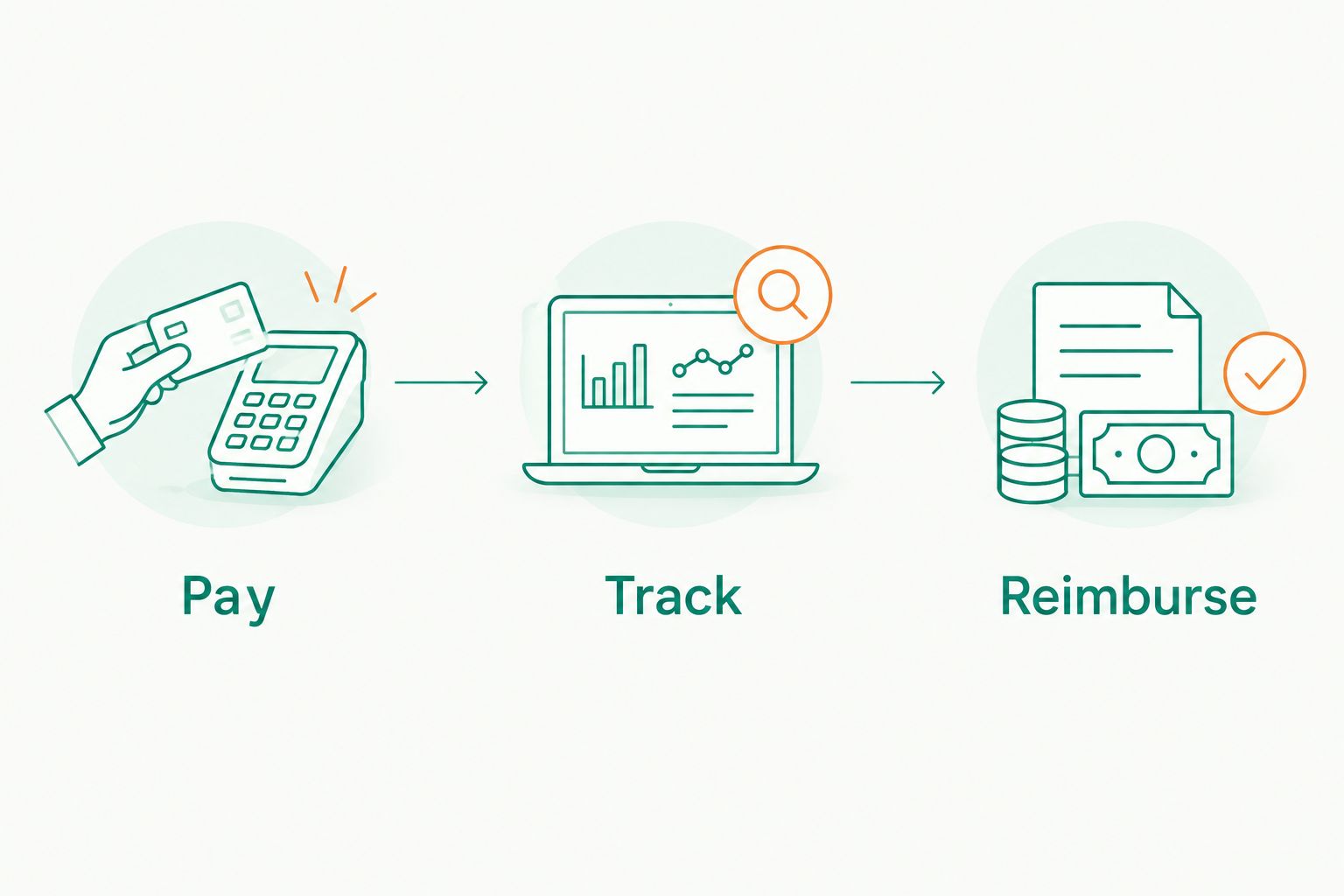
Pay, track, and reimburse without losing the evidence
For a 2026 purchase you intend to reimburse later, build the record while the details are fresh. A saved receipt proves a purchase; the complete file supports why the withdrawal qualifies.
Pay
Keep the itemized receipt, not just a card statement. If your basket includes groceries, household filters, and allergy medicine, identify the qualifying items rather than treating the entire transaction as medical spending.
Use this guide to separating HSA-qualified expenses on mixed bills when a receipt contains both medical and personal purchases.
Track
Record the patient, expense date, item, amount paid, and any insurance or other reimbursement. Attach medical-purpose documentation when the expense requires it.
Reimbursable offers unlimited free manual tracking; Premium adds AI receipt scanning, bank sync, and email forwarding to reduce receipt administration. Spreadsheets, folders, paper receipts, and HSA-provider receipt tools are legitimate alternatives. Choose the method you will maintain and back up.
Reimburse
Maintain 1 unreimbursed balance for each expense. If insurance pays part of a bill, or you reimburse only part from your HSA, update the balance instead of treating the original total as available again.
Do not also reimburse the same expense through an FSA, insurance, or another arrangement, and do not claim a deduction for the same reimbursed expense. Keep evidence connecting each HSA withdrawal to its expense.
Which allergy relief option should you choose?
Choose a room-sized HEPA purifier for a documented airborne-particle problem, not as the default way to spend HSA money. If your immediate need is symptom treatment, select the appropriate medicine or nasal-rinsing product with clinical guidance where needed.
Reimbursable is best for HSA holders who want eligibility lookup and receipt tracking in one place. It supports your records; it does not replace the medical-purpose analysis or your tax advisor's judgment.
For 2026 purchases, start with free manual tracking if that meets your needs. Consider automation only when scanning, bank sync, or email forwarding solves an actual receipt-administration problem.
FAQ
What's the best HSA eligible air purifier?
There is no universally HSA-approved air purifier model. Choose a room-sized purifier for your documented medical need, then confirm that the particular expense meets the medical-expense rules.
Does a doctor's letter make an air purifier HSA eligible?
No. A doctor's letter supports the medical purpose, but it does not automatically qualify an expense that is primarily for general health or household comfort.
Can I use my HSA for OTC allergy medicine without a prescription?
OTC medicines generally qualify for HSA reimbursement without a prescription. Keep an itemized receipt and make sure the expense meets the other HSA requirements, including timing and no duplicate reimbursement.
Are replacement air purifier filters automatically HSA eligible?
No. Assess replacement filters in connection with the qualifying medical use rather than assuming every household filter qualifies. Keep receipts and documentation supporting that use.
Can I reimburse an air purifier years after buying it?
There is no IRS deadline for reimbursing a qualified HSA expense incurred after the HSA was established. Retain records showing eligibility, payment, and that the expense was not reimbursed elsewhere or deducted.
Do HSA and FSA reimbursement deadlines work the same way?
No. HSAs do not have the same expense-incurrence and claim deadlines as FSAs. Follow your FSA plan's coverage period, submission deadlines, and any applicable grace-period or carryover provisions.
Do I need a paid app to claim tax-free HSA reimbursement?
No. A paid app is not required for tax-free HSA reimbursement. Paper files, spreadsheets, folders, and HSA-provider tools can support your records when you retain the necessary evidence.
One last thing
Before storing an air purifier receipt, write down why you bought the device and attach the supporting medical documentation. Years later, a model number alone will not explain the treatment purpose.
Not tax advice; consult your tax advisor. Eligibility depends on your facts, and a store label or successful card transaction does not settle the question.