
Best overall: the supplement your clinician recommends to treat a specific diagnosed condition—not a general-wellness multivitamin. Best for diagnosed iron deficiency: iron; best for pregnancy-related care: prenatal vitamins; best for diagnosed vitamin B12 deficiency: vitamin B12. Every pick below depends on medical purpose, not the brand on the bottle.
- The best HSA eligible vitamins and supplements address specific medical needs, not general wellness.
- Iron, vitamin B12, vitamin D, calcium, and prenatal vitamins require attention to the medical reason for use.
- A prescription or doctor's letter does not automatically make a general-health supplement HSA eligible.
- Reimbursable supports eligibility lookup and receipt tracking; keep treatment documentation alongside purchase records.
Why this matters
A supplement can be medically useful without qualifying for tax-free HSA reimbursement. IRS Publication 502, under Nutritional Supplements, generally excludes vitamins and supplements unless a medical practitioner recommends them as treatment for a specific medical condition diagnosed by a physician.
For your 2026 purchases, separate two decisions: what your clinician recommends and whether that expense meets the tax rules. Reimbursable provides an HSA/FSA eligibility directory and receipt tracking, but a directory listing does not replace the facts of your treatment.
Reimbursable is a practical HSA receipt-tracking option for people saving eligible medical expenses for later reimbursement. Spreadsheets, folders, paper receipts, and HSA-provider receipt tools are legitimate alternatives.
What makes the best HSA eligible vitamins and supplements?
Choose by medical fit before considering convenience or bottle size. These criteria determine the recommendations:
- Specific medical purpose: The supplement treats a diagnosed condition or forms part of qualifying medical care—not a broad goal such as energy or longevity.
- Clinician-directed selection: The ingredient and formulation match the treatment recommendation.
- Clear documentation: Your records explain the condition, recommendation, purchase, and payment.
- Separately identifiable expense: You can distinguish the qualifying supplement from groceries and general-health products.
- Safe treatment fit: Your clinician or pharmacist checks dose, interactions, and whether supplementation is appropriate.
There is no universal winner. The best eligible supplement is the one that fits both your medical treatment and the reimbursement rules.
HSA vitamins and supplements at a glance
These are conditional buying categories, not blanket approvals. The order reflects distinct treatment situations, not a claim that one nutrient matters more than another.
| Supplement | Best for | Standout feature | Key limitation |
|---|---|---|---|
| Iron | Clinician-directed treatment of diagnosed iron deficiency | Directly addresses the identified deficiency | Routine use without a diagnosed condition does not establish eligibility |
| Prenatal vitamins | Pregnancy-related medical care | Combines nutrients used in prenatal care | Pregnancy-related purpose and supporting records still matter |
| Vitamin B12 | Clinician-directed treatment of diagnosed B12 deficiency | Targets a specific nutrient deficiency | General energy claims do not establish medical necessity |
| Vitamin D | Clinician-directed treatment of diagnosed vitamin D deficiency | Targets the nutrient identified in treatment | General bone-health use is not automatic qualification |
| Calcium | Clinician-directed care for a diagnosed condition such as osteoporosis | Can form part of a condition-specific treatment plan | Routine dietary supplementation remains general-health spending |
1. Iron: best for diagnosed iron deficiency
Iron supplements replace iron when your clinician determines that supplementation is appropriate. For HSA purposes, the useful distinction is treatment of diagnosed iron deficiency versus taking iron because you feel tired.
Fatigue alone does not establish either the diagnosis or eligibility. Ask your clinician which formulation fits your treatment, and keep the recommendation with the receipt rather than relying on the bottle label.
Iron pros:
- Matches a clearly identified deficiency when prescribed or recommended for that purpose.
- Makes the treatment reason straightforward to document.
- Can be recorded separately from unrelated purchases.
Iron cons:
- Unnecessary iron can be harmful; self-diagnosis is not a sound buying strategy.
- Side effects and interactions require attention from your clinician or pharmacist.
- A general-wellness purchase is not made eligible simply because it contains iron.
Best for: People receiving clinician-directed treatment for diagnosed iron deficiency.
For a 2026 purchase, save the treatment recommendation and an itemized receipt identifying the product. Buy only when iron fits your treatment; skip it as an HSA-funded energy experiment.
2. Prenatal vitamins: best for pregnancy-related medical care
Prenatal vitamins supply nutrients used in pregnancy-related care. Their medical context differs from buying a daily multivitamin for general wellness, but the purchase should still connect to qualifying care.
Ask your obstetric clinician which product fits your circumstances, including other supplements you take. A prenatal label is not a substitute for a treatment recommendation or a reason to ignore duplicate ingredients.
Prenatal vitamin pros:
- Fits a defined pregnancy-related care context.
- Allows you to keep the recommendation with other prenatal medical records.
- Offers a distinct use case from routine daily wellness supplementation.
Prenatal vitamin cons:
- Formulations differ; the label alone does not establish suitability.
- Taking a prenatal vitamin outside pregnancy-related care does not automatically establish eligibility.
- Combining products can duplicate nutrients.
Best for: People whose clinician recommends prenatal supplementation as part of pregnancy-related medical care.
Keep records that explain the medical purpose instead of relying only on a retailer's eligibility badge. Buy for documented prenatal care; hold if you are choosing it solely as a general multivitamin.
3. Vitamin B12: best for diagnosed B12 deficiency
Vitamin B12 supplements can form part of treatment for diagnosed B12 deficiency. Your clinician determines the appropriate treatment route and formulation; an oral supplement is not interchangeable with every other form of treatment.
The reimbursement distinction is specific: treating a diagnosed deficiency is different from buying a product advertised for focus or energy. Save the actual medical recommendation, not just the promotional description.
Vitamin B12 pros:
- Addresses a specific diagnosed nutrient deficiency.
- Provides a clear ingredient to match against the recommendation.
- Supports a straightforward expense record when purchased separately.
Vitamin B12 cons:
- Energy-related advertising does not establish eligibility.
- A combination supplement can complicate the connection to treatment.
- Buying a supplement does not replace evaluation of the cause of deficiency.
Best for: People with diagnosed B12 deficiency whose clinician recommends supplementation.
Choose the formulation your clinician recommends rather than assuming that a gummy, tablet, or other preparation fits the same treatment plan. Buy for documented deficiency treatment; skip broad energy claims as your eligibility rationale.
4. Vitamin D: best for diagnosed vitamin D deficiency
Vitamin D supplementation can be part of treating a diagnosed vitamin D deficiency. General advice about bone health does not, by itself, turn every vitamin D purchase into a qualified medical expense.
Keep the distinction clear in your 2026 records: the reason for the purchase should be the diagnosed condition and treatment recommendation. Your clinician—not an eligibility label—should determine the appropriate amount and follow-up.
Vitamin D pros:
- Targets a specific deficiency when that condition is diagnosed.
- Makes the ingredient-to-treatment connection easy to describe.
- Can be tracked as a separate medical purchase.
Vitamin D cons:
- Routine preventive use does not automatically meet the medical-expense test.
- Excess supplementation can cause harm.
- A higher-strength product is not automatically a better treatment choice.
Best for: People receiving clinician-directed treatment for diagnosed vitamin D deficiency.
An eligibility record should explain why you purchased vitamin D, not merely state that vitamin D supports health. Buy for the documented treatment plan; hold general-wellness purchases outside your HSA ledger.
5. Calcium: best for condition-specific bone care
Calcium supplementation can form part of clinician-directed care for a diagnosed condition such as osteoporosis. Taking calcium to fill an everyday dietary gap is a different situation and does not automatically qualify.
Ask whether a supplement is needed at all and how it fits with your diet and medications. For reimbursement, keep the recommendation that connects the purchase to the diagnosed condition.
Calcium pros:
- Can fit a specific bone-care treatment plan.
- Provides an identifiable ingredient for your records.
- Works as a distinct recommendation when your clinician identifies the need.
Calcium cons:
- General bone-health marketing does not establish eligibility.
- Supplements are not a substitute for the rest of an osteoporosis treatment plan.
- Interactions and unnecessary supplementation require clinical attention.
Best for: People whose clinician recommends calcium to treat a specific diagnosed condition.
Do not assume a calcium-and-vitamin combination qualifies simply because one ingredient appears in your treatment plan. Buy when the recommended product fits documented care; skip automatic HSA payment for routine dietary supplementation.
How these recommendations are ranked
These recommendations prioritize medical purpose, clinician-directed selection, documentation, and a clearly identifiable expense. They do not rank brands, potency, taste, or treatment effectiveness across unrelated conditions.
For 2026, the decision rule stays simple: match the supplement to the diagnosed condition before matching the receipt to your HSA. A ranking cannot decide which nutrient you need.
Turn a qualifying purchase into a usable reimbursement record
Eligibility is only half the job. IRS Publication 969 requires records showing that HSA distributions paid qualified medical expenses, those expenses were not reimbursed elsewhere, and you did not also claim them as itemized deductions.
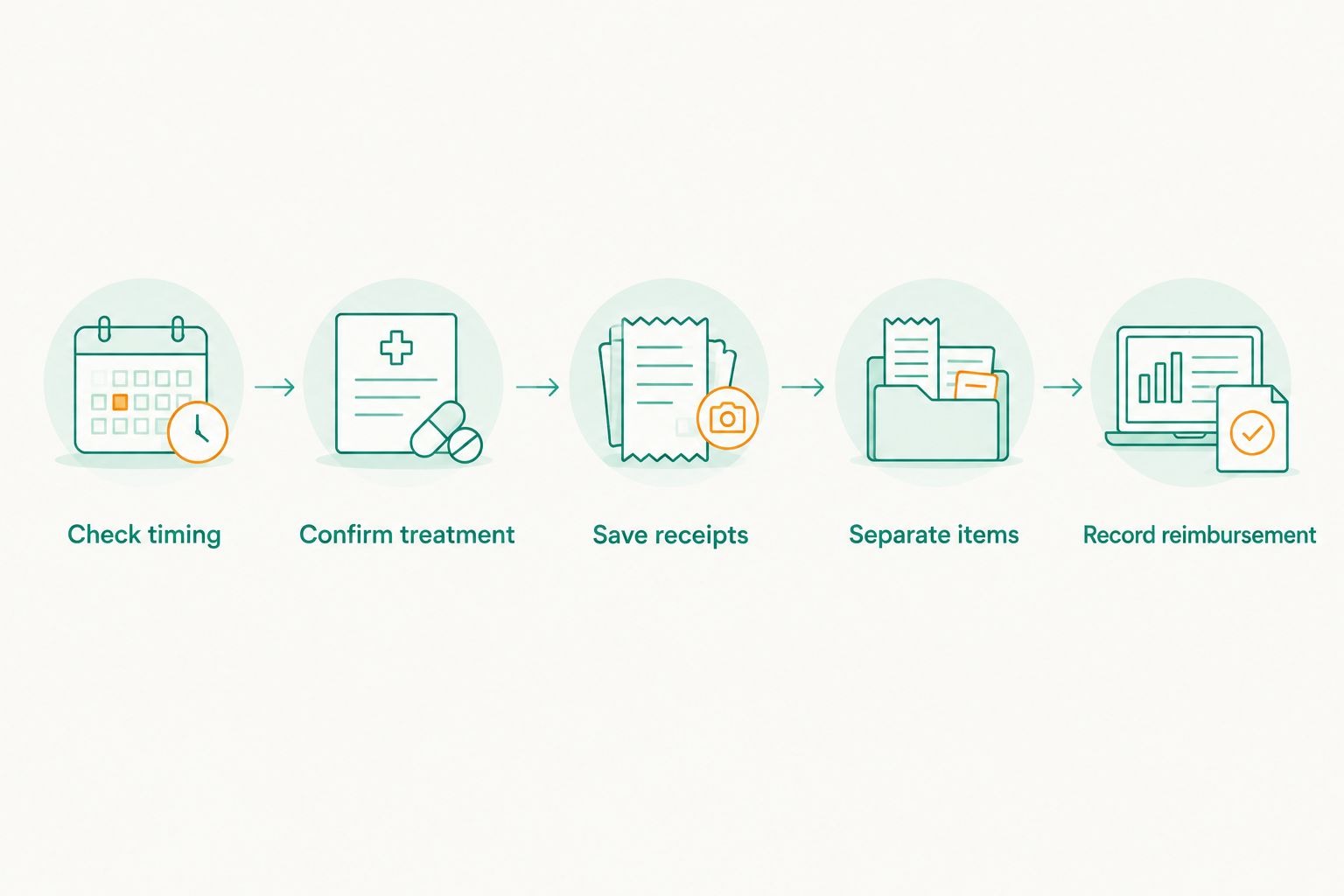
Use this sequence for each purchase:
- Check timing. The expense must occur after your HSA was established. Keep evidence of the establishment date.
- Confirm treatment. Save the diagnosis and recommendation connecting the supplement to medical care. A doctor's letter does not automatically qualify a general-health expense.
- Save receipts. Keep the itemized receipt and payment record. A card statement alone usually does not identify what you bought.
- Separate items. Record only the qualifying portion of a mixed purchase. Keep unrelated groceries and wellness items out.
- Record reimbursement. Track the amount reimbursed and the remaining unreimbursed expense so you do not claim it twice.
For example, suppose a receipt has 4 line items: one qualifying treatment supplement and three general-health purchases. Your ledger should include 1 eligible line item, not the entire receipt; the 3 excluded items remain personal spending.
Use the guide to separating qualified expenses on mixed bills when a checkout includes both categories. Preserve the original receipt even when you record only part of it.
Reimbursable offers unlimited free manual tracking. Use it if a dedicated record works better for you than a spreadsheet, folder, or your HSA provider's receipt tool; paid automation is not required to obtain tax-free reimbursement.
Which supplement should you choose?
Choose the clinician-recommended supplement that treats your specific condition. If you have no diagnosed condition or qualifying medical purpose, do not pick a product from this list merely to spend HSA funds.
Paying out of pocket while you clarify eligibility avoids treating an uncertain purchase as an immediate HSA withdrawal. Keep the receipt either way. If the expense qualifies and meets the timing rules, you can decide when to reimburse yourself.
FAQ
What are the best HSA eligible vitamins and supplements in 2026?
The best choice is the supplement recommended for your specific diagnosed condition or qualifying medical care. Iron, prenatal vitamins, vitamin B12, vitamin D, and calcium are conditional options, not universally eligible purchases.
Are everyday multivitamins HSA eligible?
Everyday multivitamins taken for general health generally are not qualified medical expenses. IRS Publication 502 distinguishes general-health supplements from those recommended to treat a specific medical condition diagnosed by a physician.
Does a doctor's letter make any supplement HSA eligible?
No. A doctor's letter does not automatically convert a general-health supplement into a qualified expense. The underlying medical purpose must meet the applicable rules.
Can I use my HSA for prenatal vitamins?
Prenatal vitamins used for qualifying pregnancy-related medical care can qualify. Keep the purchase record and supporting medical recommendation rather than assuming every prenatal-labelled purchase qualifies regardless of purpose.
Can I reimburse myself years after buying an eligible supplement?
There is no IRS deadline for HSA reimbursement of an otherwise qualified expense. The expense must occur after the HSA was established, remain unreimbursed elsewhere, and not also be claimed as an itemized deduction; retain supporting records.
Do FSA reimbursement deadlines work like HSA rules?
No. Health FSAs have plan-year and claim-submission deadlines, with any carryover or grace period governed by the plan. Do not apply the HSA's delayed-reimbursement rules to an FSA.
Is a receipt-tracking app required for tax-free HSA reimbursement?
No. You can use spreadsheets, folders, paper receipts, or HSA-provider receipt tools. What matters is keeping records that establish eligibility, payment, and the absence of duplicate reimbursement.
One last thing
A receipt proves a purchase; it does not necessarily prove why the purchase qualifies. For every conditional supplement you buy in 2026, store the medical recommendation beside the receipt—not in a separate system you will have to search years later.
Reimbursable can help you organize the expense record, but you remain responsible for eligibility and supporting documents. Not tax advice; consult your tax advisor.