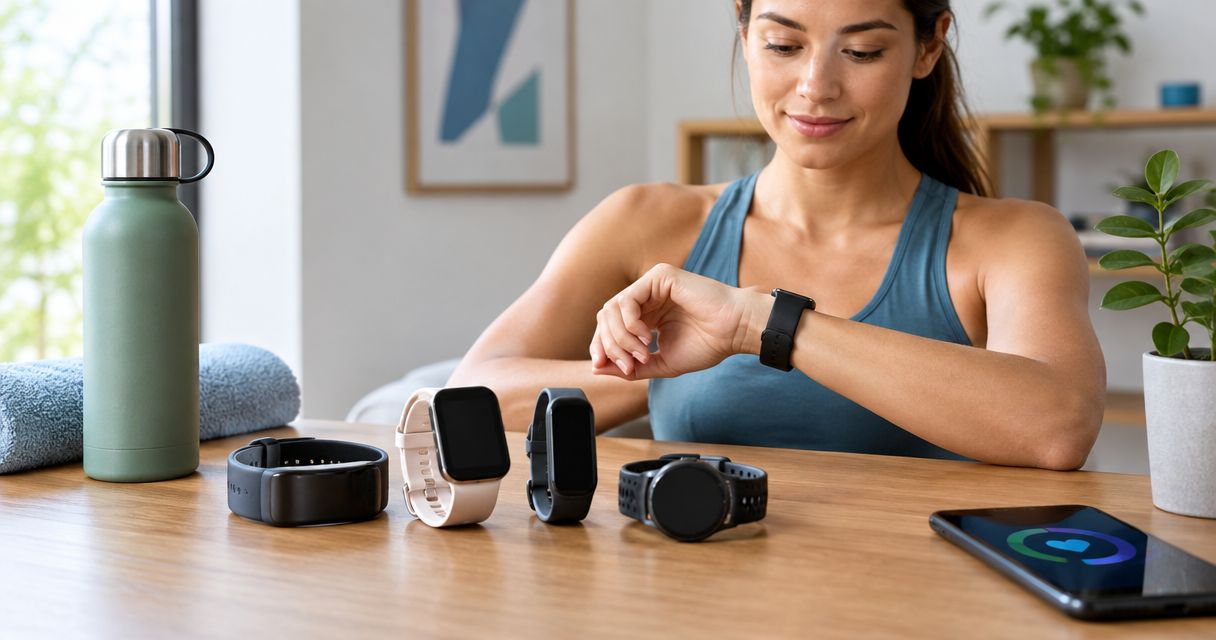
The best HSA eligible fitness trackers are medical monitoring devices purchased for qualifying medical care, not ordinary activity trackers bought for general wellness. Best for diabetes monitoring: a medical glucose monitor; best for clinician-directed heart monitoring: a medical ECG monitor; best for oxygen monitoring: a medical pulse oximeter—each subject to its medical purpose and documentation.
- The best HSA eligible fitness trackers serve qualifying medical purposes, not simply exercise or general wellness.
- Glucose monitors, medical ECG monitors, and pulse oximeters require different buying decisions; none is a universal recommendation.
- A doctor's letter does not automatically make an ordinary fitness tracker HSA eligible.
- Reimbursable helps HSA holders organize receipts; tracking an expense does not establish its eligibility.
Why this matters
A device can measure your heart rate, sleep, or movement without qualifying as a medical expense. Health-related features are not an HSA eligibility test. For your 2026 purchase, start with the medical purpose, then evaluate the device.
Reimbursable is best for HSA holders who want to organize receipts for later reimbursement. Its eligibility directory and receipt-tracking app support your records; they do not replace the underlying tax rules.
The relevant federal sources are IRS Publication 502, Medical and Dental Expenses, IRS Publication 969, Health Savings Accounts and Other Tax-Favored Health Plans, and Internal Revenue Code section 213(d). Use the current IRS guidance when evaluating a 2026 purchase. These sources distinguish medical care from spending that merely benefits general health.
What makes the best HSA eligible fitness trackers?
This ranking puts medical purpose before wearable features. Use these criteria before comparing devices:
- Qualifying purpose: The expense must meet the tax definition of medical care, rather than serve only general fitness.
- Clinical fit: Choose measurements your clinician needs for your care—not the longest feature list.
- Exact product: Assess the specific device and intended use, not every product sold under the same brand.
- Supporting records: Keep an itemized receipt and documentation explaining the medical purpose when relevant.
- Separate expenses: Evaluate the device, accessories, subscriptions, and optional services separately.
- Practical use: Confirm that you can operate the device and share useful readings with your care team.
A seller's eligibility badge is not a substitute for these checks. Neither is successful payment with an HSA card.
Medical monitors and fitness trackers at a glance
This is a use-case ranking, not a claim that every product in a category qualifies. For 2026, the safest buying decision starts with a defined medical need and an assessment of the exact expense.
| Rank and option | Best for | Standout function | Key limitation |
|---|---|---|---|
| 1. Medical glucose monitor | Diabetes-related glucose monitoring | Measures glucose for medical management | Not every glucose-tracking purchase has a qualifying medical purpose |
| 2. Medical ECG monitor | Clinician-directed heart rhythm recording | Records electrical heart activity | Does not replace clinical assessment or emergency care |
| 3. Medical pulse oximeter | Clinician-directed oxygen monitoring | Estimates blood oxygen saturation | Readings have limitations and require clinical context |
| 4. General fitness tracker | Exercise and everyday activity tracking | Records activity and wellness trends | General wellness use does not qualify merely because the device measures health data |
1. Medical glucose monitor: best for diabetes monitoring
A medical glucose monitor measures glucose to support medical care. Depending on the device, monitoring involves a blood sample or a sensor; the right choice depends on the patient's treatment needs.
IRS Publication 502 specifically discusses blood sugar test kits used for diabetes. That provides a clearer medical-expense foundation than purchasing a glucose-tracking device solely to experiment with food or exercise habits.
Medical glucose monitor pros:
- Supports a defined medical monitoring task.
- Produces information relevant to diabetes management.
- Has an established medical-expense basis when used for qualifying diabetes care.
Medical glucose monitor cons:
- General wellness use does not establish eligibility.
- Sensors, supplies, and optional services require their own expense review.
Best for: Someone whose diabetes care requires glucose monitoring.
Before buying, ask your clinician which monitoring method fits your care. Confirm what the purchase includes, whether insurance pays any portion, and what documentation supports your out-of-pocket amount.
Verdict: Buy for a documented medical need; skip an HSA reimbursement claim based only on wellness curiosity.
2. Medical ECG monitor: best for clinician-directed rhythm recording
A medical ECG monitor records the heart's electrical activity. Choose this category when a clinician identifies a reason to capture rhythm information and explains how to use the results.
A heart-rate feature and an ECG function are not interchangeable. A multipurpose watch also needs a different eligibility assessment from a dedicated medical device; one medical feature does not automatically qualify the entire purchase.
Medical ECG monitor pros:
- Records information beyond a simple pulse count.
- Serves a defined monitoring purpose when included in a care plan.
- Gives you a specific record to discuss with your clinician.
Medical ECG monitor cons:
- Consumer recordings do not establish a diagnosis by themselves.
- A general-purpose wearable needs its own eligibility review.
Best for: Someone whose clinician recommends recording heart rhythm outside an appointment.
Ask whether your clinician needs recordings from the exact device you are considering. Check how you will share those recordings before you choose it.
Verdict: Buy only when the device fits your medical monitoring plan; hold an uncertain HSA claim until you resolve eligibility.
3. Medical pulse oximeter: best for oxygen monitoring
A pulse oximeter estimates blood oxygen saturation, commonly through a sensor placed on a finger. It belongs in this comparison because medical monitoring—not wearing a device all day—is the relevant distinction.
The FDA explains that pulse oximeters have accuracy limitations. Follow your clinician's instructions and do not rely on a reading alone when symptoms suggest a problem.
Medical pulse oximeter pros:
- Measures a specific medical parameter.
- Supports home monitoring when your clinician recommends it.
- Avoids buying a broader fitness wearable when oxygen monitoring is the actual need.
Medical pulse oximeter cons:
- Readings require context and can be inaccurate.
- A general interest in checking oxygen does not itself establish a qualifying expense.
Best for: Someone whose care plan includes home oxygen monitoring.
Confirm the device's intended use and ask your clinician how to interpret its results. Keep the purchase record alongside any relevant care instructions.
Verdict: Buy for clinician-directed medical monitoring; skip treating a wellness gadget as automatically eligible.
4. General fitness tracker: best for everyday exercise tracking
A general fitness tracker records activity or wellness information, such as steps, workouts, or sleep trends. Those functions can be useful without meeting the federal medical-expense definition.
If your purpose is motivation, training, or general health, do not assume an HSA can reimburse the purchase. A doctor's recommendation to exercise does not automatically turn the tracker into medical care.
General fitness tracker pros:
- Helps you observe everyday activity patterns.
- Supports personal exercise goals.
- Offers wellness tracking without requiring a medical monitoring workflow.
General fitness tracker cons:
- General-health purchases do not qualify merely because they support healthier habits.
- Medical-looking features and retailer labels do not resolve tax eligibility.
Best for: Someone seeking workout or lifestyle tracking with personal funds.
If a clinician recommends a particular device for treatment, evaluate those specific facts rather than assuming all fitness trackers qualify. A letter describes the medical rationale; it does not override the law.
Verdict: Buy for fitness if it meets your needs; skip HSA reimbursement for ordinary general-wellness use.
How this ranking works
Medical glucose monitors rank first because diabetes testing has a direct example in IRS Publication 502. Medical ECG monitors and pulse oximeters follow as distinct monitoring options whose suitability depends on the patient's medical circumstances.
General fitness trackers come last for HSA purchasing—not because exercise tracking lacks value, but because general wellness is not enough to establish eligibility. This ranking makes no model-specific performance claims and does not treat an entire manufacturer's catalog as eligible.
Check eligibility before saving an expense for reimbursement
For a 2026 wearable purchase, separate the eligibility decision from the receipt-storage task. A complete receipt proves what you bought; it does not prove why the expense qualifies.
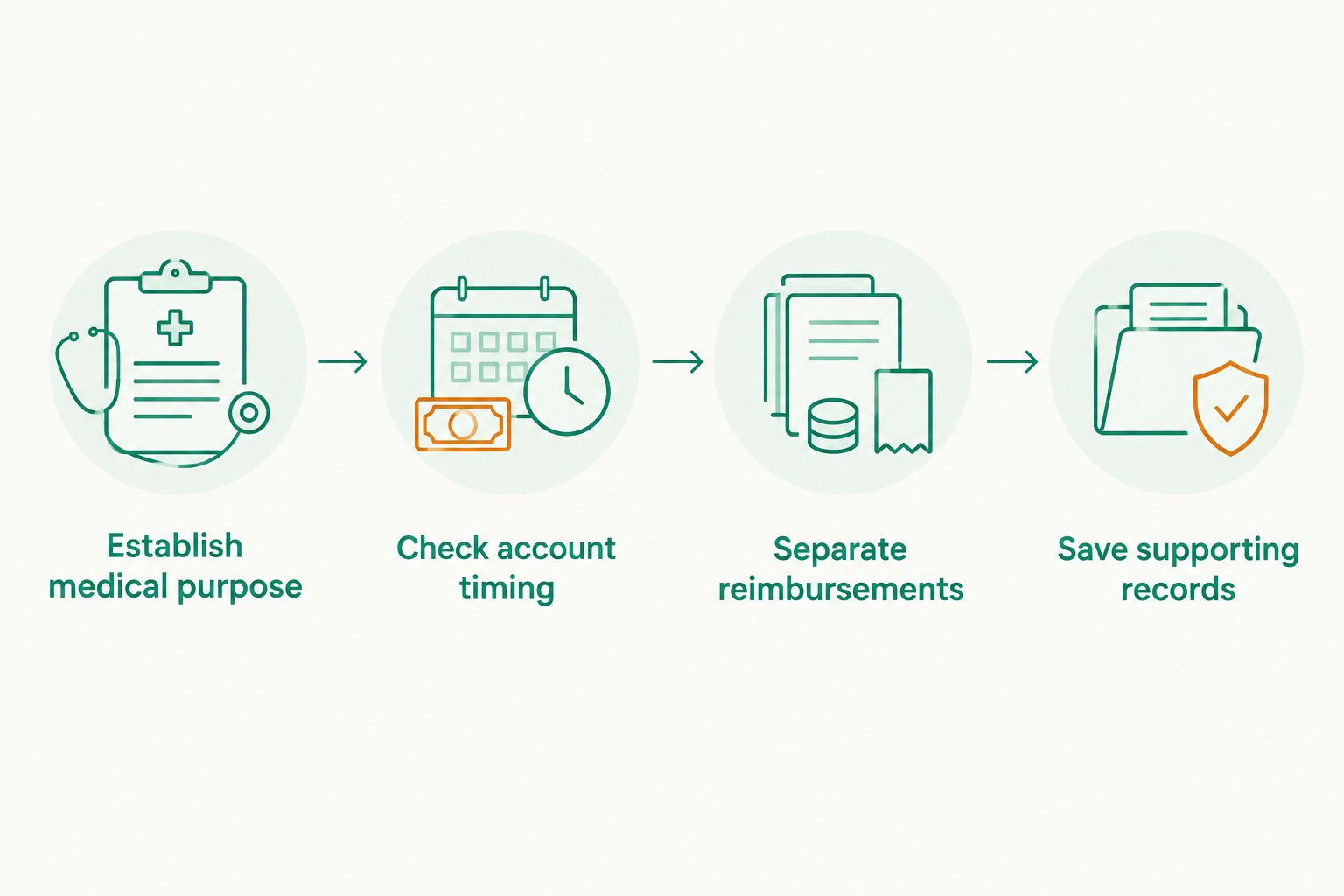
Establish medical purpose
Identify the condition, diagnostic need, or treatment purpose behind the expense. Ask your clinician for relevant documentation when the connection is not clear from the item itself.
A doctor's letter does not automatically qualify a general-health expense. Review the facts against IRS rules rather than treating the letter as approval.
Check account timing
The expense must occur after your HSA was established. Keep 2 dates visible in your records: the HSA establishment date and the expense date.
Do not confuse opening a new account with the original establishment date of an existing HSA arrangement. Transfers and changes of provider deserve a separate timing review.
Separate reimbursements
Only claim the qualifying amount you paid and have not recovered elsewhere. You cannot also reimburse that amount through insurance, an FSA, or another arrangement, or claim it as an itemized medical deduction.
For bundles containing accessories or services, use the same discipline described in this guide to separating qualified medical expenses on mixed bills. Do not assume every line follows the device's treatment.
Save supporting records
Keep 3 record types together: purchase evidence, relevant medical-purpose documentation, and reimbursement history. Preserve the item description rather than relying only on a card statement.
Pay, track, and reimburse without duplicating a claim
You can pay an eligible expense out of pocket and reimburse yourself later. Federal HSA rules impose no reimbursement deadline, provided the expense meets the requirements and you retain adequate records. FSA deadlines are different; check your plan's rules.
Keep 1 reimbursement log that connects each expense to any later withdrawal. If you reimburse only part of an expense, record the amount already claimed and the remaining eligible balance.
Reimbursable's HSA receipt tracking offers unlimited free manual tracking. Spreadsheets, digital folders, paper receipts, and HSA-provider receipt tools are also legitimate alternatives; choose a system you will maintain.
Premium's receipt scanning, bank sync, and email forwarding address receipt administration. They are not necessary to obtain tax-free reimbursement, and automation does not determine whether a wearable qualifies.
Which tracker should you choose in 2026?
Choose the device your medical care requires, then establish whether its expense qualifies. For diabetes monitoring, start with the appropriate medical glucose monitor; for rhythm or oxygen monitoring, follow your clinician's device guidance.
If you only want steps, workout summaries, or sleep trends, choose a fitness tracker on those merits and pay with personal funds. Do not make tax treatment the reason to buy medical equipment you do not need.
Use Reimbursable for receipt tracking after that decision—not as proof that the purchase is eligible.
FAQ
What's the best HSA eligible fitness tracker in 2026?
There is no universal best HSA eligible fitness tracker. A medical glucose monitor, medical ECG monitor, or pulse oximeter serves a different medical need; ordinary fitness tracking for general wellness does not establish eligibility.
Can I use my HSA for a smartwatch?
A smartwatch is not automatically HSA eligible because it measures health information. Evaluate the exact purchase and its medical purpose; a general-wellness purchase does not qualify merely because it includes medical-looking features.
Does a doctor's letter make a fitness tracker HSA eligible?
No, a doctor's letter does not automatically make a fitness tracker HSA eligible. Documentation can explain a medical purpose, but the expense must still satisfy the applicable medical-expense rules.
Are continuous glucose monitors always HSA eligible?
No, do not assume every continuous glucose monitor purchase qualifies. Glucose monitoring for diabetes care has a different medical-expense basis from tracking glucose solely for general wellness or exercise experimentation.
Does an HSA card payment prove that a wearable qualifies?
No, successful payment with an HSA card does not prove tax eligibility. Keep documentation supporting the qualifying medical purpose and the amount not reimbursed elsewhere.
Can I reimburse a wearable purchase years later?
Yes, if the purchase is a qualified medical expense incurred after your HSA was established and you satisfy the reimbursement requirements. Keep adequate records and do not also reimburse or deduct the same expense elsewhere.
Do I need a paid receipt app for HSA reimbursement?
No, a paid receipt app is not required. Reimbursable offers unlimited free manual tracking, and spreadsheets, folders, paper receipts, or HSA-provider tools are legitimate ways to maintain records.
One last thing
A retailer's receipt can disappear from your online account before you decide to reimburse yourself. Save your own copy when you purchase, along with the exact item description and any documentation supporting its medical purpose.
Not tax advice; consult your tax advisor. Resolve an uncertain wearable expense before taking an HSA distribution, not after.