Yes, you can use an HSA for dental treatment abroad when the treatment qualifies as medical care under U.S. tax rules, occurs after your HSA was established, and is not reimbursed elsewhere or claimed as a tax deduction. For 2026, the treatment’s purpose—not the dentist’s country—determines eligibility; cosmetic whitening and vacation spending do not become eligible because they appear on a dental-trip bill.
- Can you use HSA for dental treatment abroad? Yes, for qualified dental care—not an overseas vacation.
- IRS Publication 502 distinguishes dental treatment from cosmetic procedures; Publication 969 explains HSA reimbursement requirements.
- Save itemized invoices, payment evidence, currency conversions, and insurance records before reimbursing yourself.
- Reimbursable suits HSA holders who want receipt tracking; spreadsheets and organized folders are legitimate alternatives.
Can you use HSA for dental treatment abroad?
Qualified dental treatment abroad can be reimbursed tax-free from your HSA. IRS Publication 502 includes dental expenses that prevent or alleviate dental disease, such as cleanings, fillings, and treatment of dental ailments. It does not impose a general U.S.-only location requirement on qualified dental care.
IRS Publication 969 supplies the separate HSA rules: the expense must follow establishment of the account, cannot have been compensated by insurance or another source, and cannot also be taken as an itemized deduction. Use both publications when reviewing an overseas invoice in 2026. Publication 502 explains the medical-expense category; Publication 969 explains whether your HSA distribution is tax-free.
For the broader eligibility checklist, see what qualifies as an HSA dental expense and what to save.
| Expense on an overseas dental trip | HSA treatment | What your records should establish |
|---|---|---|
| Cleaning, examination, or filling | Generally eligible | Dental service, patient, service date, and payment |
| Root canal, medically necessary crown, or dental implant | Generally eligible | Treatment provided and the amount you paid |
| Dentures or braces | Generally eligible | Itemized dental charge and payment evidence |
| Teeth whitening | Not eligible | Keep the cosmetic charge outside your reimbursement |
| Airfare or ground transportation | Conditional | Travel was primarily for and essential to medical care |
| Sightseeing and vacation activities | Not eligible | Separate these charges from medical expenses |
| Lodging | Subject to additional restrictions | Medical purpose and the specific IRS lodging requirements |
The table identifies expense categories, not blanket approval for every invoice. A treatment package still needs an itemized breakdown, especially when it includes cosmetic work or travel services.
Why this matters
An overseas dentist can put treatment, hotel arrangements, transportation, and cosmetic extras on the same invoice. One payment does not make every line item HSA-eligible. You need to separate qualified care from everything else before taking a reimbursement.
The same distinction applies when an overseas clinic describes a package as medically necessary. A sales description is not a tax determination, and a doctor’s letter does not automatically qualify a general-health or cosmetic expense. Your records need to show what the treatment actually addressed.
How do you document overseas dental treatment for HSA reimbursement?
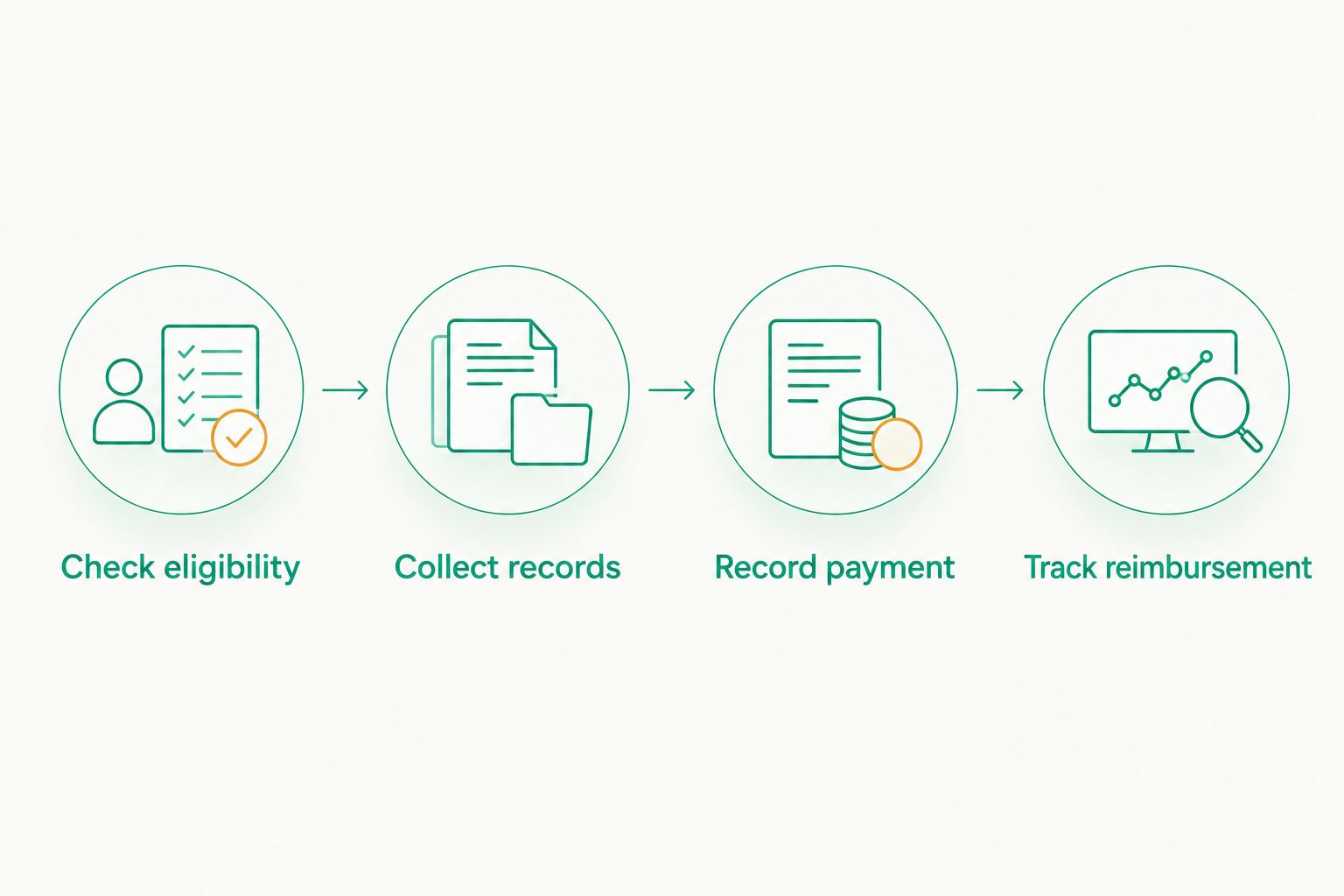
Use these 4 steps before reimbursing yourself. The goal is a record that connects the dental service to the patient, the payment, and the amount that remains unreimbursed.
1. Check eligibility
Ask for a treatment plan that names each procedure rather than a single label such as dental package. Identify therapeutic care, cosmetic work, and nonmedical services separately.
Check 2 dates: when your HSA was established and when the dental care occurred. Care provided before your HSA existed does not become eligible because you pay the bill or open an account afterward. An earlier qualifying HSA can affect the establishment date, so confirm account history when you have transferred or rolled over funds.
For a 2026 procedure, retain the actual service date—not just the booking date or the day you sent a deposit. If a treatment plan spans several appointments, keep the dates associated with each completed service.
2. Collect records
Build a file containing 3 core records: the itemized invoice, proof of payment, and the reimbursement ledger entry. Add supporting documents when the transaction requires them.
Your invoice should identify:
- The dentist or clinic and the patient.
- Each procedure and its service date.
- Separate treatment, cosmetic, and travel charges.
- The amount charged and the original currency.
A card statement establishes payment but usually does not explain the treatment. An appointment confirmation establishes a booking but does not prove that care occurred or that you paid. Keep the documents together so they support one another.
For a foreign-language invoice, request an English version or retain a clear translation alongside the original. A translated summary should preserve the procedure descriptions, dates, currency, and charges rather than replacing them with a generic medical-expense label.
3. Record payment
Record the original foreign-currency amount and the U.S.-dollar amount you actually paid. When your card statement shows the converted transaction, retain that statement with the invoice and identify any separately charged fees.
For cash payments, obtain a receipt showing that the clinic received payment. Also keep the exchange-rate documentation used to calculate your dollar expense. Do not substitute a later exchange rate simply because it produces a larger reimbursement.
Treat separately listed payment-processing or currency-conversion fees as separate questions rather than automatically adding them to qualified dental care. Ask your tax advisor how to handle those charges and unusual currency arrangements.
4. Track reimbursement
Enter the qualified amount in your ledger and subtract insurance payments, other reimbursements, and refunds. Mark the expense as reimbursed when you take the HSA distribution, including the distribution date and amount.
Keep 1 ledger row per expense, or another structure that clearly connects each reimbursement to its supporting records. The essential requirement is traceability, not a particular spreadsheet layout. The guide to applying HSA reimbursement rules to an expense ledger explains how to organize that record.
Why overseas dental reimbursement eligibility varies
Review each charge, not just the destination or the clinic’s description. These factors change whether an expense belongs in your HSA reimbursement total:
- Treatment purpose: Care that prevents or treats dental disease differs from work performed solely to improve appearance.
- Account timing: Dental care must occur after your HSA was established, even when reimbursement happens much later.
- Other payment sources: Insurance, another reimbursement account, and refunds reduce the amount left for HSA reimbursement.
- Tax treatment: You cannot both reimburse an expense tax-free from an HSA and claim an itemized deduction for it.
- Trip purpose: Transportation has its own medical-purpose test; treatment during a vacation does not automatically qualify the vacation travel.
- Invoice detail: A bundled charge needs enough detail to distinguish qualified treatment from cosmetic or personal spending.
A clinic’s willingness to accept an HSA card does not resolve these questions. Likewise, a card payment being declined does not determine whether the underlying expense qualifies.
Can you use your HSA for flights and hotels for dental treatment abroad?
You can use an HSA for qualifying medical transportation when the travel is primarily for and essential to medical care. That is a separate test from whether the dental procedure qualifies. Keep your itinerary, appointment records, and explanation of the trip’s medical purpose together.
Consider the distinction between traveling specifically for a scheduled root canal and having a cleaning during an already-planned vacation. The dental procedure can qualify in either setting, but the airfare does not automatically receive the same treatment.
Lodging has additional IRS conditions, including limits and requirements concerning the setting in which medical care is provided. Do not assume a hotel qualifies merely because it is near the dentist. Ordinary meals while traveling are generally not qualified medical expenses; meals associated with inpatient care follow different rules.
For a 2026 trip that combines treatment and personal travel, review transportation and lodging separately with your tax advisor. Keep sightseeing, leisure accommodation, and other personal charges outside the medical total unless a specific rule supports inclusion.
Can you reimburse yourself years after overseas dental treatment?
Yes. Federal HSA rules set no deadline for reimbursing a qualified expense incurred after the account was established, provided you retain records and satisfy the other reimbursement requirements. Paying out of pocket now does not require taking the HSA distribution immediately.
For example, you can pay for qualified dental care abroad in 2026 and reimburse yourself in a later tax year. Keep the invoice, payment evidence, dollar conversion, and unreimbursed balance until you claim reimbursement, then retain the records supporting that distribution under applicable tax recordkeeping rules.
Delayed reimbursement requires durable records, not a special paid app. It also does not guarantee investment gains or make every delay financially preferable. Decide separately whether leaving money in your HSA fits your cash needs and risk tolerance.
What is the simplest way to track an overseas dental receipt?
Reimbursable is best for HSA holders who want a dedicated place to track receipts for later reimbursement. A spreadsheet, organized folders, paper files, or an HSA-provider receipt tool can also do the job. Choose the method you will keep accurate and accessible.
| Tracking option | Best for | Practical advantage | Limitation or responsibility |
|---|---|---|---|
| Reimbursable | HSA holders wanting dedicated receipt tracking | Unlimited free manual tracking; optional automation | You still determine eligibility and verify entries |
| Spreadsheet and digital folders | People wanting control over their records | You choose fields for currency, insurance, and reimbursement status | You enter data and connect files yourself |
| Paper receipts and a written ledger | People who prefer physical records | Records can be organized without software | You must protect originals from loss and fading |
| HSA-provider receipt tools | People wanting records alongside their account | Keeps recordkeeping within an existing provider relationship | Check the provider’s features and export options |
Reimbursable Premium adds receipt scanning, bank sync, and email forwarding to reduce receipt administration. Those features are conveniences, not conditions for tax-free reimbursement; verify extracted details against the original documents.
Whichever method you choose, keep an accessible backup. Save original invoices alongside converted dollar amounts, and make sure a future account change does not leave you without the documents supporting an old expense.
FAQ
Can I use my HSA for dental implants in Mexico?
Yes, dental implants in Mexico can qualify when they treat a dental condition and meet the normal HSA reimbursement rules. The expense must follow establishment of your HSA, and you must exclude amounts reimbursed elsewhere or deducted.
Can I reimburse overseas dental care if I paid with a regular credit card?
Yes, paying with a regular credit card does not prevent HSA reimbursement for qualified overseas dental care. Keep the itemized invoice and payment evidence, then reimburse only the eligible amount that remains unreimbursed.
Do I need an English receipt from a foreign dentist?
Keep records that clearly establish the treatment, patient, date, currency, and payment. An English invoice or a clear translation alongside the original makes a foreign-language record easier to review.
Can I use my HSA for teeth whitening abroad?
No, teeth whitening is not an eligible medical expense under IRS Publication 502. Paying an overseas dentist or combining whitening with eligible treatment does not change that exclusion.
Can I use an FSA for overseas dental treatment too?
Qualified overseas dental care can also be eligible under an FSA, subject to your plan’s coverage and substantiation rules. Unlike an HSA, an FSA has plan-specific claim deadlines and rules about when expenses must be incurred; check them before treatment.
What if insurance reimburses me after I use my HSA?
You cannot keep tax-free HSA reimbursement for the same expense amount that insurance later covers. Update your ledger and ask your HSA custodian and tax advisor how to correct the distribution.
Does a dentist’s letter make an overseas cosmetic procedure HSA-eligible?
No, a dentist’s letter does not automatically turn a cosmetic or general-health expense into qualified medical care. Eligibility depends on the treatment’s purpose and the applicable IRS rules, not just the presence of a letter.
One last thing
Ask for the itemized invoice before leaving the clinic. A payment receipt alone can leave you unable to separate an eligible crown from whitening, a hotel arrangement, or another bundled service. Getting that breakdown while the clinic has your treatment details in front of it is a practical final step.
For 2026 reimbursement decisions, consult IRS Publication 502, Medical and Dental Expenses, for expense categories and Publication 969, Health Savings Accounts and Other Tax-Favored Health Plans, for HSA requirements. Use the applicable instructions for Form 8889 when reporting HSA distributions.
Not tax advice. Always consult your tax advisor, particularly for mixed-purpose travel, bundled treatment, foreign-currency questions, or reimbursement corrections.