No. You cannot use an HSA tax-free for dental work performed before your HSA was established, even if you pay the bill after opening the account. A later invoice, credit-card payment, or installment does not turn an earlier dental expense into an eligible HSA reimbursement.
- Can you use HSA for dental work before opening HSA? No; treatment must follow the HSA establishment date.
- IRS Publication 969 makes account establishment—not the invoice or payment date—the starting point for eligible expenses.
- Eligible dental expenses incurred after establishment can be reimbursed later, without an IRS reimbursement deadline.
- Reimbursable supports HSA receipt tracking; keeping a receipt does not make an earlier expense eligible.
Can you use HSA for dental work before opening your HSA?
Dental work performed before your HSA was established does not qualify for tax-free HSA reimbursement. IRS Publication 969 explains that expenses incurred before an HSA is established are not qualified medical expenses for that account. State law determines when the HSA is established.
Use this sequence before adding a dental bill to your reimbursement records. Reimbursable is best for HSA holders who want a dedicated place to track medical receipts.
- Confirm establishment. Ask your HSA custodian for the account's establishment date, not just the date you became eligible to contribute.
- Check treatment. Find the date the dentist performed the service on the itemized statement.
- Check eligibility. Confirm that the treatment qualifies as medical care and identify the portion you personally owe.
- Save evidence. Keep the itemized bill, payment confirmation, insurance adjustment, and reimbursement status together.
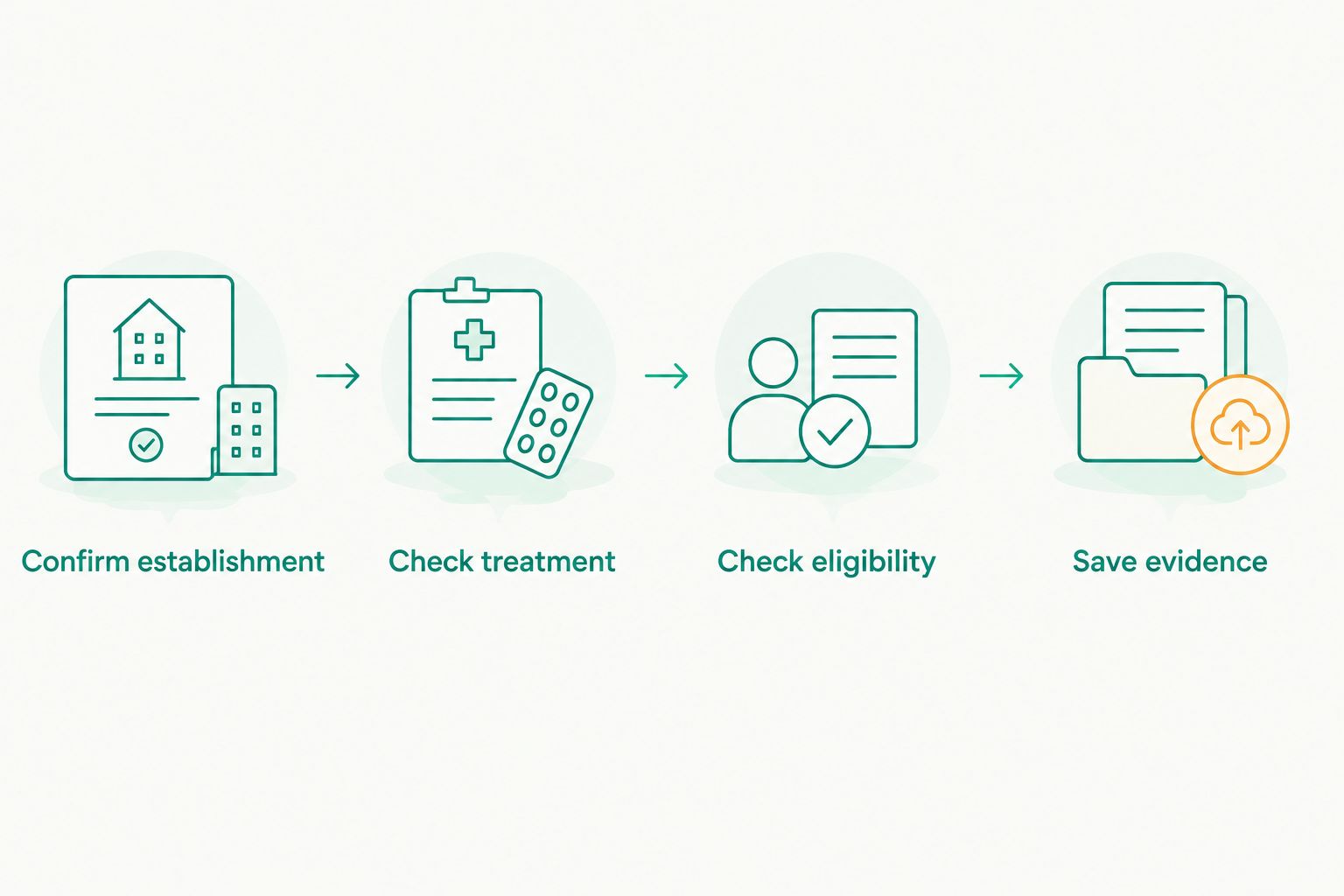
These checks answer different questions. A dental procedure can qualify as medical care under IRS Publication 502 but still fail the HSA timing rule under Publication 969.
Why this matters
An HSA is not a way to reimburse every medical bill you have ever paid. Its tax-free reimbursement rules start with expenses incurred after the account was established, even when you had qualifying health coverage earlier.
For your 2026 records, separate eligible treatment from eligible timing. Saving a pre-establishment bill is sensible recordkeeping; labeling it as a future tax-free HSA reimbursement is not.
Dental work before establishment: not eligible
Suppose your dentist performs a filling on March 10, 2026, and your first HSA is established on April 1, 2026. That filling is not eligible for tax-free reimbursement from the HSA.
The result stays the same if the dental office sends its invoice in April. It also stays the same if you pay the March bill in May or wait until your HSA balance grows.
A payment date cannot repair an ineligible treatment date. Keep the bill separate from the expenses you plan to reimburse tax-free, so it does not accidentally enter a later withdrawal request.
Dental work after establishment: potentially eligible
Suppose your HSA is established on April 1, 2026, and you receive a filling on April 15, 2026. The timing requirement is satisfied, but you still need to check the treatment and reimbursement rules.
IRS Publication 502 includes dental treatment such as fillings, extractions, and treatment to prevent or alleviate dental disease. Cosmetic procedures such as teeth whitening generally do not qualify.
For a qualified expense, you can pay out of pocket and reimburse yourself later. IRS Publication 969 states that there is no time limit on receiving an HSA distribution to reimburse a qualified expense incurred after establishment, provided you keep the required records.
You do not need the full reimbursement amount sitting in your HSA on the treatment date. The expense's eligibility and the account's available balance are separate issues.
Dental treatment spanning the opening date: separate the services
A treatment plan can include visits on both sides of your HSA establishment date. Do not treat the entire plan as eligible merely because the final appointment or final payment comes afterward.
Ask for an itemized statement that identifies the services and treatment dates. A consultation before establishment and a later extraction need separate review, even if they appear on the same bill.
Orthodontic contracts, advance payments, and bundled treatment arrangements need particular care. Ask your tax advisor how the expense is incurred under your arrangement rather than assigning the whole contract to its signing date or final payment date.
| Dental billing situation | HSA timing result | What to keep |
|---|---|---|
| Treatment before establishment; payment afterward | Does not qualify based on that later payment | Itemized statement showing the treatment date |
| Qualified treatment after establishment; payment from personal funds | Can qualify for later reimbursement | Itemized bill, payment evidence, and insurance records |
| Separate visits before and after establishment | Evaluate each service separately | Service-level dates and charges |
| Payment plan for treatment completed before establishment | Later installments do not change the treatment date | Original treatment record and payment schedule |
| Transfer from an existing HSA | Confirm the original establishment history | Prior-account and transfer records |
Why the answer varies between dental bills
The rule is consistent, but the records behind each bill differ. Check these factors before deciding that a dental expense belongs in your reimbursement total:
- Account establishment: Qualifying health coverage and HSA eligibility do not, by themselves, establish an HSA.
- Service timing: The appointment date matters more than a statement's printing date or a card's payment date.
- Treatment purpose: Dental care that treats or prevents disease differs from treatment performed only for appearance.
- Insurance payments: You cannot reimburse yourself for a portion already covered by dental insurance.
- Other tax treatment: You cannot also claim the same reimbursed expense as an itemized medical deduction or reimburse it through an FSA.
- Account history: A new custodian does not necessarily mean a new establishment date when an earlier HSA is involved.
A doctor's or dentist's letter does not automatically make a general-health or cosmetic expense eligible. The underlying expense must meet the tax rules, including the HSA establishment requirement.
What if you were HSA-eligible before opening the account?
Being eligible to contribute is not the same as having an established HSA. Enrollment in a qualifying high-deductible health plan does not automatically make earlier dental expenses reimbursable.
For example, your qualifying coverage might begin in January 2026 while your HSA is established in April 2026. Do not assume a February dental visit qualifies simply because the coverage was already active.
Ask the custodian to confirm establishment in writing when the timing is close. An application date, payroll election, or benefits enrollment screen is not a substitute for confirming the account's legal establishment date.
What if you moved money from an older HSA?
A transfer or rollover involving an existing HSA can preserve an earlier establishment history. IRS Publication 969 explains that an HSA funded through a rollover from an earlier HSA is treated as established when the earlier account was established.
That makes a move between custodians different from opening your first HSA. Keep the original account documents and transfer or rollover records, then confirm the relevant date with your custodian and tax advisor.
Do not reject an otherwise eligible dental receipt solely because it predates your current custodian's account-opening screen. Equally, do not assume an earlier health-plan enrollment establishes an older HSA.
Does paying by credit card or installments change the answer?
No. Paying a dentist by credit card or through installments does not make pre-establishment treatment eligible for tax-free HSA reimbursement. The payment method does not override the date the expense was incurred.
For qualified treatment after establishment, personal payment can support a later reimbursement. Save evidence linking the payment to the dental service; a credit-card statement alone usually does not explain what treatment you received.
Do not add credit-card interest, late fees, or financing charges to the dental treatment amount you intend to reimburse. Keep the treatment charge separate from the cost of borrowing.
How should you track dental receipts for later reimbursement?
Keep 4 record types together: the itemized bill, proof of payment, insurance explanation of benefits, and reimbursement history. Each document answers a different question, so a receipt image alone is not the whole record.
Your tracking system should identify the patient, provider, service date, treatment description, amount paid, insurance reimbursement, and remaining unreimbursed amount. Add the HSA establishment date to your account records so you can check older receipts without rebuilding the timeline.
Choose a tracking method you will maintain
There is no required app for tax-free HSA reimbursement. Spreadsheets, folders, paper receipts, and HSA-provider receipt tools are legitimate alternatives to a dedicated app.
| Tracking option | Best for | Useful capability | Limitation or check |
|---|---|---|---|
| Spreadsheet and digital folders | People comfortable maintaining their own records | Flexible columns and direct access to saved files | You enter details and maintain the filing system yourself |
| Paper receipts and folders | People who prefer physical records | Keeps original documents together | You need a filing system and protection against loss or fading |
| HSA-provider receipt tools | People who prefer their existing account portal | Keeps receipt management within the provider relationship | Verify storage, export, and tracking features with the provider |
| Reimbursable | HSA holders who want dedicated receipt tracking | Unlimited free manual tracking; Premium adds receipt scanning, bank sync, and email forwarding | Automation does not determine eligibility or replace supporting records |
Start with manual tracking if it meets your needs. Consider Premium when scanning, bank sync, or email forwarding reduces receipt administration—not because a paid tool is necessary for tax-free reimbursement.
Mark eligibility before recording a reimbursement
Use clear statuses such as “eligible and unreimbursed,” “already reimbursed,” and “before HSA establishment.” Apply the status to the individual expense rather than a whole folder of dental paperwork.
If insurance later pays part of a bill, update the outstanding amount. When you reimburse yourself, record the withdrawal date and amount against that expense so it cannot accidentally be reimbursed again.
Start organizing your dental receipts
Use free manual tracking to keep dental receipts and reimbursement records together.
Which IRS sources should you use for a 2026 dental bill?
Use IRS Publication 969, Health Savings Accounts and Other Tax-Favored Health Plans, for HSA establishment, qualified distributions, and recordkeeping. Use IRS Publication 502, Medical and Dental Expenses, for the underlying medical-care categories and exclusions.
These publications serve different purposes. Publication 502 does not override the requirement that an HSA expense occur after establishment, and Publication 969 does not make every dental-office charge qualified medical care.
For a 2026 reimbursement decision, consult the current IRS guidance and the instructions accompanying your tax return. Keep your account-establishment evidence alongside your receipts when the expense falls close to that date.
FAQ
Can I reimburse dental work done before I opened my first HSA?
No. Dental work performed before your first HSA was established does not qualify for tax-free HSA reimbursement, even if you pay afterward.
Does my dental invoice date determine HSA eligibility?
No. The date the expense was incurred controls the timing check, not simply the invoice date. For ordinary dental treatment, keep the service date on the itemized statement.
Can I reimburse an eligible dental bill years later?
Yes. There is no IRS time limit for reimbursing a qualified expense incurred after your HSA was established. Keep records showing eligibility, payment, and that the expense was not reimbursed elsewhere or deducted.
Can I use future HSA contributions for a dental bill I already paid?
Yes, if the dental expense was qualified and incurred after your HSA was established. A later contribution does not make treatment from before establishment eligible.
What if my current HSA replaced an older HSA?
An earlier HSA establishment date can apply when funds move from an existing HSA. Preserve the original account history and confirm the relevant date with your custodian and tax advisor.
Do FSA deadlines apply to HSA dental reimbursements?
No. HSA reimbursement timing differs from an FSA's plan-specific claim deadlines and coverage rules. Do not use an FSA deadline to decide when you must reimburse an eligible HSA expense.
Can Reimbursable make an old dental bill HSA-eligible?
No. Reimbursable helps you track HSA receipts, but tracking does not change a treatment date or an expense's tax eligibility. Verify eligibility before recording a bill as reimbursable.
One last thing
Save proof of when your HSA was established, not just proof that you paid the dentist. A complete dental receipt cannot answer the account-timing question on its own.
Keep that establishment record accessible when you change custodians. It connects future reimbursement requests to the account history that makes them eligible.
Not tax advice. Always consult your tax advisor.