
Document vitamins on a mixed HSA receipt by keeping the complete itemized receipt, identifying which purchases qualify, and recording only the eligible, unreimbursed amount. Vitamins taken for general health do not qualify; vitamins used to treat a specific medical condition diagnosed by a physician need supporting treatment records, and a doctor's letter does not automatically make them eligible.
- For ‘are vitamins hsa eligible mixed receipt,’ the answer depends on medical purpose, not the shared receipt.
- Keep the full receipt, separate qualifying items, and connect treatment-related vitamins to supporting medical records.
- Reimbursable offers receipt tracking; spreadsheets and folders are legitimate alternatives.
- HSA reimbursement has no IRS deadline, but the expense must occur after your HSA was established.
How do you document vitamins on a mixed HSA receipt?
Keep the whole receipt, but claim only the qualifying portion. A checkout transaction can contain eligible medical expenses and ordinary household purchases without making the entire transaction eligible or ineligible.
For a 2026 purchase, use the same item-by-item approach described in the guide to separating HSA-qualified medical expenses on mixed bills. Separate the eligibility decision from the receipt arithmetic: first decide whether the vitamins qualify, then calculate the amount you can reimburse.
IRS Publication 502, under “Nutritional Supplements,” excludes vitamins and similar supplements unless a medical practitioner recommends them as treatment for a specific medical condition diagnosed by a physician. A recommendation for general wellness does not meet that exception.
| Receipt item or situation | HSA treatment | Records to retain |
|---|---|---|
| Vitamins taken for general health | Exclude from your qualified total | Keep the receipt and mark the item excluded |
| Vitamins recommended to treat a specific diagnosed condition | Include only when the medical-expense requirements are met | Itemized receipt and records connecting the vitamins to treatment |
| Another qualifying medical purchase | Evaluate separately from the vitamins | Itemized receipt and any supporting expense records |
| Groceries or ordinary household goods | Exclude from your qualified total | Preserve the full receipt without including these lines in the claim |
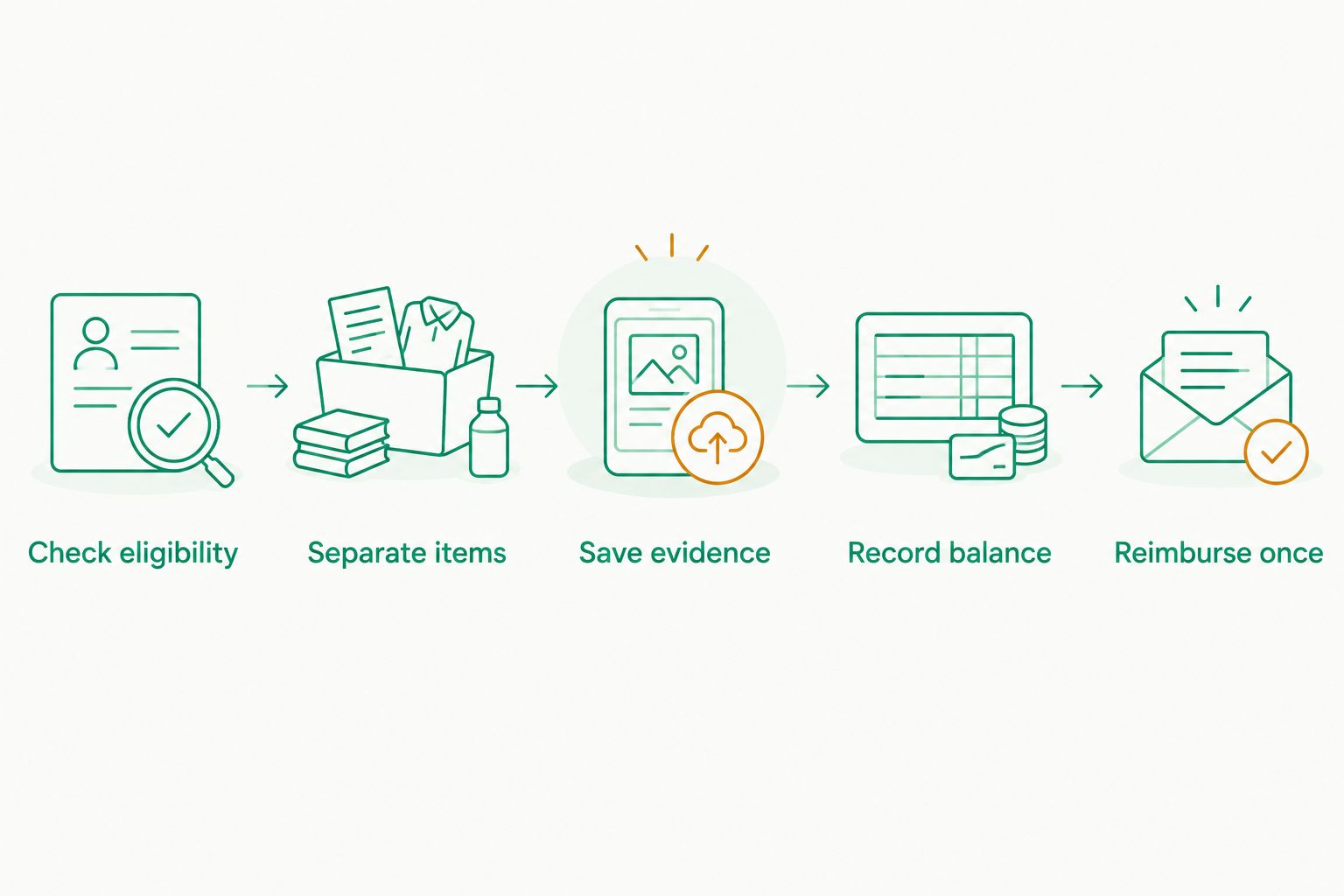
1. Check eligibility
Write down why the vitamins were purchased. “Daily wellness” and “treatment for a diagnosed condition” describe different tax situations, even when the bottle is identical.
For treatment-related vitamins, retain documentation identifying the condition and the practitioner's recommendation. The records should connect the supplement to treatment, rather than merely show that a clinician approved taking vitamins.
Also confirm that the expense occurred after your HSA was established. An otherwise eligible purchase from before that date does not become reimbursable because you saved the receipt or opened an HSA later.
2. Separate items
Keep the original receipt intact and make an annotated copy or a separate item list. Mark each line as qualified, excluded, or awaiting clarification.
Maintain 2 separate totals: the full checkout total and the qualified medical total. They serve different purposes: one proves the transaction, while the other supports the HSA reimbursement.
Use amounts actually paid after discounts. Where a receipt includes shared discounts or sales tax, document a reasonable, consistent allocation to qualifying items; do not assign the entire adjustment to the medical portion merely to increase reimbursement.
3. Save evidence
Build a record with 3 components: purchase evidence, eligibility support, and reimbursement history. These can live together in a digital folder, an expense tracker, or a paper filing system.
Purchase evidence should show the seller, purchase date, item description, and amount paid. If the receipt uses an abbreviated product name, save additional order or product details that identify what you bought.
Eligibility support explains why a treatment-related vitamin qualifies. Reimbursement history shows whether any part has already been paid back through an HSA, FSA, insurance, or another source.
4. Record balance
Create 1 ledger entry per expense and connect it to the receipt. Record the purchase date, person receiving treatment, qualifying item, eligible amount, and reimbursement status.
If you group several qualifying items into one entry, preserve the item-level breakdown underneath it. A receipt reference should let you reconstruct the total without relying on memory.
For a 2026 mixed receipt, do not enter the entire checkout amount as qualified and plan to fix it later. Record the eligible balance correctly from the start, with uncertain vitamins kept outside that balance until resolved.
5. Reimburse once
When you take an HSA distribution, match it to the qualifying expenses in your records. Save the reimbursement date and amount, then reduce the remaining eligible balance.
Never reimburse the same expense twice. An amount paid back through an FSA or insurance cannot also support a tax-free HSA reimbursement, and an expense used for tax-free HSA reimbursement cannot also be claimed as an itemized medical deduction.
Why this matters
A receipt proves a purchase, not its medical purpose. That distinction matters most when an ordinary retail product can be either a personal expense or part of treatment.
IRS Publication 969, under “Distributions From an HSA,” explains that you must keep records showing that distributions paid or reimbursed qualified medical expenses, that the expenses were not otherwise reimbursed, and that they were not taken as an itemized deduction. You keep those records with your tax files rather than sending the receipts with your return.
For 2026 recordkeeping, aim for a file someone else can understand without your explanation. A highlighted receipt alone does not explain a vitamin's treatment purpose, and a treatment note alone does not establish what you paid.
What a mixed-receipt record looks like
Suppose you buy vitamins, a qualifying medical item, and groceries in the same transaction. You pay out of pocket and intend to reimburse yourself from your HSA later.
If the vitamins are for general wellness, exclude them along with the groceries. Your reimbursement record includes only the independently qualifying medical item and its properly attributable charges.
If the vitamins instead meet the treatment exception, retain the supporting medical records and include their eligible amount. The groceries remain excluded; the treatment documentation does not turn neighboring receipt lines into medical expenses.
A useful ledger entry contains:
- Receipt reference: A filename or identifier connecting the entry to the complete receipt.
- Purchase details: Seller, date, patient, and item description.
- Eligibility basis: Why each included item qualifies, with treatment documentation where needed.
- Amount calculation: Actual item charges and any documented allocation of discounts or tax.
- Reimbursement status: Amount already reimbursed, remaining balance, and reimbursement dates.
Keep unclear items in a separate review category. That lets you preserve the purchase evidence without treating an unresolved expense as qualified.
Why vitamin documentation varies
The right supporting records depend on the purchase and its treatment context. These factors change what your file needs:
- Medical purpose: General-health vitamins are excluded; a qualifying treatment purpose needs evidence connecting the supplement to a diagnosed condition.
- Receipt detail: A descriptive item line is easier to substantiate than a generic department code or payment total.
- Shared adjustments: Basket-wide discounts and tax require a documented allocation rather than copying the checkout total.
- HSA establishment date: The expense must occur after the account was established, regardless of when you request reimbursement.
- Other payments: Insurance, an FSA, returns, or previous reimbursements affect the remaining amount you can claim.
- Reimbursement timing: Saving an expense for later requires records that remain understandable and accessible over time.
There is no universal letter that fixes every vitamin purchase. Documentation supports a qualifying expense; it does not create eligibility for a general-health expense.
Which receipt-tracking method should you use?
Choose the method you will maintain consistently. You need a reliable connection between the full receipt, the eligibility explanation, and the remaining unreimbursed amount—not a particular app.
| Method | Best for | Useful feature | Limitation or responsibility |
|---|---|---|---|
| Spreadsheet plus digital folders | People comfortable maintaining their own ledger | Flexible columns for eligible amounts and reimbursement status | You must enter, reconcile, and back up the records |
| Paper receipts plus a written log | People who prefer physical records | Keeps purchase evidence and annotations together | Fading receipts need legible copies, and records need protection |
| HSA-provider receipt tools | People whose provider offers suitable storage | Can keep records near account activity | Verify the actual storage, export, and tracking features before relying on them |
| Reimbursable | People seeking an HSA/FSA directory and receipt-tracking app | Free manual tracking is unlimited | You still determine eligibility and retain supporting treatment records |
Reimbursable is a receipt-tracking option for U.S. HSA holders saving medical expenses for later reimbursement. Its role is record organization, not replacing the tax rules or making a vitamin purchase qualify.
Before choosing any system in 2026, check that you can retrieve a readable receipt and explain the eligible balance. If you change providers or tools, preserve your records independently rather than assuming they will follow the account automatically.
Does a doctor's letter make every vitamin purchase HSA eligible?
No. A doctor's letter does not automatically qualify vitamins bought for general health. The medical-expense exception concerns treatment for a specific condition diagnosed by a physician, not a general recommendation to improve nutrition.
Ask whether your records explain the condition, the treatment recommendation, and the connection to the actual purchase. If that connection is unclear, consult your tax advisor before including the vitamins in your qualified total.
Can you reimburse a mixed receipt years later?
Yes. The IRS sets no time limit for HSA reimbursement of qualifying expenses incurred after the HSA was established. Keep records proving eligibility, payment, and the absence of another reimbursement or deduction.
A qualifying expense paid in 2026 can remain in your records for later HSA reimbursement. FSA claim deadlines and plan rules are different; do not apply the HSA's open-ended reimbursement rule to an FSA.
What if you already paid for everything with your HSA card?
Paying with an HSA card does not make the entire receipt qualified. Identify the nonqualified portion and contact your HSA custodian about its mistaken-distribution procedures before attempting a correction.
Do not assume an ordinary contribution reverses the transaction. Ask your tax advisor how to report or correct the distribution, especially if it includes general-health vitamins or household purchases.
FAQ
Are vitamins HSA eligible when they are on a mixed receipt?
Vitamins do not qualify merely because they share a receipt with eligible medical purchases. General-health vitamins are excluded; vitamins recommended as treatment for a specific condition diagnosed by a physician require supporting records.
Do I need a separate receipt for my vitamins?
A separate receipt is not required just because your purchase includes nonmedical items. Keep the complete itemized receipt and a clear calculation of the eligible portion, with treatment documentation where needed.
Is a credit card statement enough for HSA reimbursement?
A credit card statement alone generally does not establish which items you purchased or why vitamins qualified. Retain the itemized receipt and the medical support for any treatment-related supplements.
Can I claim the whole receipt if the store labels it HSA eligible?
No. A store's label does not establish that every purchase on a mixed receipt meets the medical-expense rules. Review each included item and preserve the basis for treating it as qualified.
Can I use an FSA and an HSA for the same vitamins?
You cannot reimburse the same expense through both an FSA and an HSA. Record any FSA reimbursement so that the same amount stays out of your HSA claim.
Can Reimbursable replace a doctor's treatment records?
No. Reimbursable provides receipt tracking and an eligibility directory, not a substitute for medical documentation. Keep records supporting the treatment purpose alongside the purchase evidence.
What should I do if I return vitamins after recording the receipt?
Update the expense record to remove the refunded amount from your eligible balance. If you already reimbursed that amount from your HSA, ask your custodian and tax advisor how to address the distribution.
One last thing
Do not crop away the nonmedical items. Keeping the complete receipt makes your eligible subtotal easier to explain because the original transaction and your exclusions remain visible.
Save an unaltered copy, put annotations in a separate copy or ledger, and retain the treatment evidence with it. A clear record beats a highlighted total with no explanation.
Not tax advice. Always consult your tax advisor. For 2026 decisions, consult IRS Publication 502, “Nutritional Supplements,” and IRS Publication 969, “Distributions From an HSA,” alongside your circumstances.