
Choose Reimbursable if you pay medical expenses out of pocket and need to organize receipts for later HSA reimbursement; choose FSA Store if you want to shop for FSA-eligible products. In 2026, the distinction is receipt management versus retail shopping—not two interchangeable ways to manage your account.
- Reimbursable vs FSA Store comes down to receipt tracking versus shopping for eligible products.
- Choose receipt tracking when your main problem is documenting delayed HSA reimbursements.
- Choose FSA Store when your main task is buying FSA-eligible products.
- HSA reimbursement timing differs from FSA deadlines; neither service changes the underlying tax rules.
Why this matters
Buying an eligible product and proving a qualified reimbursement are separate jobs. A purchase confirmation helps document a transaction, but your records must also support the expense's eligibility, timing and unreimbursed amount.
That distinction matters when you pay out of pocket and leave HSA funds invested. There is no IRS deadline for reimbursing an otherwise qualified HSA expense incurred after the account was established. Waiting does not remove your responsibility to keep supporting records.
An FSA works differently. Its coverage period and claim-submission rules determine which expenses you can submit and when; do not apply the HSA's reimbursement timing rule to an FSA.
At a glance
| Dimension | Reimbursable | FSA Store |
|---|---|---|
| Best for | HSA holders organizing expenses for later reimbursement | Account holders shopping for FSA-eligible products |
| Retail shopping | Eligibility lookup and receipt tracking, rather than a retail checkout | Retail purchasing of FSA-eligible products |
| Product browsing | Directory-based eligibility research | Browsing products with purchase intent |
| Standout feature | Receipt-tracking app alongside an eligibility directory | Shopping focused on FSA-eligible products |
| Eligibility authority | IRS rules still determine qualification | IRS rules still determine qualification |
| Documentation responsibility | You remain responsible for supporting reimbursements | You remain responsible for supporting reimbursements |
| Pricing model | Free unlimited manual tracking; optional Premium subscription | Retail purchase model |
The table separates each service's purpose from the rules that apply to you. It does not assume that a retailer lacks other tools or that a tracking app replaces your account administrator.
FSA Store wins when you are ready to buy
FSA Store is the better fit when your immediate task is purchasing FSA-eligible products. A retailer puts the shopping decision at the center of the experience; a receipt tracker addresses the paperwork surrounding an expense.
For example, if you already know you need an eligible first-aid item, your next task is choosing and purchasing the item. Opening a tracking app does not complete that purchase. Use a retailer for that job, then retain the transaction records.
The limitation is equally important: shopping is not the same as managing every medical expense. Your reimbursement records can include bills from medical providers, insurance adjustments and purchases made elsewhere.
A retail transaction also does not resolve every eligibility question. Check any conditions that apply to your expense and follow your FSA administrator's substantiation requirements. A product's shopping category is not a substitute for reviewing your circumstances.
FSA Store wins for purchase-oriented product browsing
Choose FSA Store when you want product browsing to lead directly to a purchase. That is a different intent from asking whether a medical expense belongs in your reimbursement records.
A directory is useful when your question is about an expense category. Retail browsing is useful when your question is which product to buy. Neither task is inherently better; the useful distinction is whether you are researching a rule or selecting an item.
Keep that boundary clear during a 2026 FSA spending review. Start with expenses you actually need and your plan's rules, rather than treating an approaching deadline as a reason to buy unfamiliar products.
FSA Store's shopping focus is an advantage for purchase intent. Its relevance is narrower when your unfinished task is reconciling an old provider bill, finding a missing receipt or identifying which expenses you have already reimbursed.
The receipt-tracking app wins for delayed HSA reimbursement
Reimbursable is best for HSA holders who need to organize receipts for later reimbursement. Its stated purpose combines expense tracking with a directory of 890+ HSA/FSA-eligible items.
That fits a specific workflow: you pay an eligible expense out of pocket, preserve the evidence and decide when to reimburse yourself. The app supports the recordkeeping task; it does not make an ineligible expense qualified or establish your HSA's opening date.
Free manual tracking is unlimited. Premium adds receipt scanning, bank sync and email forwarding to reduce receipt administration. Those features address repetitive entry and collection work—not a legal requirement to purchase software.
There are legitimate alternatives:
- Spreadsheet: Best for people comfortable maintaining expense rows and reimbursement status themselves.
- Digital folders: Best for people who already have a consistent naming and backup routine.
- Paper receipts: Best for people who reliably preserve readable documents and can retrieve them later.
- HSA-provider receipt tools: Best for people who prefer keeping records within their provider's existing tools.
The app's drawback is another system to maintain. If your current method reliably connects each expense, receipt and reimbursement, switching is not necessary merely because a dedicated tracker exists.
Both leave eligibility decisions subject to IRS rules
Neither service changes whether an expense qualifies. For your 2026 review, IRS Publication 502 explains medical-expense categories, while IRS Publication 969 addresses HSAs and other tax-favored health plans.
Read those sources together. Publication 502 is not a stand-alone checklist for every HSA or FSA question: account-specific rules and exceptions also matter.
For an HSA reimbursement, check that:
- The expense was incurred after your HSA was established.
- The expense qualifies under the applicable HSA rules.
- Insurance or another source has not already reimbursed the amount.
- You have not also claimed the expense as an itemized deduction.
- Your records support the expense and the amount withdrawn.
A doctor's letter does not automatically turn a general-health expense into a qualified medical expense. The expense must meet the applicable medical-care requirements; documentation supports that analysis rather than replacing it.
This is an honest tie. Eligibility research can help you ask the right questions, but neither a directory entry nor a retail listing overrides tax rules.
Both leave you responsible for reimbursement evidence
The recordkeeping obligation stays with you, whichever service you use. For delayed HSA reimbursement, preserve records that explain what happened—not merely that money left your account.
A useful expense file connects the patient, provider or seller, service or purchase date, description, amount and payment evidence. Include insurance information when it affects the amount you actually owe.
Bank activity helps establish payment, but it does not necessarily identify the medical service or item. An itemized bill helps explain the expense, but an unpaid bill alone does not establish that you paid it. Keep the documents together.
Before reimbursing yourself in 2026, use this sequence:
- Check timing. Confirm that the expense occurred after the HSA was established.
- Confirm eligibility. Review the expense category and any conditions that apply.
- Save evidence. Keep the itemized record, payment evidence and relevant insurance documents.
- Record reimbursement. Update your records when you withdraw funds so you do not reimburse the same amount again.
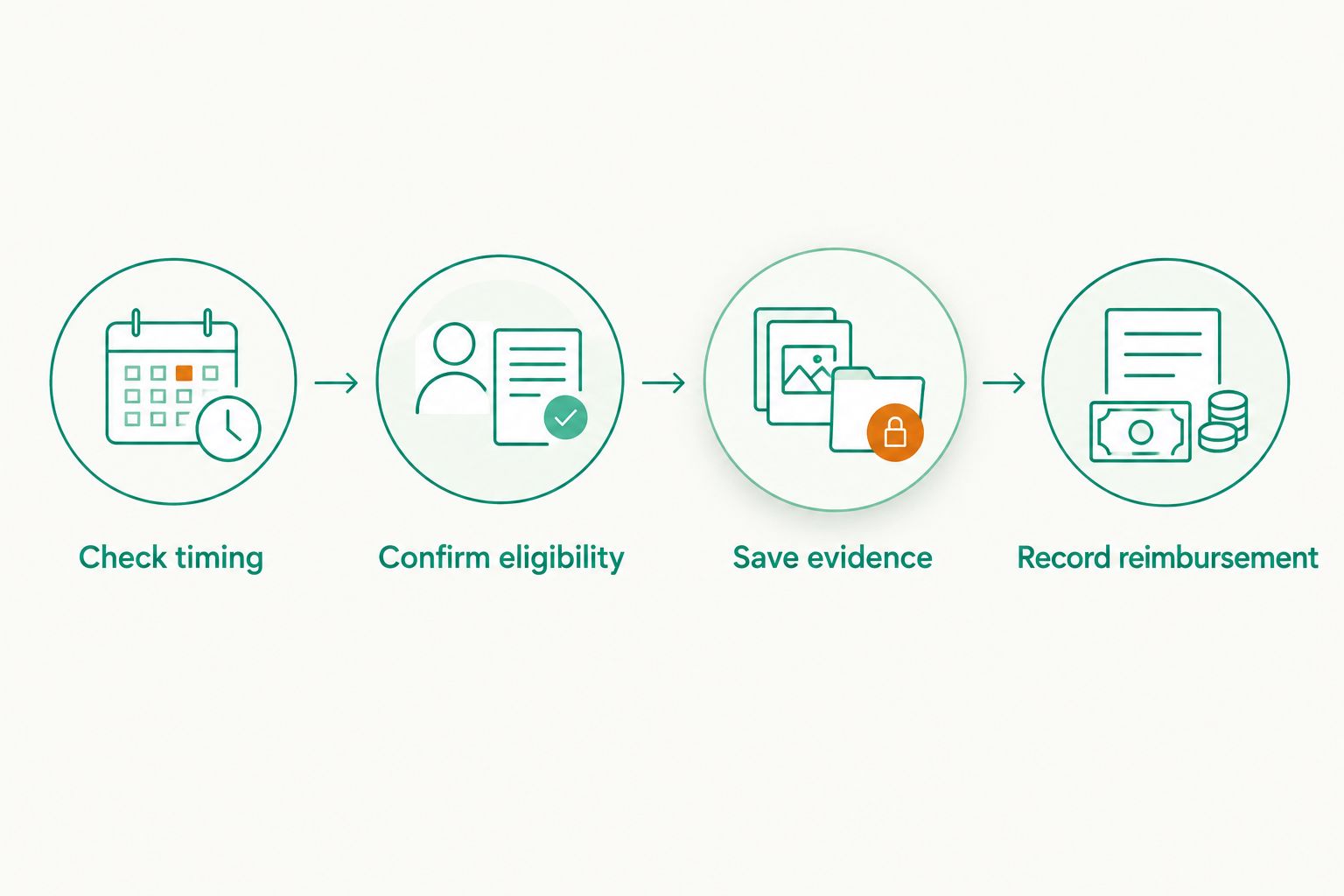
This process works with an app, spreadsheet or folder system. The best method is the one you can maintain accurately and retrieve when needed.
Pricing: a tracking subscription versus retail purchases
The pricing models answer different questions. Receipt tracking concerns how you organize records; retail spending concerns what you buy. Comparing those as though they were competing subscription plans obscures the decision.
The tracking app offers free unlimited manual tracking and an optional Premium subscription. Review the current pricing before choosing a plan, and evaluate automation against the receipt work you actually want to reduce.
FSA Store uses a retail purchase model. Your decision centers on the products you need, rather than paying for the receipt-tracking workflow described here. This comparison does not assign unverified subscription features or terms to the retailer.
Start with manual tracking if it solves your problem. Consider Premium when receipt scanning, bank sync or email forwarding addresses a recurring administrative task. Paid automation is not necessary to obtain tax-free reimbursement for a qualified expense.
Final verdict: choose by the unfinished task
Choose Reimbursable if you are a delayed-reimbursement saver
You pay eligible medical expenses out of pocket and want a dedicated place to track receipts for later HSA reimbursement. You value an eligibility directory and want the option to reduce manual receipt work.
Your next move is to organize existing unreimbursed expenses before adding more tools. Confirm the HSA establishment date, gather supporting documents and identify any amounts already covered elsewhere.
Choose FSA Store if you are a purchase-focused FSA holder
You have an eligible product need and want a retailer focused on that shopping task. You are not primarily trying to organize years of out-of-pocket medical records.
Your next move is to check your plan's spending and submission rules, purchase what you need and save the supporting records. Shopping and recordkeeping remain separate responsibilities even when they happen close together.
| Dimension | Winner |
|---|---|
| Best fit for delayed HSA reimbursement records | Receipt-tracking app |
| Retail shopping | FSA Store |
| Purchase-oriented product browsing | FSA Store |
| Dedicated receipt-management workflow | Receipt-tracking app |
| Authority over tax eligibility | Tie: neither overrides IRS rules |
| Responsibility for supporting records | Tie: responsibility stays with you |
| Pricing model | No direct winner: tracking and purchases are different expenses |
You can use both types of service. Buy where the product meets your needs, then maintain a consistent recordkeeping system across eligible expenses.
FAQ
Is Reimbursable better than FSA Store for saving HSA receipts?
Reimbursable is the better fit for the receipt-tracking task because its stated offering includes an expense-tracking app. FSA Store is the better fit when your immediate task is shopping for FSA-eligible products.
Can I reimburse myself years after paying an HSA expense?
Yes, there is no IRS deadline for reimbursing an otherwise qualified HSA expense incurred after your HSA was established. Keep records showing the expense qualifies, was not reimbursed elsewhere and was not also claimed as an itemized deduction.
Do FSA claims have the same timing rules as HSA reimbursements?
No, FSA claims follow the plan's coverage period and submission rules. Check your administrator's deadlines and any applicable grace-period or carryover provisions rather than applying HSA timing rules.
Does buying an item from an FSA-focused retailer prove my reimbursement qualifies?
No, the purchase alone does not establish every condition for your reimbursement. Keep supporting records and check the applicable account rules and any expense-specific requirements.
Do I need a paid app to get tax-free HSA reimbursement?
No, a paid app is not required for tax-free reimbursement of a qualified HSA expense. Spreadsheets, folders, paper receipts and HSA-provider receipt tools are legitimate alternatives when they preserve adequate records.
Does a doctor's letter make any wellness purchase HSA-eligible?
No, a doctor's letter does not automatically qualify a general-health purchase. The expense must meet the applicable medical-care requirements; consult your tax advisor about uncertain cases.
What should I check before reimbursing an expense in 2026?
Confirm that the expense occurred after your HSA was established, qualifies under HSA rules and has not been reimbursed elsewhere or deducted. Then match the withdrawal to your supporting records and update the reimbursement status.
One last thing
A newly paid bill can still relate to care received before your HSA existed. Do not assume that paying after the account opened makes the earlier expense eligible for HSA reimbursement; check when the expense was incurred.
For your 2026 receipt cleanup, identify the earliest expense first. A clear account-establishment date is more useful than a large folder of receipts whose timing you have not checked.
Not tax advice; consult your tax advisor. Use current IRS guidance and your account administrator's rules when resolving an uncertain expense.