
Prenatal vitamins can qualify for tax-free HSA reimbursement when a medical practitioner recommends them as treatment for a specific medical condition, rather than for general health. The prenatal label alone does not establish eligibility: keep evidence of the medical purpose, confirm the expense occurred after your HSA was established, and do not reimburse an amount already covered elsewhere or claimed as a deduction.
- Prenatal vitamins are not automatically HSA eligible; the medical purpose matters more than the label.
- IRS Publication 502 excludes general-health supplements unless a medical practitioner recommends them to treat a specific medical condition.
- Save the itemized receipt and supporting medical documentation before taking an HSA reimbursement.
- Reimbursable supports HSA receipt tracking; spreadsheets, folders, and provider tools are legitimate alternatives.
Are prenatal vitamins HSA eligible?
Prenatal vitamins are conditionally eligible, not automatically eligible. Under IRS Publication 502, nutritional supplements and vitamins generally do not qualify unless a medical practitioner recommends them as treatment for a specific medical condition diagnosed by a physician.
For your 2026 records, distinguish a prenatal supplement used for general nutrition from one recommended for a documented medical purpose. Read the distinction between general-health vitamins and medical treatment before treating every bottle as reimbursable.
| Purchase situation | HSA eligibility assessment | What to keep |
|---|---|---|
| Prenatal vitamins purchased for general nutritional support | The prenatal label does not establish eligibility | Itemized receipt; do not assume reimbursement qualifies |
| Vitamins recommended to treat a diagnosed deficiency | Can qualify under the medical-treatment exception | Receipt and documentation connecting the supplement to treatment |
| Prenatal vitamins recommended during pregnancy | Document the medical purpose; do not rely on pregnancy or branding alone | Receipt and the practitioner's recommendation explaining the medical purpose |
| Supplements recommended only for overall wellness | General-health expenses do not qualify | Keep separate from qualified HSA expenses |
A doctor's recommendation helps establish the facts, but a letter does not automatically turn a general-health purchase into a qualified medical expense. Ask what condition the supplement treats and whether the documentation supports that purpose.
Why this matters
An HSA debit card approval is not an IRS eligibility decision. Neither is a retailer's eligibility badge or the word prenatal on a package.
You are responsible for substantiating a tax-free distribution. That means showing both that the expense qualified and that you did not receive another reimbursement for the same amount.
For 2026 purchases, separate two decisions: whether the expense qualifies and when you want to reimburse yourself. Delaying reimbursement does not fix an ineligible purchase, but it gives you time to organize the supporting records before withdrawing money.
What makes prenatal-vitamin eligibility vary?
The medical purpose and your reimbursement history determine the result. These factors matter more than the product's marketing:
- Purpose of the purchase. General nutrition is different from treatment of a specific medical condition.
- Practitioner documentation. A recommendation that explains the condition and treatment purpose supports your records better than a generic wellness statement.
- Timing of the expense. Qualified expenses must occur after your HSA was established. Opening an account later does not make an earlier expense eligible.
- Person receiving care. HSA rules generally cover qualifying expenses for you, your spouse, and eligible dependents; buying vitamins for someone else does not automatically qualify.
- Other reimbursement or deductions. Insurance, an FSA, or another source cannot reimburse the same amount that you reimburse from your HSA. You also cannot claim the same expense as an itemized medical deduction.
Keep the supplement question separate from the account question. Even a medically qualifying purchase fails the HSA reimbursement test if it occurred before the account was established or was already reimbursed elsewhere.
How do you document prenatal vitamins for HSA reimbursement?
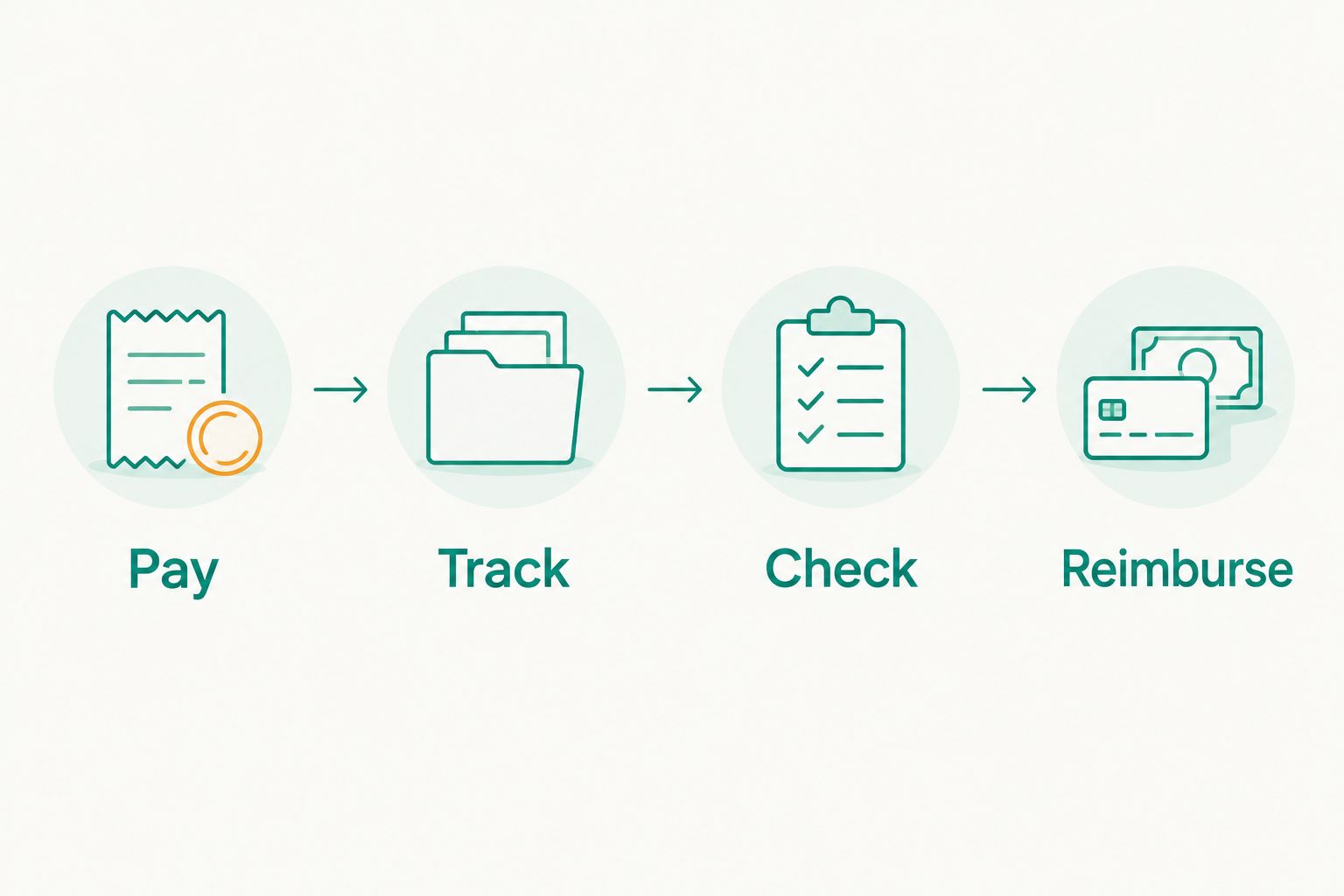
Use a simple sequence: Pay, Track, Check, Reimburse. Paying out of pocket does not prevent a later HSA reimbursement when the expense meets the rules.
Pay
Keep the itemized receipt when you buy the vitamins. It should identify the merchant, purchase date, product, and amount paid.
A card statement helps show payment, but a statement that names only the store does not identify what you bought. Save the order confirmation or itemized receipt alongside it when necessary.
Track
Record who the expense was for and whether you paid out of pocket or directly from the HSA. Mark direct HSA payments as already paid so you do not reimburse yourself again.
If you buy vitamins with groceries or personal-care products, separate the potentially qualifying line item from the rest of the transaction. Do not record the entire shopping total as a medical expense.
Check
Attach the medical documentation that explains why the supplement qualifies. Ask the practitioner to describe the condition being treated and the connection between the recommended supplement and that treatment.
Check the HSA establishment date, any insurance or FSA reimbursement, and any medical deduction before marking the expense ready. A complete receipt cannot resolve a missing medical purpose.
Reimburse
Withdraw only the qualifying, unreimbursed amount. Record the reimbursement date and match the withdrawal to the expense so the same receipt cannot be used twice.
For a repeatable recordkeeping method, use the guide to applying HSA reimbursement rules to an expense ledger. Keep unresolved purchases separate from expenses you have confirmed qualify.
Does a prescription make prenatal vitamins HSA eligible?
A prescription does not automatically make prenatal vitamins HSA eligible. The underlying medical purpose still matters under the IRS rule for nutritional supplements.
Compare a note that says to take vitamins for general wellness with documentation explaining that a supplement treats a diagnosed deficiency. The second describes the medical-treatment connection; the first does not establish that exception.
Do not ask a clinician to write a letter solely to obtain reimbursement. Ask for an accurate explanation of the care you are receiving, then evaluate eligibility using that explanation and the applicable IRS rules.
Can you reimburse prenatal vitamins years after buying them?
There is no IRS deadline for reimbursing an otherwise qualified HSA expense. The expense must have occurred after your HSA was established, and you must retain records showing that it qualified, was not reimbursed elsewhere, and was not claimed as an itemized deduction.
For example, a qualifying purchase made in 2026 does not require a reimbursement during 2026. You can leave the expense unreimbursed and make a later withdrawal if you preserve the supporting records.
Keep the receipt and medical documentation together. A receipt saved without the explanation of why the supplement qualified leaves a gap that becomes harder to resolve after you change clinicians or pharmacies.
Are prenatal-vitamin rules the same for an HSA and an FSA?
HSA and health FSA eligibility both depend on qualified medical-expense rules, but their reimbursement timing differs. An HSA does not have an annual use-it-or-lose-it reimbursement deadline for qualified expenses incurred after establishment.
A health FSA follows its plan's coverage period, claim-submission deadlines, and any applicable grace-period or carryover provisions. Check your 2026 plan documents rather than applying HSA timing rules to an FSA claim.
Do not submit the same purchase for reimbursement from both accounts. If an FSA has already reimbursed the full qualifying amount, there is no remaining amount to reimburse from your HSA.
Choose a receipt system you will actually maintain
Reimbursable is best for HSA holders who want a dedicated place to track receipts for later reimbursement. Reimbursable offers unlimited free manual tracking; Premium adds AI receipt scanning, bank sync, and email forwarding to reduce receipt administration.
You do not need a paid app to obtain tax-free reimbursement. The requirement is adequate records, not a particular storage product.
| Recordkeeping option | Best for | Advantage | Limitation |
|---|---|---|---|
| Reimbursable | HSA holders wanting dedicated receipt tracking | Unlimited free manual tracking, with optional Premium automation | Automation does not determine tax eligibility or replace medical documentation |
| Spreadsheet plus digital folders | People comfortable maintaining their own records | You control the expense fields and file organization | You must enter details and maintain links between expenses and receipts |
| Paper receipts and folders | People who prefer physical records | No app is required | Receipts can fade, and finding a specific purchase requires careful filing |
| HSA-provider receipt tools | People wanting records near their account | Can keep documentation within the provider's account workflow | Features vary; check export and access options before relying on the tool |
Choose automation when entering and finding receipts is the problem. If your spreadsheet already works, keep using it; switching tools does not make an expense more eligible.
For prenatal vitamins, the most useful feature is the ability to retrieve the receipt and supporting medical explanation together. Keep a separate reimbursement status so an old receipt does not become an accidental duplicate claim.
Which IRS sources should you use in 2026?
For a 2026 eligibility decision, start with IRS Publication 502, Medical and Dental Expenses, particularly its discussion of nutritional supplements. That section provides the general-health exclusion and the exception for practitioner-recommended treatment of a specific medical condition diagnosed by a physician.
Then consult IRS Publication 969, Health Savings Accounts and Other Tax-Favored Health Plans, for HSA qualified-expense, distribution, and recordkeeping rules. Publication 502 explains medical-expense categories; Publication 969 addresses how those expenses interact with the account.
IRS Notice 2004-50, questions 39 and 40, addresses delayed HSA reimbursement and substantiation. Its historical publication date does not create a deadline requiring you to reimburse yourself in the year of purchase.
Use the current IRS materials rather than treating a retailer's product category as tax guidance. When the medical purpose remains unclear, consult your tax advisor before taking the distribution.
FAQ
Are over-the-counter prenatal vitamins HSA eligible?
Over-the-counter prenatal vitamins are not automatically HSA eligible. Vitamins generally qualify only when a medical practitioner recommends them as treatment for a specific medical condition diagnosed by a physician, rather than for general health.
Can I use my HSA card to buy prenatal vitamins?
Use HSA funds only when the prenatal-vitamin expense qualifies under the medical-expense rules. A successful card transaction does not establish eligibility, so retain the receipt and supporting medical documentation.
Do I need a letter of medical necessity for prenatal vitamins?
Keep documentation establishing the medical-treatment purpose, but a letter alone does not guarantee eligibility. A generic recommendation for general wellness does not satisfy the exception for treatment of a specific medical condition.
Can I reimburse vitamins I bought before opening my HSA?
No, an expense incurred before your HSA was established does not qualify for tax-free reimbursement from that HSA. Saving the receipt or obtaining medical documentation later does not change the expense date.
Can I claim prenatal vitamins through my FSA and HSA?
You cannot reimburse the same amount through both an FSA and an HSA. Track any reimbursement already received and withdraw only a remaining amount that independently qualifies.
What happens if I use HSA money for vitamins that do not qualify?
A nonqualified HSA distribution generally becomes taxable income and can also trigger a 20% additional tax. The additional tax does not apply after age 65 or in certain other circumstances; consult your tax advisor about correction options and reporting.
Do I need a paid receipt app for HSA reimbursement?
No, a paid receipt app is not required for tax-free HSA reimbursement. Spreadsheets, digital folders, paper records, and HSA-provider tools are legitimate choices when they preserve adequate supporting documentation.
One last thing
Photograph the itemized receipt before you discard the packaging or leave the purchase behind. A bank transaction identifies the merchant, not necessarily the supplement, and the medical explanation belongs with that receipt rather than in a separate inbox.
Mark uncertain purchases as awaiting review instead of treating every prenatal product as eligible. That small distinction keeps an organized receipt collection from becoming an inaccurate reimbursement ledger.
Not tax advice. Always consult your tax advisor.