
Vitamins are not automatically HSA eligible with a prescription. They qualify when a medical practitioner recommends them to treat a specific medical condition diagnosed by a physician, rather than to maintain general health. For your 2026 purchases, save evidence of that treatment purpose alongside the receipt; a prescription or doctor's letter alone does not turn a general-health supplement into a qualified medical expense.
- Are vitamins HSA eligible with prescription documentation? Only when they meet the medical-treatment test, not merely because they're prescribed.
- IRS Publication 502 excludes vitamins taken for general health, even when a doctor recommends them.
- Keep the itemized receipt, diagnosis-related recommendation, and reimbursement record together.
- Reimbursable is a receipt-tracking option for HSA holders saving documentation for later reimbursement.
Why this matters
A doctor's recommendation and an HSA-qualified expense are different things. Buying the vitamin at a pharmacy, paying with an HSA card, or receiving a prescription does not independently establish its tax treatment.
The distinction matters most when you pay out of pocket and reimburse yourself years later. Your records need to explain why that particular purchase qualified, not just prove that you bought vitamins. For the broader distinction, see vitamins for general health versus medical treatment.
Are vitamins HSA eligible with a prescription?
Yes, when the vitamins are recommended to treat a specific medical condition diagnosed by a physician; no, when they are taken merely for general health. IRS Publication 502's section on nutritional supplements supplies this distinction. The prescription supports your explanation, but the underlying medical purpose determines eligibility.
Use this comparison when reviewing a vitamin purchase in 2026:
| Situation | HSA eligibility | What supports the decision |
|---|---|---|
| Daily multivitamin taken for general wellness | Not qualified | General-health use does not satisfy the medical-treatment test |
| Doctor recommends vitamins to improve overall health | Not qualified on that basis alone | A recommendation without a specific diagnosed condition is insufficient |
| Vitamin recommended to treat a physician-diagnosed deficiency | Qualifies when the medical-treatment requirements are met | Diagnosis-related recommendation and an itemized purchase receipt |
| Prescription vitamin with no clear explanation of its treatment purpose | Prescription alone does not establish eligibility | Clarification of the diagnosed condition and treatment connection |
A diagnosed deficiency provides a concrete example. If your physician diagnoses vitamin D deficiency and recommends vitamin D to treat it, the treatment purpose differs from taking the same supplement because you want to stay healthy.
Do not treat the table as blanket approval for a product category. The same bottle can have different tax treatment depending on its documented purpose.
Vitamins prescribed for a diagnosed condition
A treatment recommendation should connect the vitamin to the condition being treated. For example, documentation for a diagnosed vitamin deficiency should identify the supplement recommended and explain its role in treatment.
Ask your clinician to record the relevant details in the medical record or a written recommendation. Useful details include:
- The specific diagnosed condition.
- The vitamin or supplement recommended for treatment.
- The recommended dose and treatment period, when applicable.
- The reason the supplement is part of treatment rather than general wellness.
These details help connect the medical recommendation to your purchases. They are supporting evidence, not an automatic approval certificate.
Avoid asking a clinician to write a letter simply declaring that everything in your supplement routine is eligible. A useful record explains an actual treatment decision. It does not replace that decision with tax terminology.
Vitamins recommended for general health
Vitamins taken to maintain ordinary health do not become qualified medical expenses because a doctor recommends them. A recommendation to support wellness, improve general nutrition, or supplement an otherwise ordinary diet does not by itself establish treatment of a diagnosed condition.
That distinction also applies to a prescription pad. The word prescription is not a substitute for the medical-treatment test.
Consider someone whose doctor suggests a daily multivitamin during a routine visit without identifying a condition it will treat. That recommendation alone does not establish HSA eligibility. Paying from a personal account keeps an unsupported expense out of the HSA while you resolve any uncertainty.
Why vitamin eligibility varies
The relevant differences concern your circumstances and records, not how convincingly a product label describes its benefits. For a 2026 review, focus on these factors:
- Medical purpose: Treatment of a specific diagnosed condition differs from maintaining general health.
- Clinical connection: The recommendation needs to connect the supplement to that condition; a generic wellness recommendation is not enough.
- Expense timing: The expense must be incurred after your HSA was established. Opening an account later does not make an earlier expense eligible.
- Other reimbursement: You cannot reimburse yourself from an HSA for an amount already reimbursed by insurance, an FSA, or another source.
- Tax treatment: You cannot also claim an itemized medical-expense deduction for the same expense you reimburse tax-free from an HSA.
- Purchase documentation: Records should identify what you purchased, when you purchased it, and the amount attributable to the qualifying item.
A purchase can pass the medical-purpose test and still fail another requirement. Keep the clinical evidence and the payment history together so you can check both.
How to document vitamins for later HSA reimbursement
Use a repeatable process before moving money from your HSA. It is easier to capture a clear record at purchase than to reconstruct it years later.
1. Verify treatment
Confirm that the vitamin is recommended to treat a specific condition diagnosed by a physician. If your documentation only says general wellness, ask the clinician to clarify the actual medical purpose rather than requesting tax-approval language.
Do not interpret a retailer's eligibility label as evidence of your diagnosis. Retail classifications cannot document why you personally need the supplement.
2. Save receipts
Keep an itemized receipt that identifies the vitamin, purchase date, and amount paid. A credit-card statement shows a payment to a merchant, but generally does not identify which items you bought.
For a mixed shopping basket, separate the qualifying vitamin from groceries, toiletries, and other personal purchases. Record only the eligible amount, not the total checkout amount.
3. Attach documentation
Store the treatment recommendation with the receipt, or give both records a matching reference in your files. Keep the connection understandable without relying on memory.
If you buy the supplement repeatedly, retain each purchase receipt. A treatment recommendation explains medical purpose; it does not prove every later purchase or payment.
4. Check reimbursement
Before requesting an HSA distribution, confirm that the expense occurred after your HSA was established and that the amount remains unreimbursed. Check that you have not used the same expense for an itemized medical deduction.
For partially reimbursed expenses, track the remaining eligible amount separately. The original receipt total is not necessarily the amount still available for HSA reimbursement.
5. Record payment
When you reimburse yourself, record the distribution date and the amount assigned to that receipt. Mark the reimbursed amount so the same purchase does not appear available again.
Keep any remaining unreimbursed balance clear. A receipt archive and a reimbursement ledger serve different purposes; you need evidence of the purchase and evidence of how you used it.
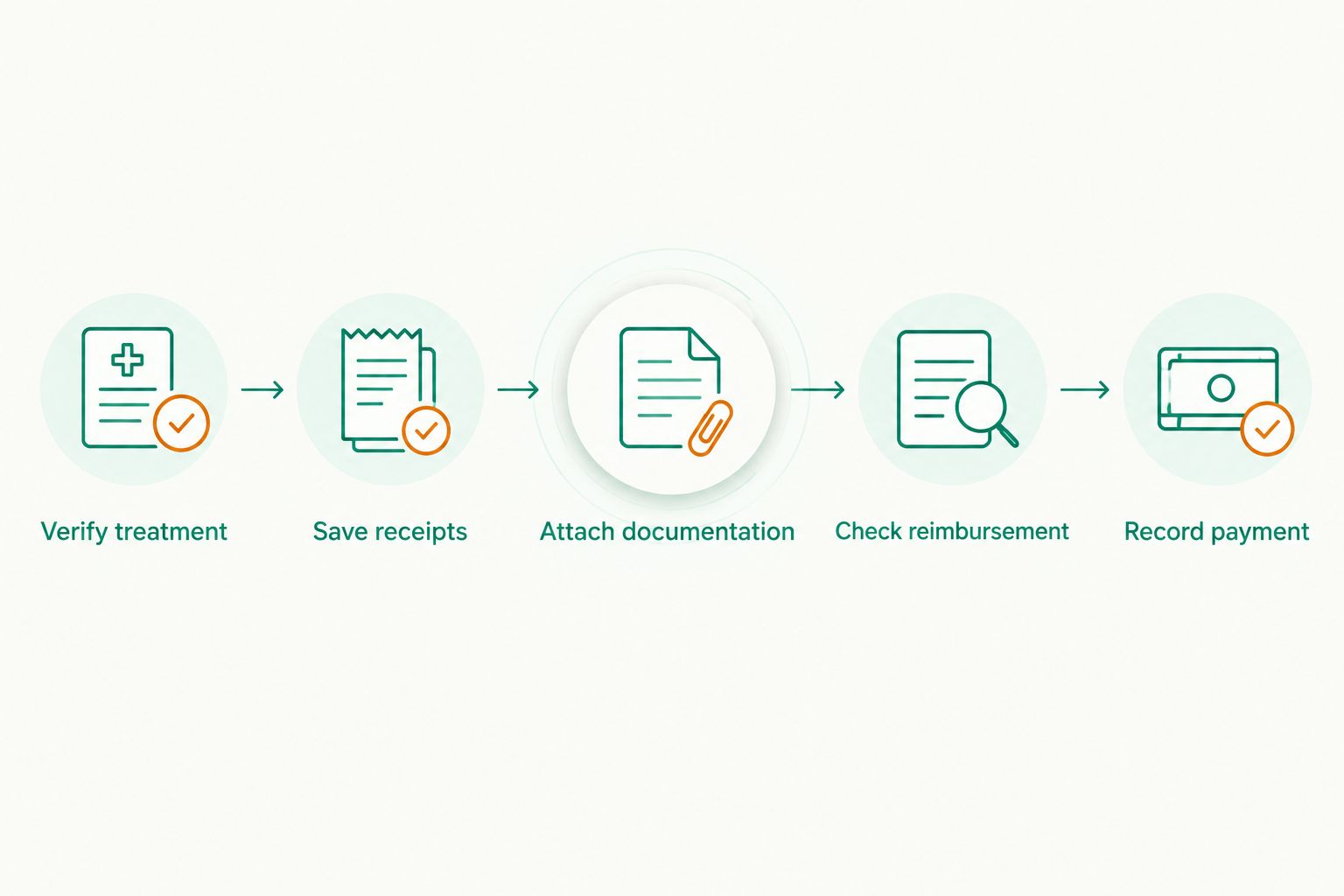
The process remains useful whether you reimburse yourself immediately or leave the expense unreimbursed. The goal is a record that explains the purchase without requiring you to remember the original conversation with your doctor.
Can I reimburse myself years after buying the vitamins?
There is no IRS deadline for reimbursing an otherwise qualified HSA expense. IRS Notice 2004-50, question and answer 39, addresses delayed reimbursement and the records needed to support it.
For a vitamin purchase made in 2026, you can delay reimbursement if the expense qualifies, occurred after your HSA was established, and has not been reimbursed elsewhere or claimed as an itemized deduction. Save documentation of those facts, not just the receipt image.
This is an HSA rule, not an FSA rule. FSAs have plan-year rules and claim-submission deadlines; check your plan's terms rather than applying the HSA's delayed-reimbursement treatment.
Does a letter of medical necessity make vitamins eligible?
A letter of medical necessity does not automatically make vitamins HSA eligible. It can document that a medical practitioner recommended the vitamins to treat a specific condition diagnosed by a physician.
Read the substance of the letter. A statement that supplements support general health does not establish the treatment purpose described in Publication 502, even if the document is titled a letter of medical necessity.
Do I need an app to save vitamin receipts?
You do not need an app to obtain tax-free reimbursement. Paper receipts, digital folders, spreadsheets, and HSA-provider receipt tools are legitimate ways to organize supporting records.
Reimbursable is best for HSA holders who want dedicated receipt tracking for later reimbursement. Reimbursable's HSA receipt tracking includes unlimited free manual tracking; Premium adds AI receipt scanning, bank sync, and email forwarding to reduce receipt administration. None of those features changes whether a vitamin qualifies.
| Recordkeeping option | Best for | Useful capability | Limitation or task to check |
|---|---|---|---|
| Paper receipts and folders | People comfortable maintaining physical records | Keeps original purchase documents together | Protect against fading, loss, and separation from clinical records |
| Spreadsheet and digital folders | People who want direct control over their ledger | Lets you organize receipts and reimbursement status yourself | Requires manual updates and consistent file references |
| HSA-provider receipt tools | People who prefer their account provider's tools | Keeps receipt management with the provider, where offered | Verify the provider's actual features and export options |
| Reimbursable | HSA holders wanting dedicated receipt tracking | Unlimited free manual tracking and optional receipt automation | Eligibility still depends on the expense and supporting evidence |
Start with the method you will maintain. Consider Reimbursable Premium when scanning, bank sync, or email forwarding addresses a real administrative problem, not because automation is necessary for a valid reimbursement.
Which IRS sources should I check in 2026?
Use IRS Publication 502, Medical and Dental Expenses, for the nutritional-supplement distinction. Its nutritional-supplements section separates general-health purchases from supplements recommended to treat a specific condition diagnosed by a physician.
Use IRS Publication 969, Health Savings Accounts and Other Tax-Favored Health Plans, for HSA-specific requirements, including qualified expenses, account-establishment timing, and recordkeeping. Publication 502 also discusses itemized medical deductions; do not assume every rule for an itemized deduction applies identically to HSA distributions.
For delayed reimbursement, consult IRS Notice 2004-50, question and answer 39. For practical examples of the general-health distinction, consult the IRS frequently asked questions on medical expenses related to nutrition, wellness, and general health.
Check the IRS guidance available when making your decision. Not tax advice; consult your tax advisor, especially when the treatment purpose or reimbursement history is unclear.
FAQ
Are vitamins HSA eligible with prescription documentation?
Vitamins qualify when recommended to treat a specific medical condition diagnosed by a physician, not merely because you have a prescription. Keep the treatment documentation and itemized receipt together.
Can I use my HSA for a daily multivitamin my doctor recommends?
A daily multivitamin recommended only for general health is not a qualified HSA expense. A recommendation tied to treatment of a specific physician-diagnosed condition requires a different eligibility assessment.
Is vitamin D HSA eligible if I have a diagnosed deficiency?
Vitamin D recommended to treat a physician-diagnosed vitamin D deficiency meets the medical-purpose distinction described in IRS Publication 502. The purchase must also meet the HSA timing and no-double-reimbursement requirements.
Does an approved HSA card transaction prove my vitamins qualify?
An approved HSA card transaction does not prove that vitamins qualify. You remain responsible for supporting the expense's medical purpose and keeping purchase records.
Can I reimburse a vitamin purchase from before I opened my HSA?
You cannot take a tax-free HSA reimbursement for an expense incurred before your HSA was established. A later prescription or diagnosis does not change that account-timing requirement.
Do HSA vitamin receipts expire like FSA claims?
Qualified HSA expenses have no IRS reimbursement deadline, provided you retain the required records and satisfy the other rules. FSA claims follow your plan's deadlines instead.
What happens if I use HSA money for nonqualified vitamins?
A nonqualified HSA distribution is generally included in taxable income and carries an additional 20% tax before age 65. The additional tax does not apply after age 65 or in specified disability or death circumstances, but a nonqualified distribution remains taxable.
One last thing
The most useful document might be the medical recommendation, not the receipt. The receipt proves you bought the vitamin; the recommendation helps explain why that otherwise ordinary purchase was medical treatment.
Before filing a 2026 purchase, ask yourself: could someone understand its eligibility without hearing your explanation? If not, connect the missing treatment evidence now, while the details are easy to retrieve.