
Choose Reimbursable if you pay medical expenses out of pocket and want to organize receipts for later HSA reimbursement; choose HSA Store if your immediate goal is shopping for HSA-eligible products. In 2026, the useful distinction is receipt management versus retail shopping—not which business changes the tax rules.
- Reimbursable vs HSA Store compares receipt tracking with retail shopping, not competing HSA accounts.
- Choose the receipt-tracking app for organizing medical expenses; choose HSA Store for product shopping.
- HSA reimbursement requires eligible expenses incurred after your HSA was established, without double reimbursement or deduction.
- An HSA has no federal reimbursement deadline; an FSA follows plan-specific deadlines.
Why this matters
Buying an eligible product and documenting an eligible reimbursement are different tasks. A shopping receipt proves a transaction happened; your records must also support the qualified amount, the timing and whether anyone else paid you back.
For your 2026 decision, start with the job you need done. If you already have receipts from pharmacies, dentists and other providers, another shopping destination does not solve the recordkeeping problem. If you need to buy a medical product, an expense ledger does not replace a retailer.
Use a shopping tool to make a purchase and a recordkeeping system to preserve the reimbursement evidence. You can use both without treating either as your HSA custodian or a substitute for tax advice.
At a glance
| Dimension | Reimbursable | HSA Store |
|---|---|---|
| Best for | HSA holders saving receipts for later reimbursement | Shoppers buying HSA-eligible products |
| Eligibility research | Directory of 890+ HSA/FSA-eligible items | HSA-focused retail product browsing |
| Buying products | Eligibility lookup and expense tracking are the stated offering | Retail shopping is the central purpose |
| Receipt records | Unlimited free manual tracking | A purchase receipt still needs a recordkeeping home |
| Reducing receipt entry | Premium offers receipt scanning, bank sync and email forwarding | Shopping does not replace a medical-expense ledger |
| Tax qualification | IRS rules determine eligibility | The same IRS rules apply |
| Pricing model | Free manual tracking with optional paid automation | Retail purchases rather than a tracking subscription |
| Standout distinction | Combines eligibility lookup with receipt tracking | Connects product browsing with purchasing |
Best for: tracking wins after payment; shopping wins before it
The receipt-tracking app fits the saver; HSA Store fits the shopper. Those are different user profiles, even when the same person fills both roles.
The saver pays a qualified medical bill with personal funds and keeps the supporting records. Reimbursement happens later, after checking that the expense remains unreimbursed and otherwise qualifies. The main task is maintaining a reliable history.
The shopper wants to find and purchase an HSA-eligible product. A retailer fits that task because the transaction—not the long-term expense ledger—is the immediate goal.
Neither approach requires you to abandon the other. Buy where the purchase makes sense, then keep the receipt in whatever system you can maintain consistently.
Eligibility research is a tie on the rule that matters
The directory covers 890+ HSA/FSA-eligible items, giving you a starting point for eligibility research. HSA Store approaches the question through retail browsing. The better starting point depends on whether you are researching an expense or preparing to purchase a product.
The limitation is the same: an eligibility label does not establish every fact about your reimbursement. Your circumstances, the purpose of the expense and any applicable documentation requirements still matter.
For 2026 research, use IRS Publication 502, Medical and Dental Expenses, to understand medical-expense categories, and IRS Publication 969, Health Savings Accounts and Other Tax-Favored Health Plans, for HSA and FSA rules. Publication 502 alone is not a complete HSA rulebook; account-specific rules can differ from medical-expense deduction rules.
A doctor's letter does not automatically qualify a general-health expense. Vitamins, fitness spending and other conditional categories require attention to the underlying medical purpose—not simply a document bearing a clinician's signature.
HSA Store wins when you need to buy a product
HSA Store is the better fit for a purchase you intend to make now. Its retail purpose matches that task directly.
An eligibility directory helps answer a research question, but research and checkout are separate activities. Choose the shopping route when your next action is purchasing a product, rather than entering an expense you already paid.
Keep the purchase decision separate from the reimbursement decision:
- Identify the product you actually need.
- Check whether the expense qualifies under the applicable rules.
- Keep the itemized receipt and payment evidence.
- Record whether you paid with HSA funds or personal funds.
That last distinction prevents a common recordkeeping mistake: treating an expense already paid from the HSA as an outstanding amount you can reimburse again.
The receipt-tracking app wins for an ongoing expense ledger
A dedicated ledger is the better fit when receipts accumulate across purchases and medical providers. Unlimited free manual tracking lets you maintain that record without buying automation.
The tradeoff is effort. Manual tracking still requires you to enter expenses, retain evidence and update reimbursement status. An app does not remove the need to check what you record.
Spreadsheets, organized folders, paper receipts and HSA-provider receipt tools are legitimate alternatives. A spreadsheet works when you maintain it consistently; paper works when it remains readable and organized. Evaluate an HSA-provider tool on its actual features rather than assuming every provider offers the same workflow.
For each expense, preserve these details:
- Service or purchase date and the person receiving care.
- Provider or merchant and a description of the expense.
- Amount paid and supporting payment evidence.
- Insurance payments, refunds or other reimbursements.
- HSA reimbursement date and amount, including any partial reimbursement.
The system matters less than whether you can connect each withdrawal to the supporting evidence.
Reimbursable Premium wins when manual receipt entry is the problem
Premium's practical value is less receipt administration through receipt scanning, bank sync and email forwarding. Consider those features when entering and collecting records—not buying products—is the task you want to reduce.
Automation has limits. A bank transaction does not necessarily show which items were purchased, who received treatment or whether insurance later reimbursed part of the bill. Scanned information still needs review.
Free manual tracking remains a valid choice. Premium is not necessary to obtain tax-free reimbursement, and a paid feature does not make an otherwise ineligible expense qualify.
Before subscribing, identify the repeated task you want to remove. If you already keep an orderly ledger with little effort, additional automation has a smaller practical role. If emailed receipts and separate payment records create repeated work, compare the automation features against that specific problem.
Both follow the same HSA qualification rules
Neither the app nor the retailer changes the federal requirements. For a 2026 reimbursement decision, check these 3 conditions before withdrawing HSA funds:
- Eligible expense: The payment must be for a qualified medical expense under HSA rules.
- Correct timing: The expense must have been incurred after your HSA was established.
- No double benefit: The expense cannot also be reimbursed elsewhere or claimed as an itemized medical-expense deduction.
There is no federal time limit for reimbursing a qualified expense from an HSA, provided the requirements are met and you retain adequate records. That flexibility makes receipt preservation important; it does not guarantee investment growth or a particular financial outcome.
Do not apply the HSA timing rule to an FSA. FSA expenses and claims follow plan-specific coverage periods and deadlines. A carryover or grace period, where offered, does not make an FSA an indefinite reimbursement account.
Pricing: free manual tracking versus retail purchases
Reimbursable offers unlimited free manual tracking and optional paid Premium automation. Review the current pricing options before deciding whether the added receipt features address your workload.
HSA Store follows a retail model: the purchase is the transaction. Comparing a retail purchase with a tracking subscription as though they were interchangeable expenses misses the purpose of each.
For your 2026 budget, make two separate decisions: what medical products you need, and whether receipt automation is useful enough to pay for. Buying a product does not create a complete reimbursement ledger; maintaining a ledger does not supply the product.
Start with manual tracking if it meets your needs. Consider Premium when a named automation feature solves a recurring administrative problem—not because paid tracking is required by the IRS.
Standout distinction: records versus checkout
The app combines eligibility lookup with ongoing receipt tracking. HSA Store connects product browsing with purchasing. Neither is a complete substitute for the other.
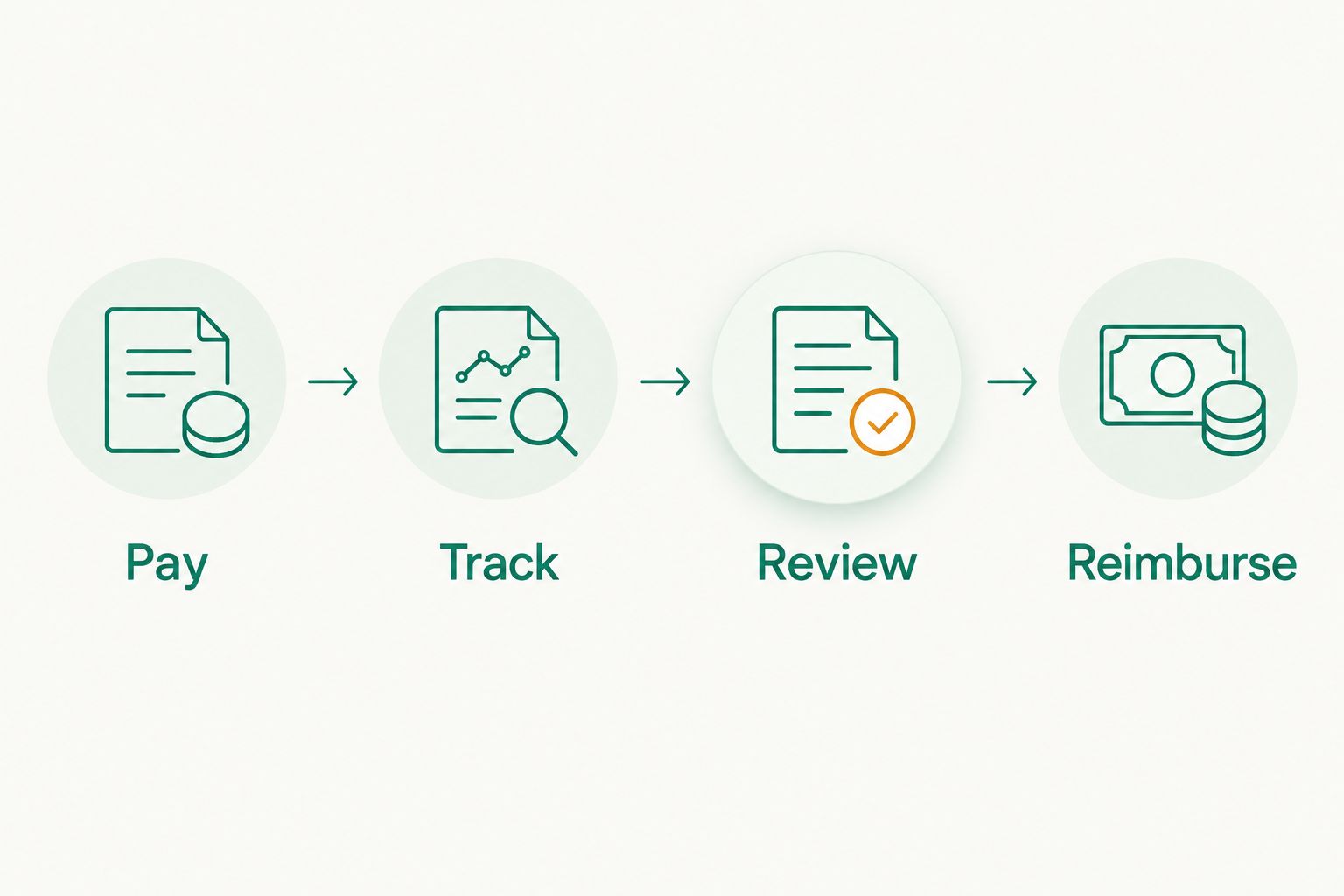
Use these 4 steps to connect a purchase with a later reimbursement:
- Pay: Identify the qualified expense and keep evidence of payment.
- Track: Save the itemized record and enter the unreimbursed amount.
- Review: Check insurance payments, refunds and prior reimbursements.
- Reimburse: Withdraw only the remaining qualified amount and update the record.
This sequence also works with a spreadsheet or an organized paper system. The important control is updating the outstanding amount before and after each reimbursement.
Keep evidence together even when it arrives at different times. A provider bill, payment confirmation and insurer's explanation of benefits can describe different parts of the same expense; no single document automatically replaces all the others.
Final verdict: choose for the task you actually have
Choose Reimbursable if you are a receipt-saving HSA holder
You pay qualified expenses out of pocket and want a continuing record for later reimbursement. Start with unlimited free manual tracking; consider Premium when receipt scanning, bank sync or email forwarding addresses repeated work.
The limitation is clear: tracking does not replace shopping, determine your tax position or excuse missing documentation.
Choose HSA Store if you are shopping for eligible products
You want to browse and purchase products rather than organize a backlog of medical expenses. Its retail purpose fits that immediate need.
The limitation is equally clear: completing a purchase does not finish your long-term recordkeeping. Keep the receipt, document the payment source and record any later reimbursement separately.
| Dimension | Winner |
|---|---|
| Best for | Receipt saver: tracking app; product shopper: HSA Store |
| Eligibility research | Tie: neither replaces the applicable IRS rules |
| Buying products | HSA Store |
| Receipt records | Receipt-tracking app |
| Reducing receipt entry | Premium automation |
| Tax qualification | Tie: the same federal requirements apply |
| Pricing model | Free manual tracking for records; retail model for purchases |
| Standout distinction | Tracking app for records; HSA Store for checkout |
FAQ
Is Reimbursable better than HSA Store for saving HSA receipts?
Reimbursable is the better fit for ongoing receipt tracking because it offers unlimited free manual tracking and optional Premium automation. HSA Store is the better fit when your immediate task is shopping for products.
Can I use HSA Store and a separate receipt tracker together?
Yes, you can shop at HSA Store and maintain the resulting records in a separate tracking system. Save the itemized receipt, payment evidence and reimbursement status so you do not claim the same expense twice.
Do I need a paid app to reimburse myself from an HSA?
No, a paid app is not required for tax-free HSA reimbursement. Spreadsheets, folders, paper records and suitable HSA-provider tools are legitimate alternatives when they preserve adequate supporting evidence.
Can I reimburse an HSA expense years after paying it?
Yes, there is no federal HSA reimbursement deadline for an otherwise qualified expense. The expense must have been incurred after your HSA was established, remain unreimbursed and not have been claimed as an itemized medical-expense deduction.
Does a doctor's letter make a general-health purchase HSA eligible?
No, a doctor's letter does not automatically make a general-health purchase HSA eligible. The expense must satisfy the underlying medical-expense rules, and additional documentation does not override those rules.
Are FSA reimbursement deadlines the same as HSA deadlines?
No, FSA claims follow plan-specific expense and submission deadlines. Check your FSA plan documents rather than applying the HSA's open-ended reimbursement timing.
Does an eligible-product listing prove my withdrawal is tax-free?
No, a product listing alone does not establish that your HSA withdrawal qualifies. You still need to support the expense, its timing and the absence of another reimbursement or deduction.
One last thing
Keep the reimbursement history, not just the receipt. A receipt can remain perfectly readable while your ledger becomes wrong because an insurance payment or refund arrived later.
Before your next withdrawal, reconcile the amount you paid, any later payments and what you already reimbursed. That check protects the usefulness of every receipt you save.
Not tax advice. Always consult your tax advisor.