
You generally cannot use an HSA tax-free for a family gym membership purchased for exercise, recreation, or general health. A narrow exception applies when a membership is purchased solely to treat a specific diagnosed disease or support prescribed treatment—not simply because a doctor recommends exercise. One family member's medical need does not make everyone else's access eligible, and a doctor's letter does not automatically qualify the family bill.
- Can you use HSA for gym membership family expenses? Generally no; ordinary family fitness dues are personal expenses.
- A qualifying medical purpose for one patient does not make the entire family's membership eligible.
- Reimbursable supports HSA eligibility lookup and receipt tracking; documentation alone cannot turn an ineligible expense into medical care.
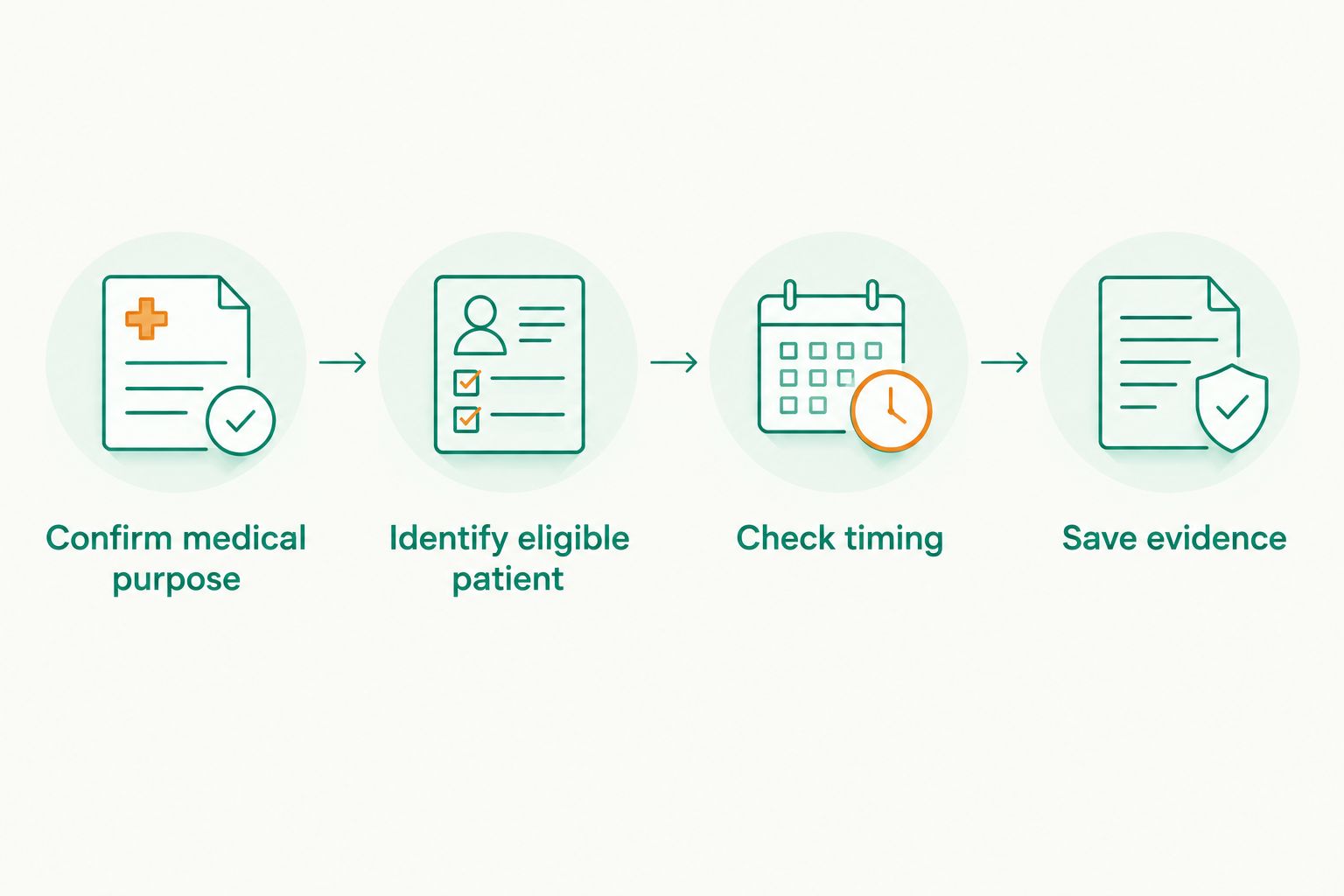
- For 2026 reimbursements, verify the medical purpose, eligible patient, expense date, and absence of duplicate reimbursement.
Can you use HSA for a family gym membership?
An ordinary family gym membership is not an HSA-qualified medical expense. IRS Publication 502 excludes health club dues, while IRS guidance on nutrition, wellness, and general health describes a narrow exception for memberships purchased solely for qualifying medical treatment.
For your 2026 decision, apply that medical-purpose test before considering which family members use the gym. The gym membership eligibility test explains the underlying distinction; a shared family bill adds the separate question of whose expense you can substantiate.
| Situation | HSA treatment | What you need to establish |
|---|---|---|
| Family joins for exercise and recreation | Not qualified | General fitness is a personal expense |
| Doctor recommends that the family become more active | Recommendation alone does not qualify dues | A specific qualifying medical purpose, not general wellness |
| One patient buys access solely for qualifying medical treatment | Narrow exception requires supporting facts | Treatment purpose, eligible patient, and qualifying expense |
| Family package includes one patient's treatment-related access | Entire package is not automatically qualified | Whether any separately supported charge meets the medical-expense rules |
| Gym separately bills a qualifying treatment service | Evaluate that service independently | What treatment was provided, to whom, and why |
The distinction is not whether exercise helps your health. It is whether the particular expense meets the tax definition of medical care.
Why this matters
A family membership combines access for several people into one purchase. That makes it easy to mistake one person's medical recommendation for permission to reimburse the whole household's fitness spending.
Separate the medical-purpose question from the family-billing question. An itemized bill cannot make ordinary recreation eligible, and a medical letter cannot explain an unsupported allocation of shared dues.
Paying out of pocket while you check the rules keeps the decision separate from your HSA balance. Save the records, but mark the expense as unresolved rather than treating every saved receipt as a future tax-free reimbursement.
Ordinary family fitness memberships: not qualified
A membership bought so you, your spouse, and your children can swim, exercise, or attend fitness classes is personal spending when its purpose is general health or recreation. Family HSA coverage does not change that result.
The same applies when a clinician gives broad advice to exercise more, improve fitness, or maintain a healthy weight. Helpful advice is not, by itself, evidence that the membership was purchased solely for qualifying medical treatment.
For example, suppose your family already uses a club for recreation and a doctor later recommends that one person exercise regularly. Do not relabel the existing family dues as medical spending merely because exercise now also supports that person's health.
Treatment-related gym access: a narrow exception
IRS wellness guidance allows a gym membership to qualify when purchased for the sole purpose of affecting a body structure or function through prescribed treatment, or treating a specific diagnosed disease. The guidance gives examples involving prescribed physical therapy and treatment of conditions such as obesity, hypertension, or heart disease.
That exception is narrower than a doctor's endorsement of exercise. Your records should explain the diagnosed condition, the treatment connection, and why the expense meets the medical-purpose requirement.
A letter of medical necessity is supporting evidence, not an automatic approval. If the actual purchase provides ordinary family recreation, the letter does not transform that entire purchase into qualified medical care.
For a 2026 reimbursement, read IRS Publication 502 alongside the IRS frequently asked questions about medical expenses related to nutrition, wellness, and general health. Publication 969 explains the additional HSA rules, including eligible patients, timing, and recordkeeping.
One patient's treatment does not qualify a family package
Start by identifying the patient, not by dividing the membership total. The patient must be someone whose qualifying medical expenses your HSA can cover under the applicable rules.
Then establish what you actually purchased for that patient. A family contract that grants shared access does not necessarily contain a separately supportable medical charge.
Do not divide family dues equally and call one person's share qualified without support. An equal split is bookkeeping arithmetic, not proof of medical eligibility.
Ask the gym for an itemized statement that distinguishes membership access from separately billed services. If a qualifying treatment service appears on the same invoice as ordinary dues, evaluate that service on its own rather than treating the invoice as all-or-nothing.
For the billing mechanics, use the guide to separating HSA-qualified medical expenses on mixed bills. Separating charges helps document a decision; it does not create eligibility where none exists.
Does family HSA coverage make everyone's gym membership eligible?
Family HSA coverage does not make gym memberships qualified medical expenses. The expense must independently meet the medical-care rules, and the patient must meet the HSA's spouse or dependent requirements where applicable.
Family enrollment at a gym and family coverage under a health plan are different arrangements. Neither substitutes for the medical-purpose test.
Why family gym membership eligibility varies
The decision depends on the facts behind the charge, not on whether the gym accepts an HSA card. Check these factors:
- Purpose of the purchase: General fitness and recreation differ from access purchased solely for qualifying treatment.
- Patient eligibility: HSA reimbursement rules cover the account holder and qualifying family members, not automatically everyone on a gym contract.
- Scope of access: A shared family package needs separate scrutiny from a charge tied to one patient's treatment.
- Expense timing: The medical expense must occur after the HSA was established.
- Other reimbursement or deductions: You cannot also reimburse the expense elsewhere or claim it as an itemized medical deduction.
- Supporting records: The receipt, treatment explanation, and billing details must support the expense you claim.
A change in one factor does not erase the others. An eligible patient can still incur a nonqualified expense, and a qualifying treatment expense can still fail the HSA timing rule.
Use these 4 checks before reimbursing yourself
1. Confirm the medical purpose
Write down what the charge actually covers. Distinguish ordinary access from a separately billed treatment service, and distinguish general exercise advice from treatment for a specific diagnosed condition.
Ask your clinician to explain the treatment connection when relevant. Do not ask for a letter merely to give an existing recreational membership a different label.
2. Identify the eligible patient
Record who received the care and confirm that the person's expenses fall within the HSA reimbursement rules. Do not assume that inclusion on a family gym contract establishes tax-dependent status.
For a shared bill, identify the exact charge under review. If the gym cannot separate anything beyond the family membership total, do not manufacture a patient-specific amount.
3. Check timing and other payments
Confirm that the expense occurred after your HSA was established. Paying an older expense in 2026 does not make it qualified if the underlying care occurred before the account existed.
Also check insurance payments, FSA reimbursements, other reimbursements, and any medical deduction already claimed. The same expense cannot support overlapping tax benefits.
4. Save the decision and evidence
Keep the itemized bill, proof of payment, and relevant medical documentation together. Record whether the expense is qualified, nonqualified, or awaiting clarification.
If only part of an invoice qualifies, preserve the explanation for that specific amount. A future reimbursement should trace back to an identified expense, not an unexplained total in a spreadsheet.
What should you keep for a treatment-related expense?
Your records should let you reconstruct the decision without relying on memory. Keep the provider or gym name, patient name, service description, service date, amount paid, and proof of payment.
Where the narrow treatment exception is relevant, retain the medical explanation with the receipt. Where a shared invoice contains personal charges, retain the itemization and your reason for excluding those charges.
Use a clear status such as pending review rather than mixing unresolved gym expenses with documented qualifying care. A large receipt collection is less useful than a smaller, accurately classified reimbursement ledger.
If you reimburse yourself later, record the reimbursement date and amount against that expense. This prevents the same receipt from being submitted again accidentally.
Choose a receipt system you will maintain
Reimbursable is a fit for HSA holders who want eligibility lookup and receipt tracking in one place. Its directory and app support the administrative work; they do not replace the IRS medical-expense rules.
Reimbursable offers unlimited free manual tracking. Premium adds AI receipt scanning, bank sync, and email forwarding for people who want less receipt administration; automation is not required for tax-free reimbursement.
| Recordkeeping option | Best for | Main advantage | Main limitation |
|---|---|---|---|
| Reimbursable manual tracking | HSA holders wanting dedicated expense tracking | Unlimited free manual tracking | You enter records yourself |
| Spreadsheet and digital folders | People comfortable maintaining their own system | You control the fields and organization | You maintain receipt links and reimbursement status |
| Paper receipts | People who consistently file physical records | No app required | Physical records need protection and organization |
| HSA-provider receipt tools | People wanting records alongside their account | Keeps the workflow with the account provider | Features depend on the provider |
Choose the system you will keep current. None of these options makes a general-health family membership eligible, and no paid tracking plan is necessary to establish a valid reimbursement.
Does a doctor's letter make a family gym membership eligible?
A doctor's letter does not automatically qualify a family gym membership. It can explain a patient's medical need, but the actual purchase must still satisfy the narrow medical-purpose exception.
Ask your tax advisor to review the expense itself, not just the letter. Shared recreational access remains a separate issue even when the patient's treatment need is genuine.
Can you reimburse a qualifying expense years later?
A qualifying HSA expense has no IRS reimbursement deadline, provided it occurred after the HSA was established and meets the other rules. Keep records showing that it was not reimbursed elsewhere or deducted.
For expenses incurred in 2026, retain enough documentation to support a later distribution. Do not apply the same timing assumption to an FSA, which has plan-year and claim-submission deadlines.
FAQ
Can I use my HSA for a family gym membership in 2026?
Generally, no: an ordinary family gym membership is a personal fitness expense. A narrow medical-treatment exception does not automatically qualify access for the entire family.
What if my doctor writes a letter of medical necessity?
A letter does not automatically make a gym membership HSA-qualified. The purchase must meet the medical-purpose rules, and shared family access requires separate scrutiny.
Can I claim one person's share of our family gym dues?
Do not claim an unsupported share of family dues. First establish that the particular expense qualifies, then retain billing evidence supporting any amount attributed to the eligible patient.
Does having family HDHP coverage change gym eligibility?
Family HDHP coverage does not turn general fitness dues into qualified medical expenses. Patient eligibility and expense eligibility are separate requirements.
Can I save a gym receipt now and decide about reimbursement later?
Yes, you can retain the receipt while you investigate eligibility. Saving it does not qualify the expense, so keep it separate from your reimbursement-ready total until the decision is supported.
Does an HSA card being accepted prove the membership qualifies?
No, card acceptance does not establish tax eligibility. You remain responsible for supporting the expense under the HSA rules.
Do I need a paid app to reimburse myself tax-free?
No, a paid app is not required for tax-free HSA reimbursement. Reimbursable offers unlimited free manual tracking, and spreadsheets, folders, paper receipts, and HSA-provider tools are legitimate alternatives.
One last thing
An expense date and a reimbursement date answer different questions. Saving a receipt until later does not fix an expense incurred before your HSA was established, and delaying reimbursement does not convert recreational dues into medical care.
Before reimbursing a disputed family gym charge, resolve the eligibility question first. For your 2026 records, use IRS Publication 502 for medical-expense categories, Publication 969 for HSA rules, and the IRS wellness FAQ for the gym-membership exception.
Not tax advice; consult your tax advisor.